On this page
- 01Key takeaways
- 02What does a sole trader actually need?
- 03What are the options and what do they cost?
- 04What is your own time worth?
- 05What is the cheapest set-up that still works?
- 06When should a sole trader pay for help?
- 07When is paying an agency the wrong move?
- 08How much should a sole trader spend on ads?
- 09What does this look like in practice?
- 10Sole trader cost checklist
- 11Next step
- 12Sources and further reading
- 13Frequently asked questions
Key takeaways
Social media management cost for sole traders in the UK ranges from £20–£80 a month in tools if you do it yourself, to £400–£1,200 a month for a part-time freelancer, to about £950 and up for a managed agency service. For most sole traders one channel done well is the right spend.
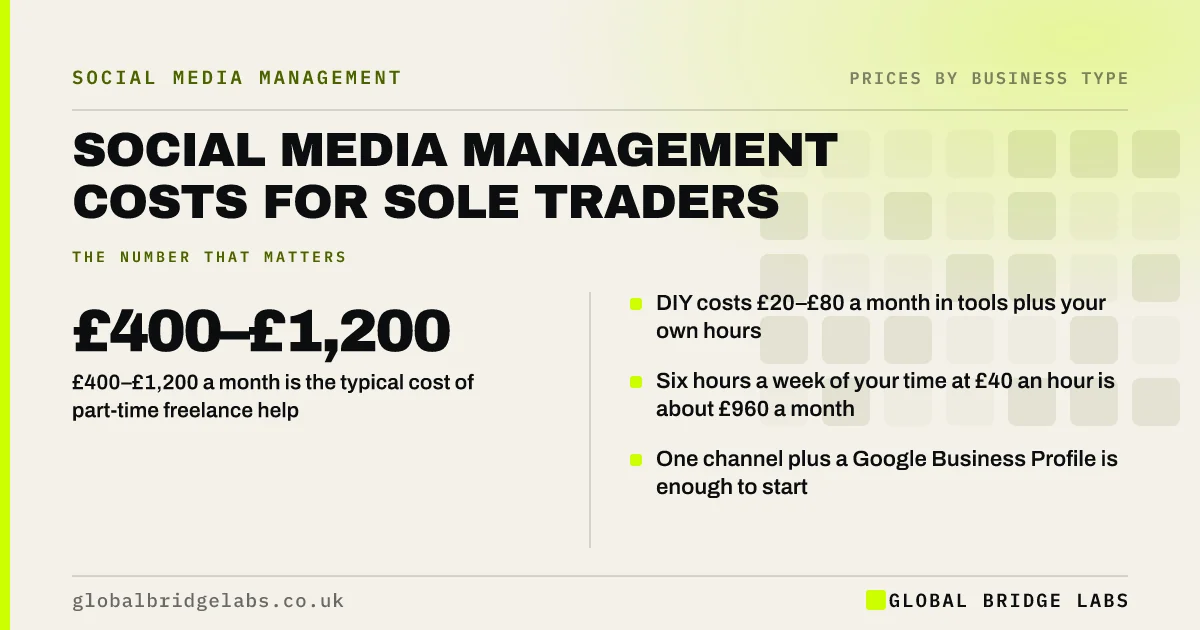
- £400–£1,200 a month is the typical cost of part-time freelance help.
- DIY costs £20–£80 a month in tools plus your own hours.
- Six hours a week of your time at £40 an hour is about £960 a month.
- One channel plus a Google Business Profile is enough to start.
Working alone and short of time for social media? Message us on WhatsApp.
Chat on WhatsApp →What does a sole trader actually need?
A sole trader needs proof of real work, quick replies and an accurate Google listing. That means one social channel where local buyers look, a handful of posts a week showing jobs or results, and messages answered the same day. It does not need five platforms or daily video.
What are the options and what do they cost?
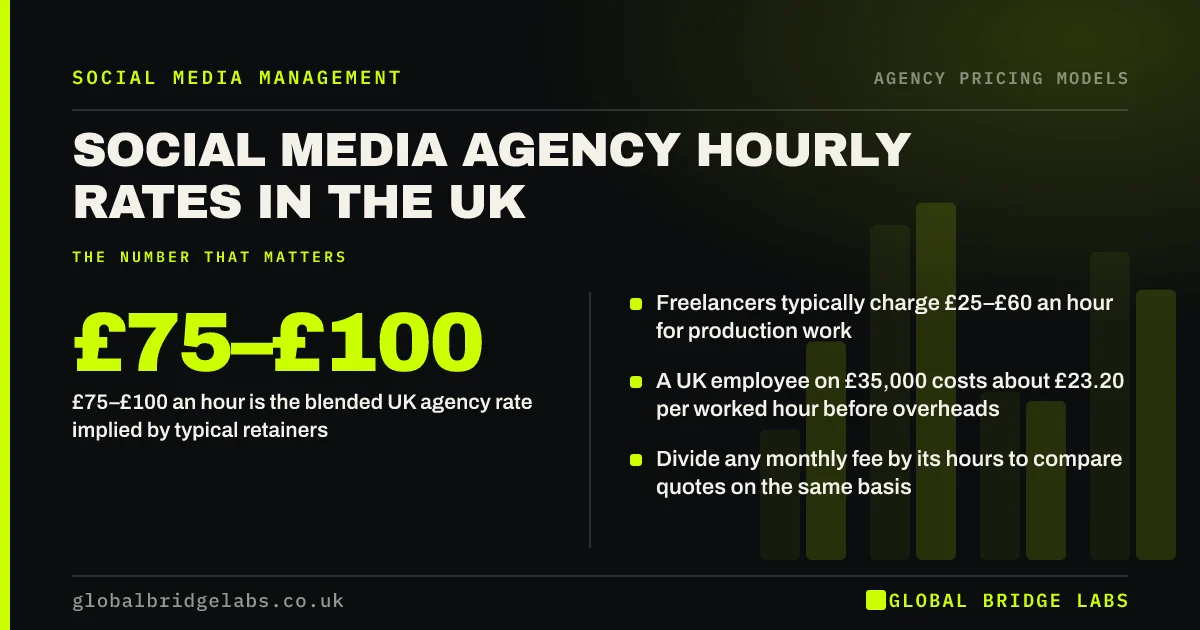
There are three routes. Doing it yourself costs tools and time. A freelancer costs about £25–£60 an hour, or £400–£1,200 a month part-time, usually for production only. A managed agency service with strategy, content and replies typically starts around £950 a month. These are market indications, not a GBL price list.
- DIY: £20–£80 a month in tools, plus about 6 hours a week.
- Freelancer: £400–£1,200 a month for part-time production.
- Publishing-only package: around £500–£950 a month.
- Managed service: typically £950 a month and up.
Want to know which route fits your workload? Send us your trade and area on WhatsApp and we will discuss your requirements.
Chat on WhatsApp →What is your own time worth?
Your time is the hidden cost. Six hours a week at a modest £40 an hour is about £960 a month, similar to a managed service. If those hours would otherwise be billable work, DIY is not free. If they are evenings you would not bill anyway, it may be the right choice.
What is the cheapest set-up that still works?
The cheapest working set-up is one channel, a Google Business Profile, a weekly routine and a short training session. Photograph every job, post three times a week, reply the same day and ask each happy customer for a review. Spend money on training before you spend it on scheduling.
- One channel where your buyers already look.
- A complete Google Business Profile.
- A phone photo of every job.
- Three posts a week, replies the same day.
- A review request after each job.
When should a sole trader pay for help?
Pay for help when posting has stopped for a month or more, when messages go unanswered during working hours, or when you turn down paid work to do marketing. At that point the cost of help is lower than the cost of the hours.
When is paying an agency the wrong move?
It is the wrong move when the budget is under about £500 a month, because that buys scheduling, not marketing. It is also wrong if you cannot send photos of your work, since nobody else can show jobs they never see.
How much should a sole trader spend on ads?
Little, and only once the page shows recent work. A local campaign needs about £300–£500 a month to produce results you can read. Below that, promote your single best job post each month to your service area and watch which posts bring messages.
- Promote only posts that already did well.
- Target your service radius, not the whole county.
- Send people to messages or a call button.
- Count the enquiries, not the likes.
What does this look like in practice?
A pattern we see with UK sole traders: the owner posts in bursts when work is quiet and stops when it is busy, which is the wrong way round. Sending photos by WhatsApp to someone who writes, designs and schedules keeps the page active during the busy weeks.
Sole trader cost checklist
Work through these before spending.
- Count the hours you spend on social media now.
- Value those hours at your billable rate.
- Choose one channel and complete your Google profile.
- Price a freelancer and a managed service for that one channel.
- Set a 90-day review on enquiries.
Next step
Tell us your trade, your area and how many hours you spend on social media. We will give you a straight view on whether to do it yourself or hand it over.
Message us on WhatsApp for a straight answer on what to spend, or book a 30-minute consultation.
Chat on WhatsApp →Sources and further reading
- Google Business Profile Help · Google
- Employee earnings in the UK (Annual Survey of Hours and Earnings) · Office for National Statistics
Frequently asked questions
How much should a sole trader spend on social media?
Many spend £20–£80 a month on tools and do it themselves. Part-time freelance help costs about £400–£1,200 a month, and a managed agency service typically starts around £950. Include the value of your own hours in the comparison.
Can a sole trader afford a social media agency?
Some can, when one extra job a month covers the fee. If the budget is under about £500 a month, training and a simple routine usually achieve more than a publishing-only package. Work out what one extra job is worth before deciding.
Is it worth a sole trader paying a freelancer for social media?
Yes, if you supply photos and know what you want to say. Freelancers usually handle production, not strategy, so keep the goal, the offers and the replies to sales enquiries in your own hands. Agree a monthly number of posts and a fixed price.
Which platform should a sole trader pay to manage?
One, chosen by where your buyers look. For local services that is often Facebook or Instagram plus a Google Business Profile. For consultants selling to businesses it is usually LinkedIn. Add a Google Business Profile whichever you choose.
Written by

Global Bridge Labs (GBL) is a UK–Sri Lanka partner for social media, websites and BPO. Everything here comes from client delivery, not theory.