On this page
- 01Key takeaways
- 02What does each one actually do?
- 03How do the costs compare?
- 04What does the freelancer's price leave out?
- 05When is a freelancer the better choice?
- 06When is an agency the better choice?
- 07What are the risks of each?
- 08Can you combine a freelancer with an agency?
- 09What does this look like in practice?
- 10Freelancer or agency checklist
- 11Next step
- 12Sources and further reading
- 13Frequently asked questions
Key takeaways
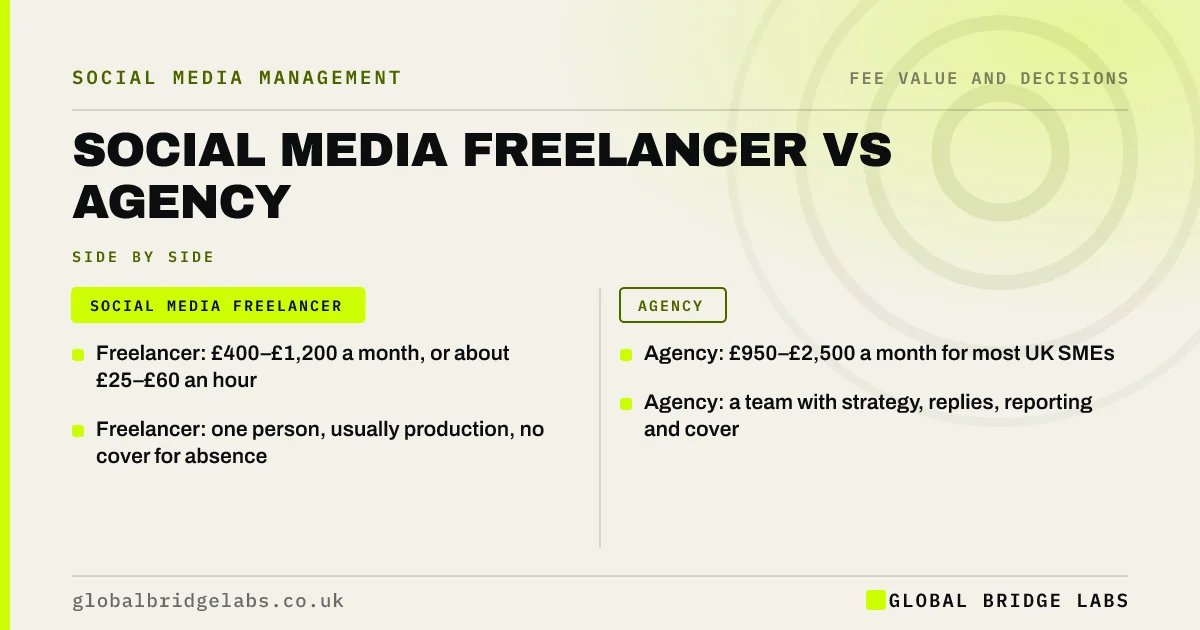
Social media freelancer vs agency cost in the UK: a freelancer typically charges £400–£1,200 a month for part-time production, and an agency £950–£2,500 for strategy, content, replies and reporting. The freelancer is cheaper per month. The agency covers more skills and does not stop when one person is away.
- Freelancer: £400–£1,200 a month, or about £25–£60 an hour.
- Agency: £950–£2,500 a month for most UK SMEs.
- Freelancer: one person, usually production, no cover for absence.
- Agency: a team with strategy, replies, reporting and cover.
Choosing between a freelancer and an agency? Message us on WhatsApp.
Chat on WhatsApp →What does each one actually do?
A freelancer is one self-employed person, usually strong in one or two skills such as writing and design. An agency is a team that covers strategy, production, community management, paid media and reporting, with an account lead who coordinates them.
How do the costs compare?
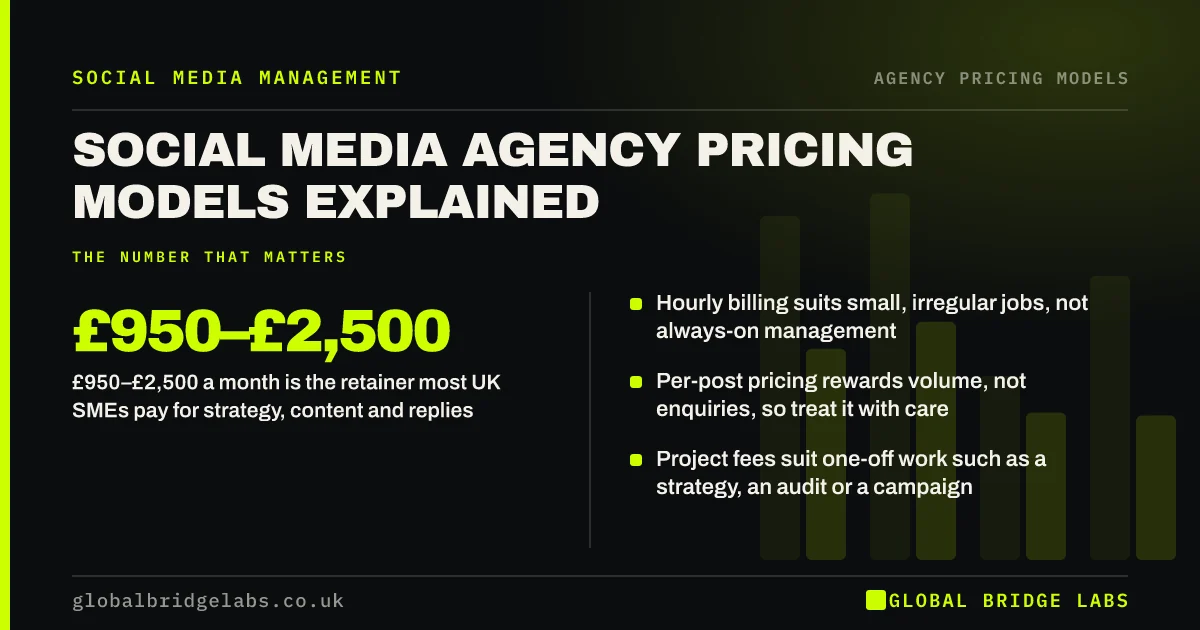
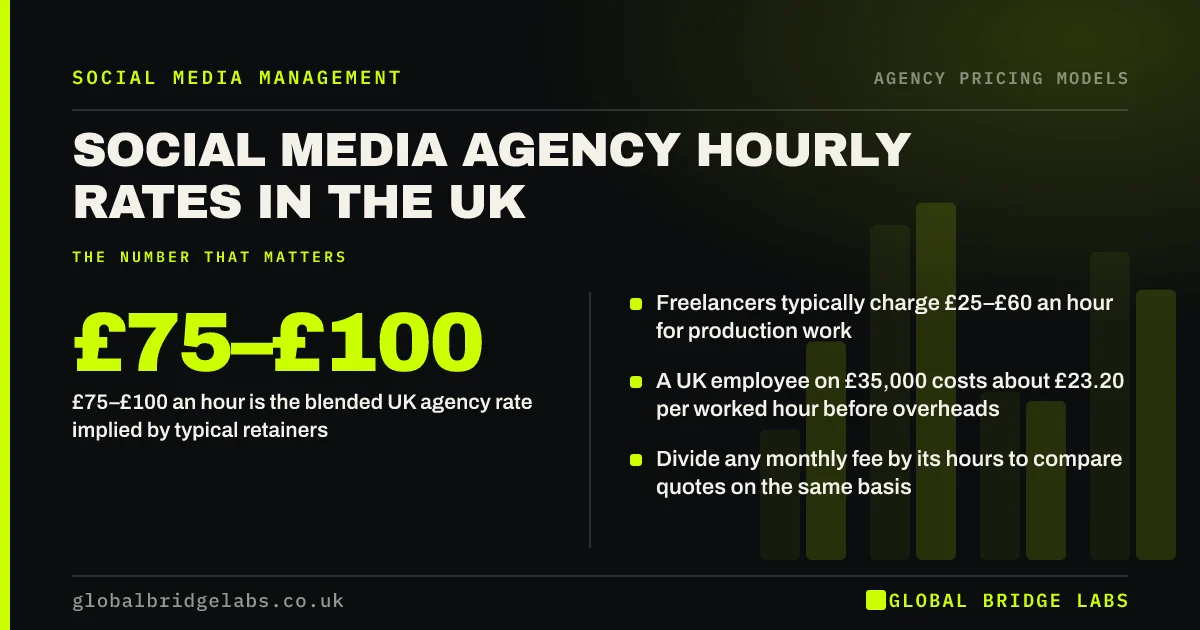
Freelancers charge about £25–£60 an hour, or £400–£1,200 a month part-time. Agency retainers imply £75–£100 an hour and run at £950–£2,500 a month for most SMEs. The freelancer's lower rate reflects lower overheads. The agency's rate includes management, tools and cover.
- Freelancer hourly: about £25–£60.
- Agency blended hourly: about £75–£100.
- Freelancer monthly: £400–£1,200.
- Agency monthly: £950–£2,500.
Want both options costed for your scope? Send us your channels on WhatsApp and we will discuss your requirements.
Chat on WhatsApp →What does the freelancer's price leave out?
It usually leaves out strategy, replies, paid media and cover. You will set direction, answer messages and manage the freelancer yourself. If that takes you three hours a week at £40 an hour, add about £520 a month to the freelancer's fee for a fair comparison.
When is a freelancer the better choice?
A freelancer is better when you know what you want to say, need production help on one or two channels, and can manage one person directly. It suits smaller budgets and businesses where a personal working relationship matters more than breadth.
When is an agency the better choice?
An agency is better when you need several skills, replies covered in working hours, paid campaigns, or continuity through holidays and sickness. It also suits owners who want one accountable contact and a monthly report without managing the work.
What are the risks of each?
The freelancer risk is dependence on one person: illness, holidays or a bigger client can stop your posting. Check the off-payroll working rules if the arrangement looks like employment. The agency risk is paying for overhead and being handed to a junior. Ask who does the work.
Can you combine a freelancer with an agency?
Yes. Some businesses keep a trusted local freelancer for filming and photography and use an agency for planning, editing, replies and reporting. It works when one side clearly leads and the other supplies material. It fails when both write strategy and nobody owns the result.
- Freelancer: on-site filming and photos.
- Agency: strategy, editing, publishing and replies.
- One named lead for the plan.
- One shared folder and one calendar.
What does this look like in practice?
A pattern we see with UK small businesses: a good freelancer works well until volume grows or they take a fortnight off. Global Bridge Labs (GBL) gives one UK account lead with a production team behind them, which keeps the single point of contact and adds cover.
Freelancer or agency checklist
Use these to decide.
- List the skills you need each month.
- Decide who sets strategy.
- Decide who answers messages, and when.
- Ask each what happens when they are away.
- Add your own management time to each price.
- Keep accounts and content in your name either way.
Next step
Tell us what you need done each month and how much you want to be involved. We will say which route fits.
Message us on WhatsApp for a straight comparison, or book a 30-minute consultation.
Chat on WhatsApp →Sources and further reading
- Understanding off-payroll working (IR35) · HM Revenue & Customs
- Employment status · GOV.UK
- Employee earnings in the UK (Annual Survey of Hours and Earnings) · Office for National Statistics
Frequently asked questions
Is a freelancer cheaper than a social media agency?
Per month, usually. Freelancers charge about £400–£1,200 a month for part-time production, against £950–£2,500 for an agency. Add your own time setting strategy, replying and managing the freelancer for a fair comparison. Compare the total, not the invoice.
What does a social media freelancer charge in the UK?
Commonly £25–£60 an hour, or £400–£1,200 a month for part-time production. Experienced specialists and consultants charge more. Most freelancers cover production, not strategy or paid media. Ask for a fixed monthly scope so the bill is predictable, and check whether VAT is charged.
Should a small business use a freelancer or an agency?
Use a freelancer if you know what to say and need production help you can manage directly. Use an agency if you need several skills, replies covered and continuity without managing the work yourself. Budget and the time you can give to managing the work usually decide it.
What happens if my freelancer is ill or on holiday?
Posting usually pauses unless you have a content bank or cover. Ask about it before you start, and keep a month of scheduled evergreen content ready. An agency should cover absence within the fee. Ask the question before you sign with either.
Written by

Global Bridge Labs (GBL) is a UK–Sri Lanka partner for social media, websites and BPO. Everything here comes from client delivery, not theory.