On this page
- 01Key takeaways
- 02Which lines should the template include?
- 03What does a filled-in month look like?
- 04How do you compare planned and actual spend?
- 05When is a template not enough?
- 06What does this look like in practice?
- 07Template checklist
- 08Next step
- 09Sources and further reading
- 10Frequently asked questions
Key takeaways
A social media budget template needs only eight lines: people time, outside help, content production, tools, ad spend, reserve, total and cost per enquiry. Fill in planned figures for 12 months, add actual figures each month and compare. If the template has more lines than that, nobody will keep it up.
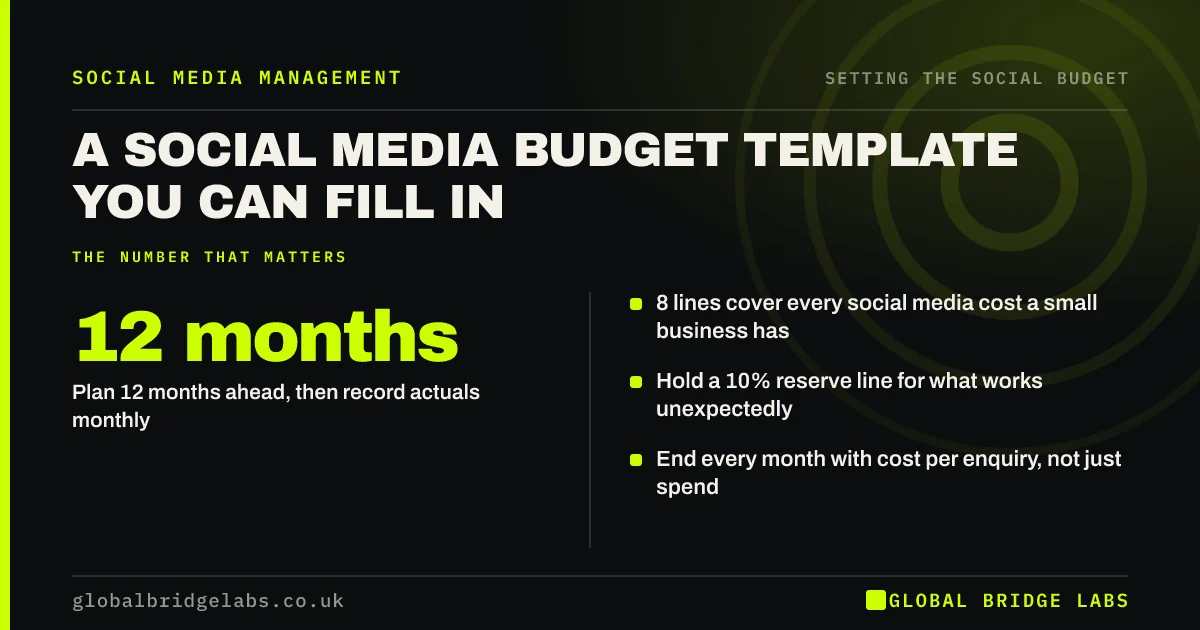
- 8 lines cover every social media cost a small business has.
- Plan 12 months ahead, then record actuals monthly.
- Hold a 10% reserve line for what works unexpectedly.
- End every month with cost per enquiry, not just spend.
Want the template sent to you? Message us on WhatsApp.
Chat on WhatsApp →Which lines should the template include?
Use the same lines every month so the totals compare. People time is your hours and staff hours at a cost per hour. Outside help is freelancer or agency fees. Production is photography, video and design. Tools are subscriptions. Ad spend is paid reach. Reserve is held back. Then add enquiries and cost per enquiry.
- People time (hours × hourly cost).
- Outside help (freelancer or agency).
- Production (shoots, video, design).
- Tools (scheduling, design, analytics).
- Ad spend (by platform).
- Reserve (around 10%).
- Total.
- Enquiries and cost per enquiry.
What does a filled-in month look like?
Illustrative month: 16 owner hours at £40 is £640, a freelancer at £500, tools at £50, ad spend at £400 and a £160 reserve. The total is £1,750. With 25 enquiries, cost per enquiry is £70. The people line is the biggest, which is normal and usually ignored.
Send us your filled-in month on WhatsApp and we will discuss your requirements.
Chat on WhatsApp →How do you compare planned and actual spend?
Put planned and actual side by side for each line and note the difference. Small gaps are normal. A line that runs over two months in a row needs a decision: change the plan or change the behaviour. Ad spend under plan often means campaigns stopped, which is worth knowing.
When is a template not enough?
A template records money but does not decide it. If you do not yet know your cost per enquiry or close rate, the template will fill with guesses. Set the budget with a method first, such as working back from your sales target, then use the template to hold yourself to it.
What does this look like in practice?
A pattern we see: a business tracks ad spend to the penny but has no line for the hours spent creating posts. Once those hours are costed, the real social media budget is often two or three times what the owner thought, and decisions about outside help change.
Template checklist
- Create the eight lines in a spreadsheet.
- Fill in planned figures for 12 months.
- Set a realistic hourly cost for your own time.
- Record actual spend and enquiries on the first working day of each month.
- Review the gaps every quarter.
Next step
Build the eight-line sheet today and fill in last month's actual figures. The numbers you cannot find are the ones to start tracking.
Message us on WhatsApp for the template, or book a 30-minute consultation.
Chat on WhatsApp →Sources and further reading
Frequently asked questions
What should a social media budget include?
It should include people time, outside help, content production, tools, ad spend and a reserve, plus a line for enquiries so you can see cost per enquiry. Many small businesses only track ad spend and miss the hours, which are often the largest cost.
Should I use a spreadsheet or accounting software?
A spreadsheet is enough for planning and monthly tracking. Your accounting software records what was paid, which helps you check actuals, but it rarely shows hours or enquiries. Keep the budget in a simple sheet and reconcile it with your accounts quarterly.
How much should the reserve be?
Around 10% of the total is a sensible starting point. It lets you put more behind a post or campaign that performs unexpectedly well in the month it happens. If the reserve is unused for a quarter, fold it back into planned lines.
Written by

Global Bridge Labs (GBL) is a UK–Sri Lanka partner for social media, websites and BPO. Everything here comes from client delivery, not theory.