On this page
- 01Key takeaways
- 02Do public sector buyers use social media to find suppliers?
- 03Where does public sector access actually come from?
- 04What should your profile show for this audience?
- 05Can social media help at all?
- 06What should you be careful about?
- 07What does this look like in practice?
- 08What should you publish to influence a specification?
- 09Next step
- 10Sources and further reading
- 11Frequently asked questions
Key takeaways
Social media does not win public sector contracts, but it does decide whether you are credible when someone checks you during a procurement. Use LinkedIn for visibility and framework listings for access, and never expect an enquiry from a post.
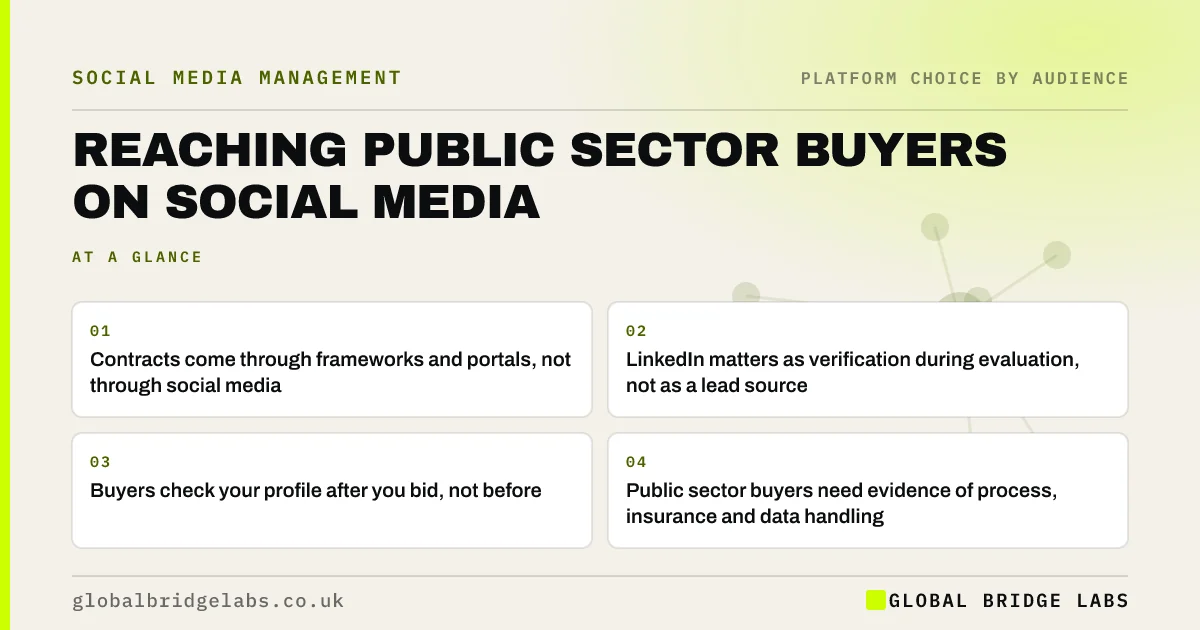
- Contracts come through frameworks and portals, not through social media.
- LinkedIn matters as verification during evaluation, not as a lead source.
- Buyers check your profile after you bid, not before. Be current and specific.
- Public sector buyers need evidence of process, insurance and data handling.
- Social proof from other public bodies carries more weight than private references.
Selling into UK public sector? We will position your presence on WhatsApp.
Chat on WhatsApp →Do public sector buyers use social media to find suppliers?
Rarely to find, frequently to check. UK public procurement runs through frameworks, dynamic purchasing systems and published tenders, and a buyer cannot simply select a supplier they saw on a feed.
What does happen is verification. During evaluation, someone will look you up, and what they find affects confidence. A profile that is current, specific about relevant experience and visibly serious does real work at that moment even though it produced no enquiry.
Where does public sector access actually come from?
From the procurement infrastructure, which is where your effort belongs if this is your market. Five routes that matter more than any social channel.
- Framework agreements and dynamic purchasing systems in your category.
- Published tender portals, monitored consistently rather than occasionally.
- Subcontracting to primes already holding the contract.
- Direct relationships with category managers, built over years.
- Below-threshold procurement, where smaller purchases are made more directly.
What should your profile show for this audience?
Evidence that you can survive due diligence. Public sector buyers are assessing risk as much as capability, and the things that reassure them are unglamorous.
Name your relevant public sector experience specifically. Show that you understand data protection obligations, that you have appropriate insurance and certifications, and that you have a documented process. The Cabinet Office's sourcing guidance sets expectations that apply throughout the supply chain, and demonstrating familiarity with them is itself a signal.
We will make your presence survive public sector due diligence. Ask on WhatsApp.
Chat on WhatsApp →Can social media help at all?
In three specific ways, none of which is lead generation. It builds recognition with category managers over years, so your name is familiar when a tender appears. It demonstrates subject expertise in a way a bid document cannot. And it reaches the people inside organisations who influence specifications before procurement begins.
That third one is the most valuable and the slowest. The specification is often written months before the tender publishes, and being known to the people writing it is worth more than anything you can do once it is published.
What should you be careful about?
Anything that could look like attempting to influence a live procurement, which can disqualify you. Once a tender is published, contact rules apply and public engagement with the buying organisation about it is a risk rather than an opportunity.
Also be careful with client references. Public bodies have transparency obligations and published contract information, but that does not mean you can claim a relationship in marketing without permission. Check before you name anyone.
What does this look like in practice?
A UK training provider spent two years posting for public sector audiences and attributed no contracts to it, which is unsurprising given how procurement works. It nearly stopped.
What it could attribute was that three separate evaluation panels mentioned having read its content, and that two specification conversations happened because a category manager already recognised the name. The channel was working exactly as it should have been, and had been measured against a goal it was never capable of meeting.
What should you publish to influence a specification?
Material that helps a buyer write a better requirement, published long before any tender exists. Comparison criteria, common specification mistakes, and honest explanations of what drives cost in your category.
This is genuinely useful to a category manager and it is how a supplier becomes the reference point for how a requirement gets written. It is also entirely legitimate, because it happens before procurement begins and is available to everyone.
What it is not is quick. Specifications are written months ahead of publication, so this is a two-year investment that shows up as tenders you are unusually well placed to answer rather than as enquiries you can attribute.
Keep it genuinely neutral. Material that reads as a specification written around your own product is recognised immediately by anyone who buys for a living, and it damages the credibility you were building.
Next step
Put your effort into framework access and tender monitoring first, then keep a current, specific and serious LinkedIn presence for the moment someone checks you during evaluation. Judge it on that job, not on enquiries.
Message us on WhatsApp and we will review how your business appears to a public sector buyer.
Chat on WhatsApp →Sources and further reading
- The Sourcing and Consultancy Playbooks · Cabinet Office
- Contracts and liabilities between controllers and processors · Information Commissioner's Office
Frequently asked questions
Can you win public sector contracts through social media?
No. UK public procurement runs through frameworks, dynamic purchasing systems and published tenders, so a buyer cannot simply select a supplier they happened to see on a feed. Social media affects your credibility during evaluation rather than your access to the opportunity.
Do public sector buyers check suppliers on LinkedIn?
Frequently, during evaluation rather than before it. A current, specific profile showing relevant public sector experience, appropriate insurance and a documented process does real work at that moment, even though it will never show up as an enquiry.
How do small businesses get into public sector supply chains?
Through framework agreements and dynamic purchasing systems in your category, consistently monitored tender portals, subcontracting to primes that already hold the contract, and below-threshold procurement, where smaller purchases are made far more directly. Social media supports all four but replaces none of them.
What should you avoid when marketing to public sector buyers?
Anything resembling an attempt to influence a live procurement, which can disqualify you outright once contact rules apply. Also avoid naming public sector clients in marketing without explicit permission, even where the contract information itself is published.
Written by
Global Bridge Labs (GBL) is a UK–Sri Lanka partner for social media, websites and BPO. Everything here comes from client delivery, not theory.