On this page
- 01Key takeaways
- 02What are the main differences between organic and paid social?
- 03How does reach differ?
- 04How does cost differ?
- 05How do trust and longevity differ?
- 06Which difference matters most for your choice?
- 07What does this look like in practice?
- 08Differences checklist
- 09Next step
- 10Sources and further reading
- 11Frequently asked questions
Key takeaways
The difference between organic and paid social is who pays for distribution. Organic posts reach people the platform chooses for free; paid ads reach the audience you choose, for a price. That one difference drives eight others: cost, reach, targeting, speed, trust, longevity, control and measurement. Knowing them helps you pick the right tool for each job.
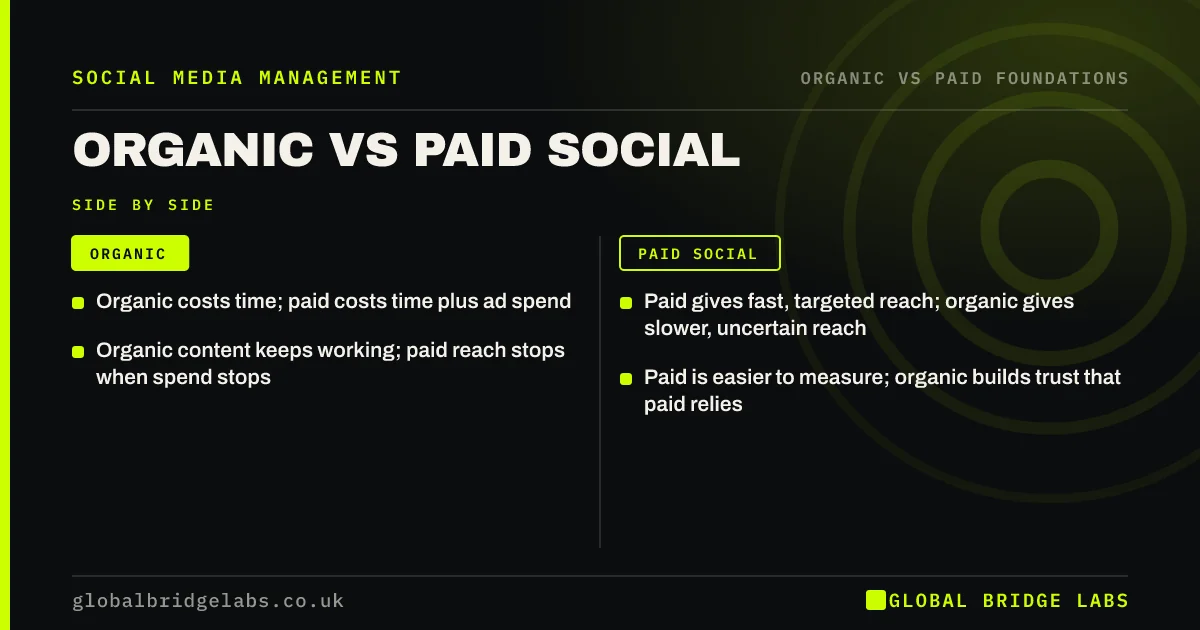
- Organic costs time; paid costs time plus ad spend.
- Paid gives fast, targeted reach; organic gives slower, uncertain reach.
- Organic content keeps working; paid reach stops when spend stops.
- Paid is easier to measure; organic builds trust that paid relies on.
Want these differences applied to your business? Message us on WhatsApp.
Chat on WhatsApp →What are the main differences between organic and paid social?
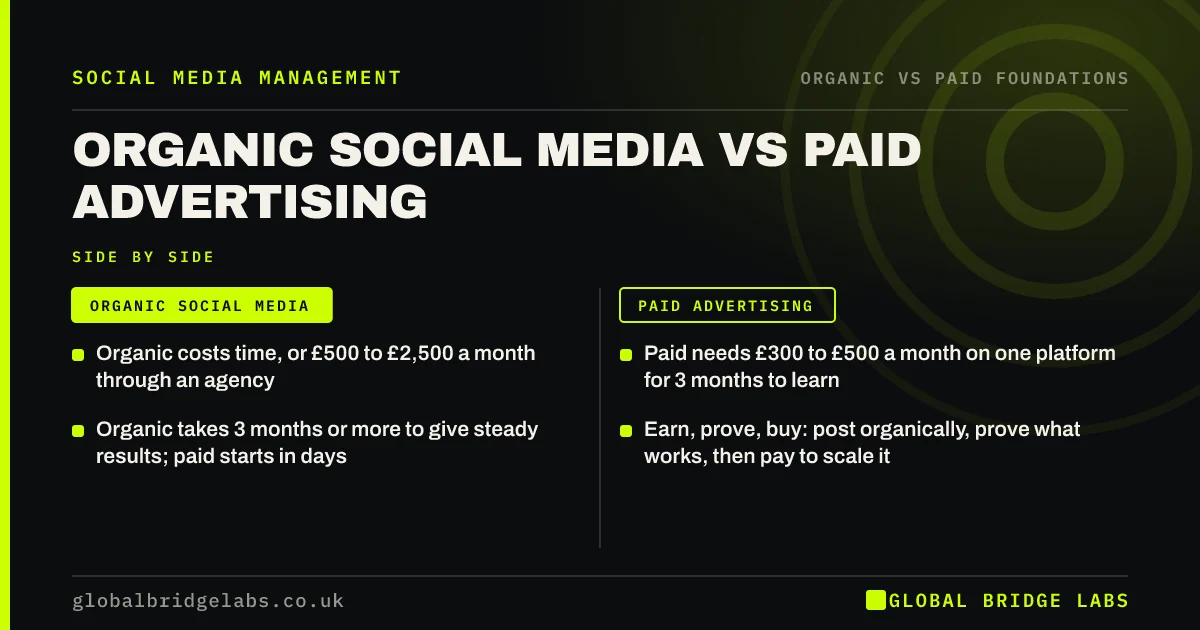
Organic social is unpaid, slower and less predictable, but builds trust and compounds over time. Paid social is fast, targeted and measurable, but costs money for every impression and stops when the budget does. Most businesses need both, in different proportions depending on their goal and stage.
- Cost: time only vs time plus ad spend.
- Reach: platform-decided vs bought.
- Targeting: broad vs precise.
- Speed: months vs days.
- Trust: higher for organic proof.
- Longevity: posts keep working; ads stop.
- Control: low vs high.
- Measurement: harder vs built in.
How does reach differ?
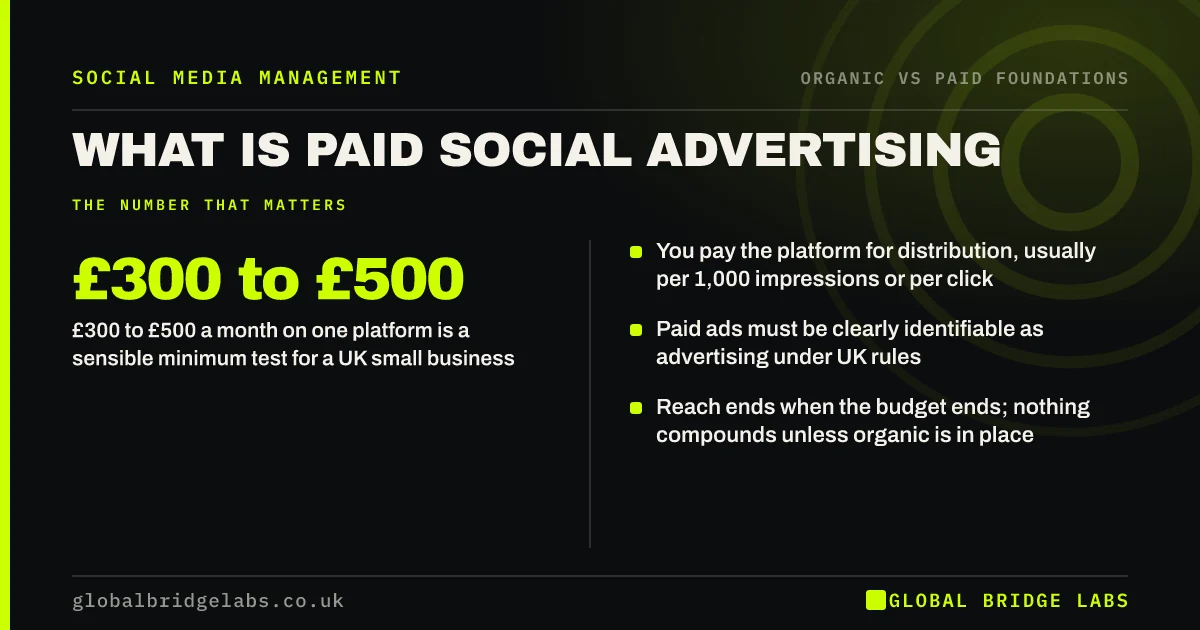
Organic reach depends on how the platform ranks your post against everything else, so it varies widely from post to post. Paid reach is bought: you set a budget and an audience, and the platform delivers impressions. The trade is certainty for cost.
How does cost differ?
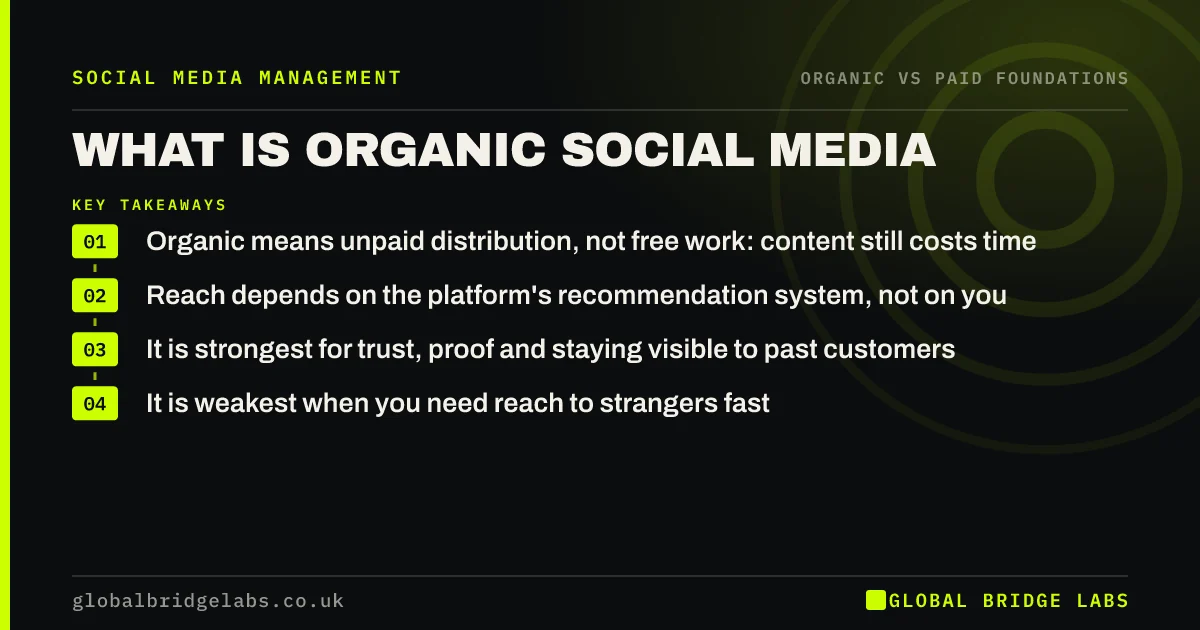
Organic social costs staff or agency time to plan, make and post content and reply to people. Paid social costs the same time plus the media budget paid to the platform, and often a management fee. Organic is not free, but its costs do not rise with reach in the way paid costs do.
How do trust and longevity differ?
People treat a post from a business they follow differently from an ad, and UK rules require ads to be identifiable. Organic posts also stay on your profile, building a record buyers can check. Paid ads disappear from feeds when the campaign ends.
Which difference matters most for your choice?
Speed and certainty usually decide it. If you need a known number of people to see something by a date, paid is the tool. If you are building a reputation that lasts, organic is. The IPA's work on long and short-term effects supports doing both: brand building over time, activation when you need a response.
What does this look like in practice?
A pattern we see: a B2B training company treated organic and paid as the same thing and judged both on cost per lead. Organic looked useless and paid looked expensive. Separating them, organic for credibility and paid for course launches, showed that people who saw the organic posts converted on ads at a far better rate.
Differences checklist
- Write down your goal before choosing organic or paid.
- Check whether timing matters for this goal.
- Check whether you need a precise audience.
- Budget time for organic and money for paid.
- Measure each on its own terms.
- Keep organic running so ads land on a credible profile.
Next step
Take your next marketing goal and score it against the eight differences. Where speed, targeting and certainty matter most, use paid; where trust and longevity matter most, use organic.
Message us on WhatsApp for the organic vs paid comparison sheet, or book a 30-minute consultation.
Chat on WhatsApp →Sources and further reading
Frequently asked questions
Is paid social more effective than organic?
Paid social is more effective for fast, targeted reach and measurable short-term results. Organic is more effective for trust, repeat customers and results that last. Effectiveness depends on the goal. Many small businesses get the best return by using organic to find what works and paid to scale it.
Can the same post be organic and paid?
Yes. You can publish a post organically and then boost it or use it as an ad, at which point the paid version follows advertising rules. Using posts that already performed organically as ads is one of the most reliable ways to lower the risk of paid social for a small business.
Why do organic and paid need different KPIs?
They do different jobs. Organic is judged on engagement quality, profile visits, messages and enquiries over time. Paid is judged on cost per result against what a customer is worth. Measuring organic on cost per lead, or paid on likes, gives misleading answers and leads to poor budget decisions.
Written by

Global Bridge Labs (GBL) is a UK–Sri Lanka partner for social media, websites and BPO. Everything here comes from client delivery, not theory.