On this page
- 01Key takeaways
- 02Can paid social build a community?
- 03When does paid help a community?
- 04What organic work builds a community?
- 05What should you measure?
- 06What about data and privacy?
- 07What does this look like in practice?
- 08Community checklist
- 09Next step
- 10Sources and further reading
- 11Frequently asked questions
Key takeaways
Community building is mainly organic work: conversations, replies, member content and consistent presence. Paid social can help by bringing the right first members or inviting past customers, but it cannot create the engagement that makes a community valuable. Spend on reaching people likely to take part, then let organic do the rest.
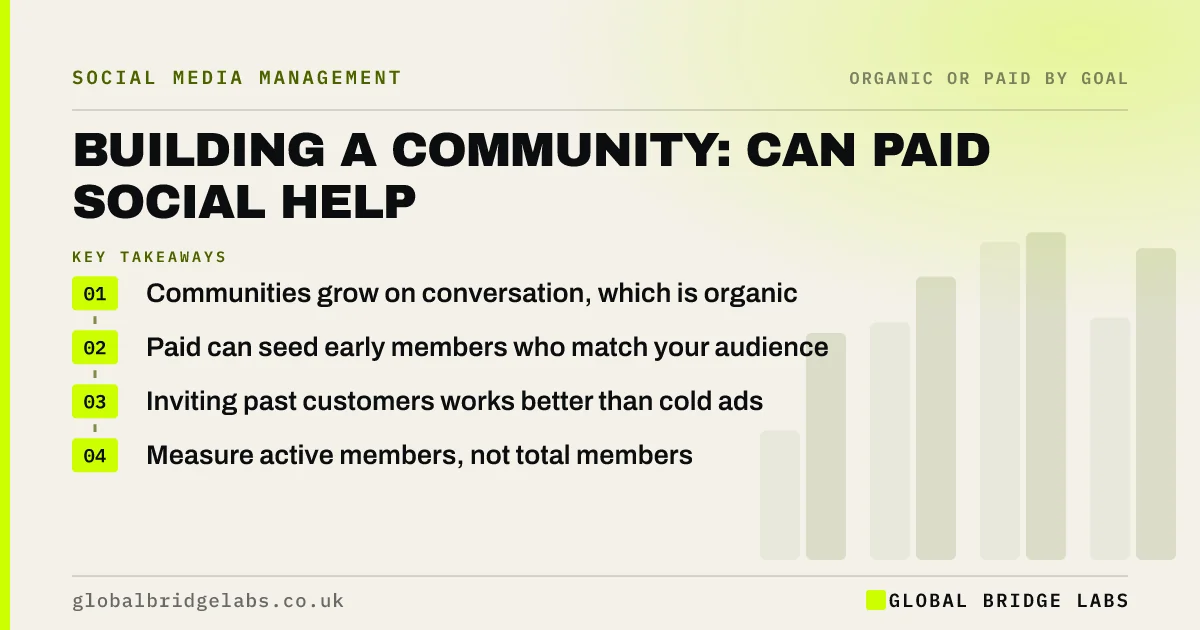
- Communities grow on conversation, which is organic.
- Paid can seed early members who match your audience.
- Inviting past customers works better than cold ads.
- Measure active members, not total members.
Thinking of building a community? Talk it through with us on WhatsApp.
Chat on WhatsApp →Can paid social build a community?
Paid social can bring people to a community, but it cannot make them participate. A community is valuable because members talk, help each other and come back. That depends on the host showing up, asking questions and replying. Ads can fill the room; organic makes people stay.
When does paid help a community?
Paid helps at the start, when a new group needs a core of relevant members, and at launches or events where you want a burst of new joiners. Target people who already engage with you, such as page engagers through Meta's engagement custom audiences, rather than cold audiences.
- Seeding the first members.
- Promoting a launch or event inside the group.
- Inviting engagers and past customers.
What organic work builds a community?
Organic community work is daily: welcoming new members, posting questions, sharing member stories, answering quickly and keeping conversations on topic. Regular formats, such as a weekly question or live session, give people a reason to return.
What should you measure?
Measure active members, comments per post, member-started conversations and enquiries or sales from members. Total member count can be inflated by ads and tells you little. A small, active community is worth more than a large, silent one.
What about data and privacy?
If you collect member details or move members to email or WhatsApp, follow UK GDPR. The ICO's guidance on valid consent applies when you ask members to join a mailing list. Keep group rules clear and moderate consistently.
What does this look like in practice?
A pattern we see: a craft supplies shop paid to grow a Facebook group quickly and ended up with thousands of silent members. Restarting with an invitation to past customers, a weekly 'show your make' thread and replies from the owner built a smaller group that drove repeat orders every week.
Community checklist
- Define who the community is for.
- Invite past customers and engagers first.
- Use paid only to seed relevant members.
- Run one regular weekly format.
- Reply to members daily.
- Measure active members and member-led posts.
Next step
Before spending on growth, run one weekly conversation format with your existing followers for a month. If people take part, use a small ad budget to invite more people like them.
Message us on WhatsApp for a community starter plan, or book a 30-minute consultation.
Chat on WhatsApp →Sources and further reading
- Meta Business Help Centre · Meta
- How to create a Facebook Page engagement custom audience · Meta
- What is valid consent? · Information Commissioner's Office
Frequently asked questions
How do I grow a Facebook group for my business?
Start by inviting customers and people who already engage with your page, give the group a clear purpose, post a regular weekly prompt and reply to every member. Paid ads can add relevant members later. Growth follows activity: people join groups that look alive.
Is a Facebook group better than a page?
They do different jobs. A page is your public shop window and is needed for ads. A group is a space for conversation among customers or peers. Many small businesses use both: the page for reach and ads, the group for loyalty and repeat business.
How long does it take to build an online community?
Most small business communities take several months of consistent hosting to become self-sustaining, meaning members start conversations without being prompted. Expect to lead almost every conversation at first and to reply to everything. Paid ads can speed up membership, but they cannot speed up genuine participation.
Written by

Global Bridge Labs (GBL) is a UK–Sri Lanka partner for social media, websites and BPO. Everything here comes from client delivery, not theory.