On this page
- 01Key takeaways
- 02What are vanity metrics?
- 03Which metrics are vanity and which matter?
- 04Why do vanity metrics mislead?
- 05What should a five-number report include?
- 06Are vanity metrics ever useful?
- 07What does this look like in practice?
- 08How do vanity and business metrics compare?
- 09Why do agencies report vanity metrics?
- 10Next step
- 11Sources and further reading
- 12Frequently asked questions
Key takeaways
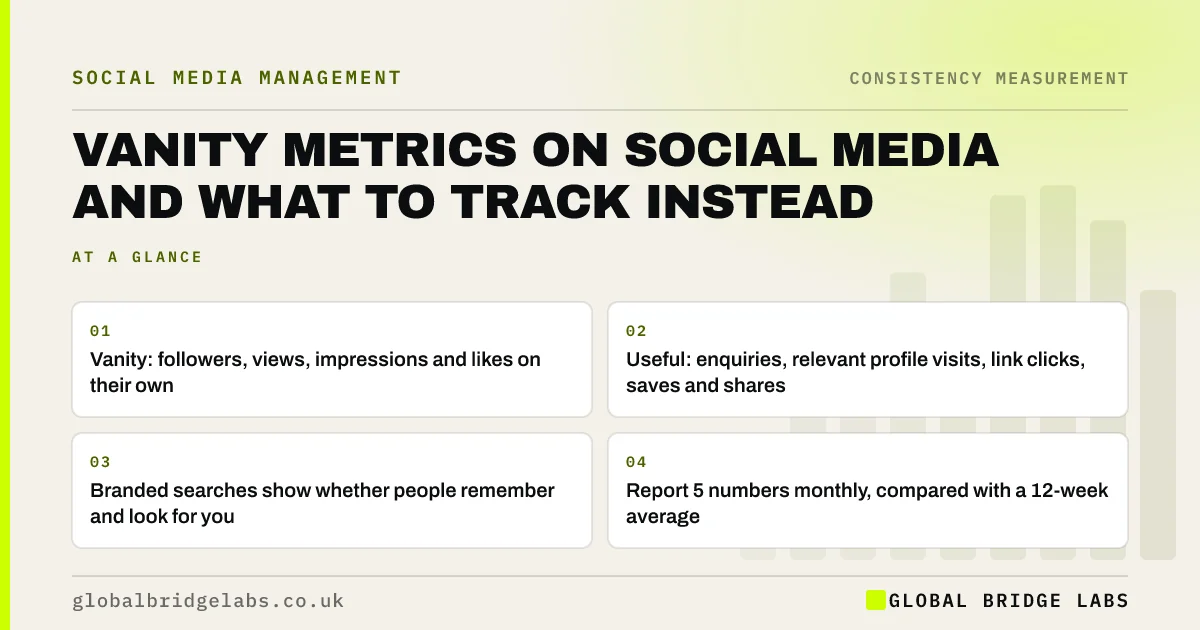
Vanity metrics are numbers that look impressive but do not show whether social media is helping the business, such as total followers, views and likes. Track instead the numbers linked to buying: enquiries, profile visits and link clicks from your market, saves and shares, and branded searches.
- Vanity: followers, views, impressions and likes on their own.
- Useful: enquiries, relevant profile visits, link clicks, saves and shares.
- Branded searches show whether people remember and look for you.
- Report 5 numbers monthly, compared with a 12-week average.
- A viral post inflates vanity metrics without moving business ones.
Want a five-number report built for your business? Message us on WhatsApp.
Chat on WhatsApp →What are vanity metrics?
Vanity metrics are social media measurements that are easy to grow and pleasant to report but have a weak link to business outcomes. They are not useless; they are simply insufficient on their own. Reach and views show attention, but not whether it reached buyers or led to action.
Which metrics are vanity and which matter?
- Followers: vanity on its own. Useful if you track the share who are relevant.
- Views and impressions: vanity on their own. Useful when split by region or audience.
- Likes: weak signal. Easy to give, little intent.
- Saves and shares: stronger. People keep or pass on useful content.
- Profile visits and link clicks: strong. Shows interest in the business.
- Enquiries and sales: the outcome. Always track the source.
- Branded searches: strong. People remember and look for you.
Why do vanity metrics mislead?
Because they reward reach, not relevance. A viral post can multiply views and followers while producing no enquiries, and the report looks like success. Meanwhile, a steady account reaching the right few hundred people each week looks unimpressive on paper and produces the actual business.
What should a five-number report include?
- Enquiries or sales attributed to social media this month.
- Profile visits or link clicks from your target area or audience.
- Saves plus shares across all posts.
- Branded searches from Google Search Console.
- Your GBL Consistency Scorecard total.
Want us to set up the five-number report for you? Message us on WhatsApp.
Chat on WhatsApp →Are vanity metrics ever useful?
Yes, as diagnostics. A fall in reach can signal a posting gap or content problem, and follower growth among the right audience is a positive sign. The mistake is treating them as goals. Use them to explain changes in the business metrics, not to replace them.
What does this look like in practice?
A UK law firm's marketing report led with impressions and follower growth, both rising. Partners were unconvinced. We replaced it with the five-number report. It showed that enquiries from LinkedIn had been flat, but that saves and branded searches were rising. The firm adjusted content towards the posts driving saves, and enquiries followed within the quarter.
How do vanity and business metrics compare?
- Followers vs relevant followers: count only people who could buy, refer or influence.
- Views vs profile visits from your area: attention against interest.
- Likes vs saves and shares: quick approval against lasting value.
- Impressions vs branded searches: exposure against being remembered.
- Engagement totals vs enquiries: activity against outcomes.
Why do agencies report vanity metrics?
Because they are easy to grow, easy to show and rarely go down after a viral post. Business metrics are harder to move and harder to attribute, so weaker partners avoid them. Ask any partner to report enquiries, relevant profile visits, saves and shares, and branded searches alongside reach.
Next step
Replace your current social media report with the five numbers above, compared with the previous 12-week average.
Message us on WhatsApp and we will build your five-number report template.
Chat on WhatsApp →Sources and further reading
- URL builders: collect campaign data with custom URLs · Google Analytics Help
- About key events · Google Analytics Help
- Performance report (Search results) · Search Console Help
Frequently asked questions
What are examples of vanity metrics on social media?
Follower count, views, impressions and likes are the most common. They show attention but not whether it reached buyers or led to action. They become useful only when broken down by audience or tied to business outcomes.
What social media metrics matter most for small businesses?
Enquiries or sales from social media, profile visits and link clicks from your target market, saves and shares, and branded searches. These are more closely linked to buying behaviour than likes or views.
Are likes a vanity metric?
Largely yes. Likes are easy to give and show little intent. Saves, shares, meaningful comments and profile visits are stronger signals of genuine interest.
How do I track enquiries from social media?
Use UTM-tagged links, ask every enquirer how they found you, track website sessions from social platforms in GA4, and log direct messages that become enquiries. Together these give a reasonable picture even without perfect attribution.
Should I stop tracking followers and views?
No, keep them as context and diagnostics. A sudden fall in reach can signal a posting gap or content problem. Just do not treat them as goals, and always report them alongside enquiries, saves, shares and branded searches.
Written by

Global Bridge Labs (GBL) is a UK–Sri Lanka partner for social media, websites and BPO. Everything here comes from client delivery, not theory.