On this page
- 01Key takeaways
- 02What is lead nurturing?
- 03Why do social media leads need nurturing?
- 04What should a nurture sequence contain?
- 05Which channel should you nurture through?
- 06What are the consent rules?
- 07How do you know when a lead is ready?
- 08When is nurturing not worth it?
- 09What does this look like in practice?
- 10Nurture checklist
- 11Next step
- 12Sources and further reading
- 13Frequently asked questions
Key takeaways
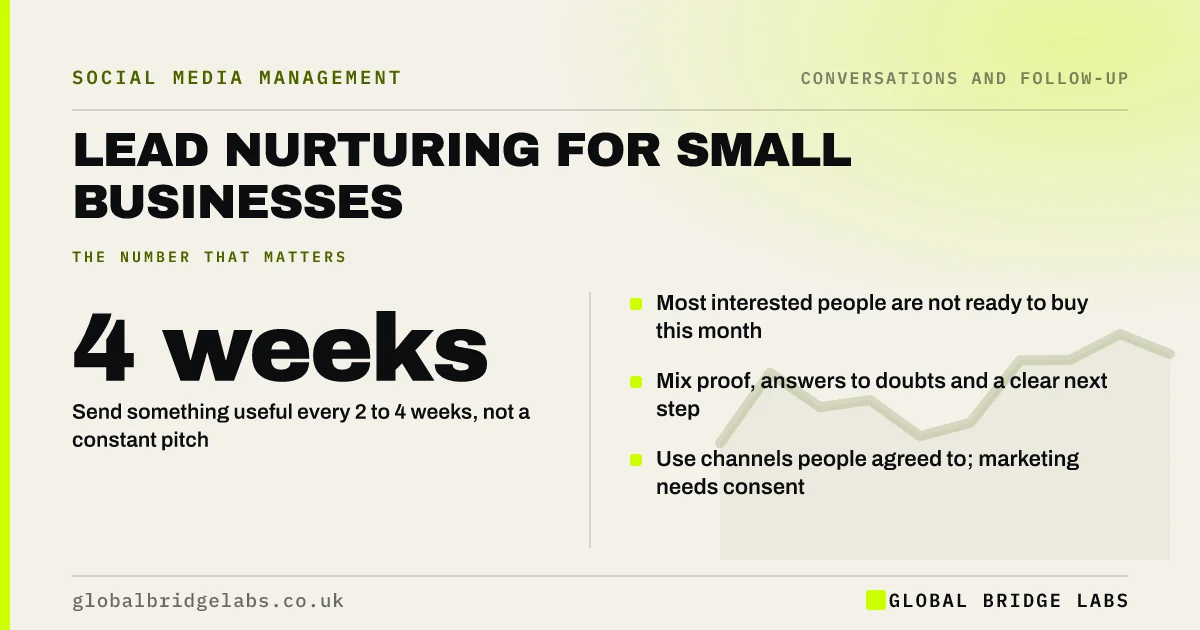
Lead nurturing keeps a business useful and visible to people who are interested but not ready to buy, so that you are the obvious choice when they are. For small businesses that means a short sequence after first contact, then something useful every two to four weeks by email, WhatsApp or social media, with a clear way to act.
- Most interested people are not ready to buy this month.
- Send something useful every 2 to 4 weeks, not a constant pitch.
- Mix proof, answers to doubts and a clear next step.
- Use channels people agreed to; marketing needs consent.
Want a simple nurture plan for your leads? Message us on WhatsApp.
Chat on WhatsApp →What is lead nurturing?
Lead nurturing is the process of building a relationship with potential customers who have shown interest but are not yet ready to buy, by sending relevant, useful information over time until they decide. It turns "not now" into "yes, when I'm ready" rather than "I forgot about you".
Why do social media leads need nurturing?
Social media leads need nurturing because many enquire early, while browsing or planning. A homeowner asking about extensions in January may build in the summer. A B2B buyer reading a guide may not have budget until next year. Without contact in between, they forget who answered.
What should a nurture sequence contain?
A short sequence after first contact should introduce who you are, show a result for someone like them and answer their most likely doubt, then make the offer. After that, a regular message every two to four weeks keeps you visible.
- Message 1: what they asked for, and who you are.
- Message 2: a case or result for someone like them.
- Message 3: answer the biggest doubt: price, timing or disruption.
- Message 4: the offer and how to take it.
- Then: one useful message every 2 to 4 weeks.
- Turn social media followers into email subscribers
- Answer buyer objections in your social media content
Want your nurture messages written? Message us on WhatsApp and we will discuss your requirements.
Chat on WhatsApp →Which channel should you nurture through?
Nurture through the channel the lead agreed to and actually reads. Email suits longer content and B2B. WhatsApp suits short, timely messages for consumers. Social media content and retargeting reach people without direct contact. Most small businesses use one direct channel plus their regular posts.
What are the consent rules?
Under PECR, marketing emails, texts and WhatsApp messages to individuals generally need consent, unless the soft opt-in applies to people who negotiated to buy a similar product. Ask at first contact whether they would like updates, record the answer and include an easy opt-out in every message.
How do you know when a lead is ready?
A lead is ready when they reply, click the offer, ask about dates or price, or revisit your pricing page. Watch for these signals and contact the person personally when you see them. Nurturing keeps the door open; a person still has to walk them through it.
When is nurturing not worth it?
Nurturing is not worth it for low-value, impulse or emergency purchases, where buyers decide in minutes. It is also wasted if messages are generic: a nurture email that could come from any business is ignored. Keep it specific to your buyers' questions.
What does this look like in practice?
A pattern we see with home improvement firms: enquiries in winter for spring work, followed by silence until the buyer chooses whoever is in front of them in March. A short sequence and a monthly useful message keeps the business in that position.
Nurture checklist
- Ask for consent at first contact.
- Write a four-message sequence.
- Plan one useful message every two to four weeks.
- Use one direct channel plus regular posts.
- Watch for readiness signals.
- Contact ready leads personally.
Next step
Write message 2 of your sequence today: a short result for a customer like your typical enquirer.
Message us on WhatsApp and we will help build your nurture plan, or book a 30-minute consultation.
Chat on WhatsApp →Sources and further reading
- Electronic and telephone marketing under PECR · Information Commissioner's Office
- What is valid consent? · Information Commissioner's Office
- The 95-5 rule: most B2B buyers are out of market · LinkedIn B2B Institute
Frequently asked questions
What is lead nurturing for a small business?
It is keeping in useful contact with people who are interested but not ready to buy, through a short sequence and regular messages, so they choose you when they are ready. For small businesses it usually means email or WhatsApp plus regular social media posts.
How often should I contact leads who are not ready?
Every two to four weeks suits most small businesses after an initial sequence. More often feels like pressure; less often and they forget you. Make every message useful, and only contact people who agreed to hear from you.
What should I send to nurture leads?
Results for customers like them, answers to common doubts such as price, timing or disruption, useful seasonal advice, and a clear offer every few messages. Avoid generic newsletters. Each message should help someone in your buyer's position decide.
Written by

Global Bridge Labs (GBL) is a UK–Sri Lanka partner for social media, websites and BPO. Everything here comes from client delivery, not theory.