On this page
- 01Key takeaways
- 02What is the difference between monthly and weekly planning?
- 03When is monthly planning better?
- 04When is weekly planning better?
- 05How do you combine monthly and weekly planning?
- 06What about planning a quarter ahead?
- 07What does this look like in practice?
- 08Monthly or weekly checklist
- 09Next step
- 10Sources and further reading
- 11Frequently asked questions
Key takeaways
In the monthly vs weekly social media planning choice, most small UK businesses save time by planning monthly and adjusting weekly. A monthly plan lets you batch the making and spot dates early. A weekly plan suits content that depends on this week, such as specials, stock or news. Plan the slots monthly and fill the time-sensitive ones weekly.
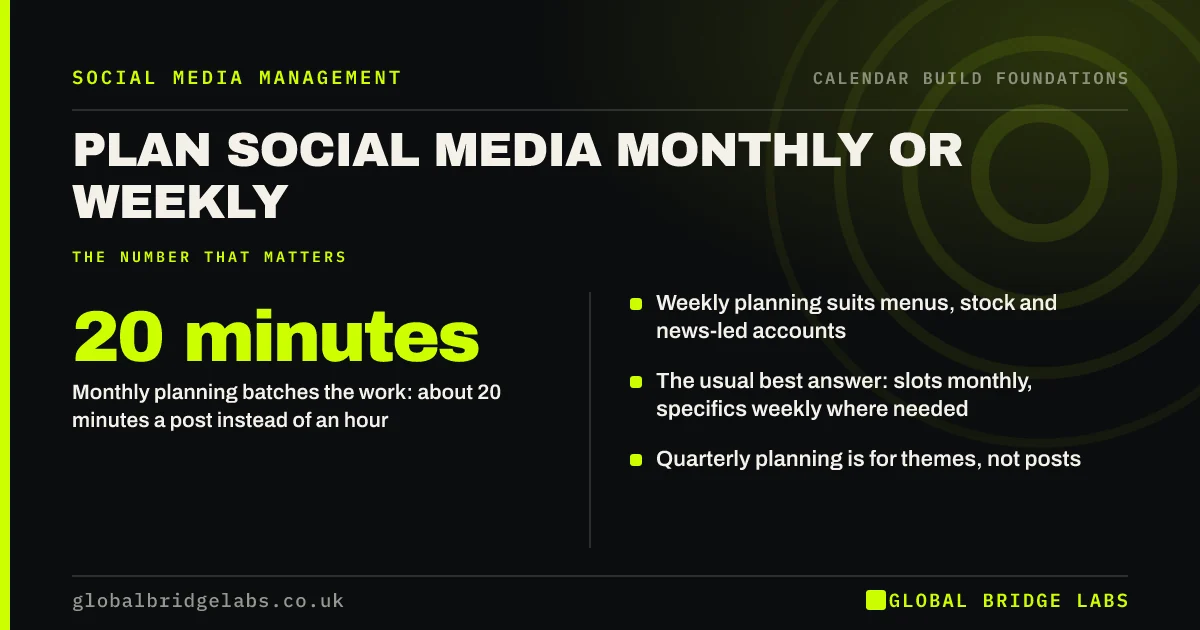
- Monthly planning batches the work: about 20 minutes a post instead of an hour.
- Weekly planning suits menus, stock and news-led accounts.
- The usual best answer: slots monthly, specifics weekly where needed.
- Quarterly planning is for themes, not posts.
Not sure which suits your business? Message us on WhatsApp.
Chat on WhatsApp →What is the difference between monthly and weekly planning?
Monthly planning decides every post for the coming month in one session and makes them in a batch. Weekly planning decides the next seven days, usually on a Friday or Monday, and makes posts as the week goes. Monthly saves time and reduces missed weeks; weekly keeps content closer to what is happening now.
When is monthly planning better?
Monthly planning is better when your content is mostly evergreen, such as proof, how-to and people posts, and when the same person who plans also does client work. Batching posts once a month usually takes about 20 minutes a post, against closer to an hour when each post is made separately. It also gives time to prepare for dates that need four to eight weeks of lead time.
When is weekly planning better?
Weekly planning is better when what you post depends on this week: a restaurant's specials, an e-commerce shop's stock levels, a property agent's new listings, or a firm commenting on news in its sector. Planning these a month ahead means rewriting them anyway. Even then, the weekly slots themselves can be set once a month.
How do you combine monthly and weekly planning?
Combine them by fixing the month's slots and evergreen posts in the monthly session, and marking the time-sensitive slots 'fill weekly'. A 15-minute weekly slot, usually Friday, fills those few. Most businesses end up with about three-quarters of posts planned monthly and a quarter filled week by week.
What about planning a quarter ahead?
Plan themes, launches and big dates a quarter ahead, but not individual posts. A quarter of specific posts is usually rewritten before it publishes, which teaches the team that planning is wasted. The quarterly view exists so the monthly session knows what is coming.
What does this look like in practice?
A pattern in hospitality: a venue plans a month of posts in advance, then rewrites half of them because the menu changed. Moving the menu posts to a weekly fill and keeping the people, venue and event posts in the monthly plan usually removes the rewriting without losing the batching.
Monthly or weekly checklist
- List which posts depend on this week and which do not.
- Plan the evergreen posts monthly and batch them.
- Mark time-sensitive slots 'fill weekly'.
- Book 15 minutes on Fridays to fill them.
- Keep quarterly planning for themes and launches.
Next step
Look at your last 12 posts and mark each one 'could have been planned a month ahead' or 'needed this week'. The split tells you how much to plan monthly.
Message us on WhatsApp with the split and we will suggest a rhythm, or book a 30-minute consultation.
Chat on WhatsApp →Sources and further reading
Frequently asked questions
Is it better to plan social media weekly or monthly?
Monthly suits most small businesses because it allows batching and early preparation for key dates. Weekly suits content that depends on this week, such as menus, stock or news. Many businesses plan slots monthly and fill a few time-sensitive slots weekly.
How far ahead should social media be planned?
Plan specific posts one month ahead and themes, launches and big dates about three months ahead. Beyond a month, individual posts are usually rewritten before they publish. Seasonal content often needs four to eight weeks of lead time.
Does weekly planning take more time?
Usually yes, because posts are made one at a time instead of in a batch. Making posts separately often takes closer to an hour each, against about 20 minutes when batched. Weekly planning earns that time back only when the content genuinely depends on the week.
Written by

Global Bridge Labs (GBL) is a UK–Sri Lanka partner for social media, websites and BPO. Everything here comes from client delivery, not theory.