On this page
- 01Key takeaways
- 02How much does a logistics website cost?
- 03What do B2B logistics buyers check?
- 04What do tracking and portals cost?
- 05Where should a logistics firm spend first?
- 06When can a logistics firm spend less?
- 07What does this look like in practice?
- 08Logistics website checklist
- 09Next step
- 10Sources and further reading
- 11Frequently asked questions
Key takeaways
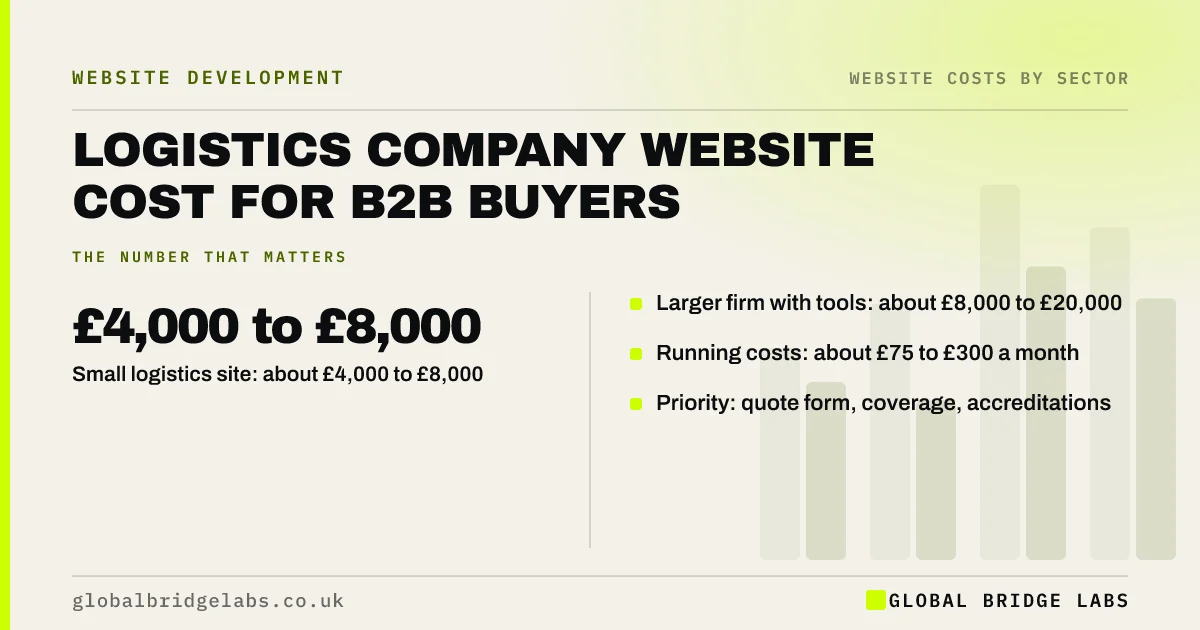
A website for a UK logistics, haulage or courier firm typically costs £4,000 to £20,000, plus £75 to £300 a month to run. B2B buyers want services, coverage, fleet and accreditations, proof of reliability and a fast quote request. Tracking integrations and customer portals add cost and should be linked from existing systems where possible.
- Small logistics site: about £4,000 to £8,000.
- Larger firm with tools: about £8,000 to £20,000.
- Running costs: about £75 to £300 a month.
- Priority: quote form, coverage, accreditations.
Want your logistics site costed? Message us on WhatsApp.
Chat on WhatsApp →How much does a logistics website cost?
A logistics website typically costs £4,000 to £8,000 for a small haulier or courier and £8,000 to £20,000 for larger firms with sector pages, quote tools and portal links, based on UK quotes. Running costs add about £75 to £300 a month.
What do B2B logistics buyers check?
B2B buyers check services, coverage areas, fleet and capacity, accreditations, sector experience and case studies before shortlisting. Security credentials such as Cyber Essentials matter for some contracts. A clear quote request form with the right fields saves back-and-forth.
- Services and coverage.
- Fleet, capacity and accreditations.
- Sector case studies.
- Quote request form tracked as a key event.
- A logistics company homepage that wins contracts
- Logistics website navigation: services, sectors, quote
Want a logistics site planned around quote requests? Message us on WhatsApp and we will discuss your requirements.
Chat on WhatsApp →What do tracking and portals cost?
Linking to tracking or a customer portal from your transport management system is usually cheap. Building custom tracking into the website costs thousands and needs ongoing care. Start with links and add integration only when customers need it.
Where should a logistics firm spend first?
Spend first on clear service and sector pages, a well-designed quote form and proof such as accreditations and case studies. These shorten the buyer's shortlist decision. Visual extras matter less than accurate, specific information.
When can a logistics firm spend less?
A firm working for a few long-term contracts can spend less, with a clear site that confirms legitimacy and capacity. Spend more when you want new contracts from search or tenders.
What does this look like in practice?
At Global Bridge Labs (GBL), a UK logistics SME with 14 staff had a generic contact form. Replacing it with a quote form asking for route, load and frequency, plus sector pages, cost about £3,500. Quote requests arrived complete, and response times to new prospects fell from days to hours.
Logistics website checklist
- List services, coverage and sectors.
- Show fleet and accreditations.
- Build a structured quote form.
- Link tracking from existing systems.
- Add case studies.
- Track quote requests.
Next step
List the details you always ask prospects for when quoting. Build those fields into your website's quote form.
Message us on WhatsApp for a logistics website brief, or book a 30-minute consultation.
Chat on WhatsApp →Sources and further reading
- SEO Starter Guide · Google Search Central
- About key events · Google Analytics Help
- Cyber Essentials overview · National Cyber Security Centre
Frequently asked questions
How much does a website cost for a haulage company?
A haulage company website typically costs £4,000 to £8,000 for a small firm and £8,000 to £20,000 for larger firms with sector pages and quote tools. Running costs are usually about £75 to £300 a month. Custom tracking or portals add significantly more.
Should a logistics website have online tracking?
Tracking helps customers, but it usually lives in your transport management system. Linking to it from the website is cheap and reliable. Custom tracking built into the site costs thousands and needs ongoing care, so consider it only when customers clearly need it.
What makes a logistics website win contracts?
Clear services and coverage, evidence of capacity, accreditations, sector case studies and a quote form that captures the right details quickly. B2B buyers shortlist on specific information and proof of reliability, so accurate facts matter more than visual design.
Written by

Global Bridge Labs (GBL) is a UK–Sri Lanka partner for social media, websites and BPO. Everything here comes from client delivery, not theory.