On this page
- 01Key takeaways
- 02Why do hashtag blocks backfire?
- 03Which hashtags are a mistake?
- 04What hashtags should a business use?
- 05Do hashtags matter on every platform?
- 06How do you audit your hashtags?
- 07What does this look like in practice?
- 08Hashtag checklist
- 09Next step
- 10Sources and further reading
- 11Frequently asked questions
Key takeaways
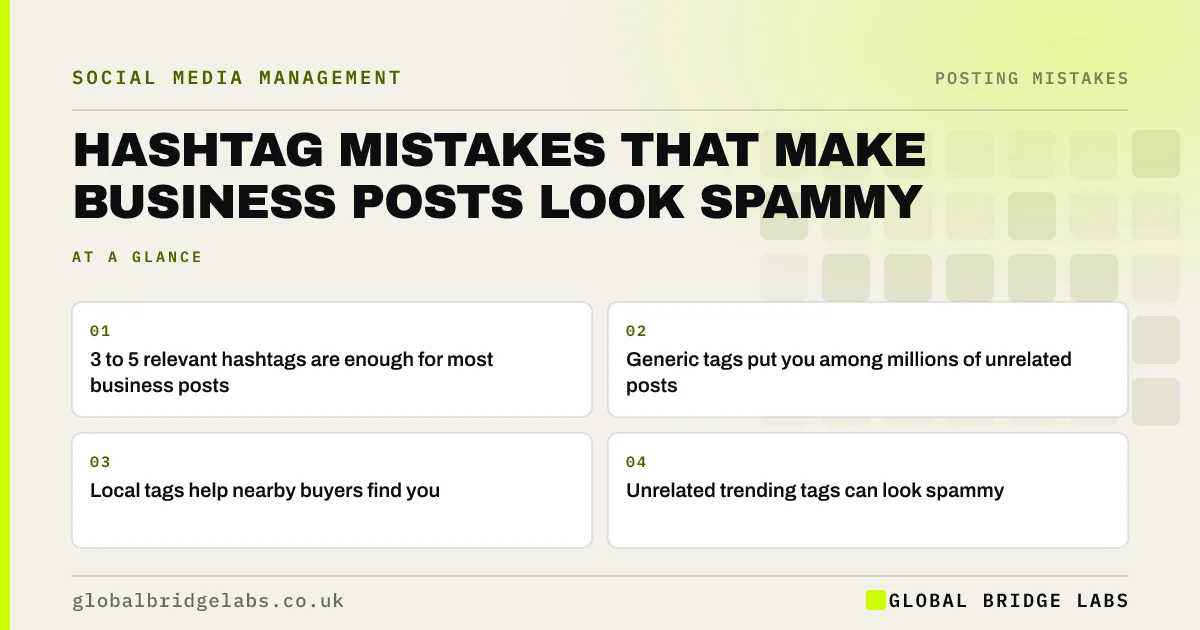
The common hashtag mistakes are blocks of 30 tags, generic tags such as #love or #business, tags that have nothing to do with the post and no local or niche tags at all. Hashtags now help platforms categorise posts rather than drive reach on their own. A few specific, relevant tags are enough.
- 3 to 5 relevant hashtags are enough for most business posts.
- Generic tags put you among millions of unrelated posts.
- Local tags help nearby buyers find you.
- Unrelated trending tags can look spammy.
Want your hashtags checked? Send us a recent post on WhatsApp.
Chat on WhatsApp →Why do hashtag blocks backfire?
Hashtag blocks backfire because they make posts look like spam to readers and add little for platforms, which now understand posts from captions, speech and images. They also tempt businesses to include unrelated tags, which can show the post to people who will never buy.
Which hashtags are a mistake?
Avoid generic tags with millions of posts, tags unrelated to the post, tags used for spam or restricted by the platform, and branded tags nobody else uses. Check a tag before using it by tapping it and looking at the recent posts.
- Generic: #business, #love, #instagood.
- Unrelated: trending tags with nothing to do with your post.
- Restricted: tags the platform limits for spam or adult content.
- Unused branded tags that nobody follows.
Want a short list of tags that fit your buyers? Message us on WhatsApp and we will discuss your requirements.
Chat on WhatsApp →What hashtags should a business use?
Use a few specific tags your buyers might follow or search: your service, your niche and your area. For example, a Leeds kitchen fitter might use a kitchen renovation tag, a Leeds home tag and one specific style tag. Accessibility matters too: write multi-word tags in CamelCase so screen readers can read them.
Do hashtags matter on every platform?
No. They matter most on Instagram and TikTok, a little on LinkedIn and X, and very little on Facebook. Adjust per platform rather than copying one block everywhere.
How do you audit your hashtags?
Audit them by listing the hashtags in your last ten posts and tapping each one. Remove any with posts unrelated to your work, any your buyers would never browse and any the platform appears to limit. Keep a short list of service, niche and local tags that match the people you sell to.
- Tags with unrelated recent posts.
- Generic tags with millions of posts.
- Tags the platform appears to restrict.
- No local or niche tags at all.
What does this look like in practice?
A pattern we see: a local business using the same 30 generic tags on every post for years. Replacing them with four local and service tags per post rarely hurts reach, and the comments that do arrive tend to come from nearer to home.
Hashtag checklist
- Use 3 to 5 relevant tags.
- Include a local or niche tag.
- Check tags before using them.
- Use CamelCase for multi-word tags.
- Adjust tags per platform.
Next step
Tap each hashtag you used last week and look at the recent posts. Remove any where your buyers would not be browsing.
Message us on WhatsApp for a hashtag list, or book a 30-minute consultation.
Chat on WhatsApp →Sources and further reading
- Meta Business Help Centre · Meta
- How TikTok recommends videos #ForYou · TikTok Newsroom
- Web Content Accessibility Guidelines (WCAG) 2.2 · W3C
Frequently asked questions
How many hashtags should a business use?
Three to five relevant hashtags is enough for most business posts on Instagram and TikTok, fewer on LinkedIn, and few or none on Facebook. Specific service, niche and local tags work better than many generic ones.
Can hashtags hurt your reach?
Unrelated, restricted or spammy hashtags can show your post to the wrong people or make it look like spam. Platforms may limit content using restricted tags. Check tags before you use them.
Do hashtags still work for businesses?
They still help platforms categorise posts and help people browsing a topic, but they are no longer a main driver of reach. Captions, video and engagement matter more. Use a few relevant tags and focus on the post itself.
Written by

Global Bridge Labs (GBL) is a UK–Sri Lanka partner for social media, websites and BPO. Everything here comes from client delivery, not theory.