On this page
- 01Key takeaways
- 02Why plan email and social together?
- 03How do you divide the work between channels?
- 04What rules apply to email marketing?
- 05How does social media grow the email list?
- 06When should email stay separate?
- 07What does this look like in practice?
- 08Email and social checklist
- 09Next step
- 10Sources and further reading
- 11Frequently asked questions
Key takeaways
An email and social media content calendar keeps both channels in one plan, so the month's main message, offer and dates appear in both. Social media reaches people and keeps you visible; email reaches people who have asked to hear from you and are often closer to buying. Plan one or two emails a month around the same themes as the social posts.
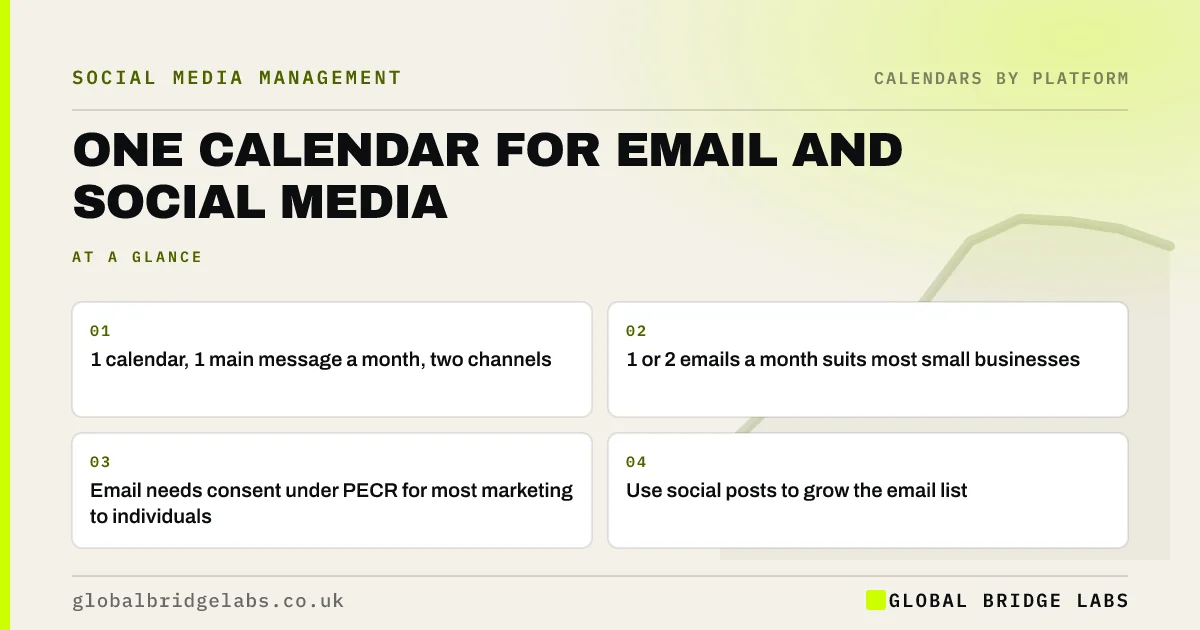
- 1 calendar, 1 main message a month, two channels.
- 1 or 2 emails a month suits most small businesses.
- Email needs consent under PECR for most marketing to individuals.
- Use social posts to grow the email list.
Want email and social planned together? Message us on WhatsApp.
Chat on WhatsApp →Why plan email and social together?
Plan them together because the same customers see both. If an offer goes out by email but not on social media, or the other way round, half the audience misses it and the message looks disjointed. One calendar means one decision about what the month is about, and each channel does what it is best at.
How do you divide the work between channels?
Use social media for reach, proof and conversation, and email for the things readers act on: offers, booking windows, deadlines and a monthly roundup of your best content. A simple month is one email in the first week with the main message and one near the end with a reminder, with social posts building up to and around both.
What rules apply to email marketing?
Marketing emails to individuals usually need their consent under the Privacy and Electronic Communications Regulations (PECR), with a 'soft opt-in' exception for existing customers who bought similar products and were given a chance to opt out. Every email needs an easy unsubscribe. Business email addresses have different rules, so check ICO guidance.
How does social media grow the email list?
Plan a social post once or twice a month that gives people a reason to sign up, such as a useful checklist, early access to an offer or a monthly roundup. Link to a simple sign-up page. Over time, the email list becomes the audience you reach without depending on a platform's algorithm.
When should email stay separate?
Keep email separate when it is run by another team for a different purpose, such as service updates or account messages, which are not marketing. Even then, share the calendar so marketing emails and social posts do not clash with important customer notices.
What does this look like in practice?
A pattern we see: a business with a few thousand email subscribers that sends nothing for months, while working hard for reach on social media. Adding one planned email a month, built from the best social posts, usually brings enquiries from customers who already know the business.
Email and social checklist
- Keep email and social in one calendar.
- Agree one main message a month.
- Send one or two emails a month.
- Check consent and include an unsubscribe link.
- Plan social posts that grow the list.
Next step
Add an 'email' row to next month's calendar and choose its main message from the month's best social theme.
Message us on WhatsApp and we will plan your email and social month, or book a 30-minute consultation.
Chat on WhatsApp →Sources and further reading
- Electronic and telephone marketing under PECR · Information Commissioner's Office
- Direct marketing and privacy and electronic communications · Information Commissioner's Office
Frequently asked questions
Should email marketing be in my social media calendar?
Yes, if the same customers see both. One calendar keeps the month's main message, offers and dates consistent across channels, and shows when emails and social posts should support each other.
How often should a small business send marketing emails?
One or two a month suits most small businesses: one with the main message or offer and one reminder or roundup. Send more only if you have genuinely useful content and readers keep opening.
Do I need consent to send marketing emails in the UK?
For most marketing emails to individuals, yes, under PECR. Existing customers can often be emailed under the soft opt-in if they bought similar products and were offered an opt-out. Every email needs an easy unsubscribe. Check ICO guidance for your case.
Written by

Global Bridge Labs (GBL) is a UK–Sri Lanka partner for social media, websites and BPO. Everything here comes from client delivery, not theory.