On this page
Key takeaways
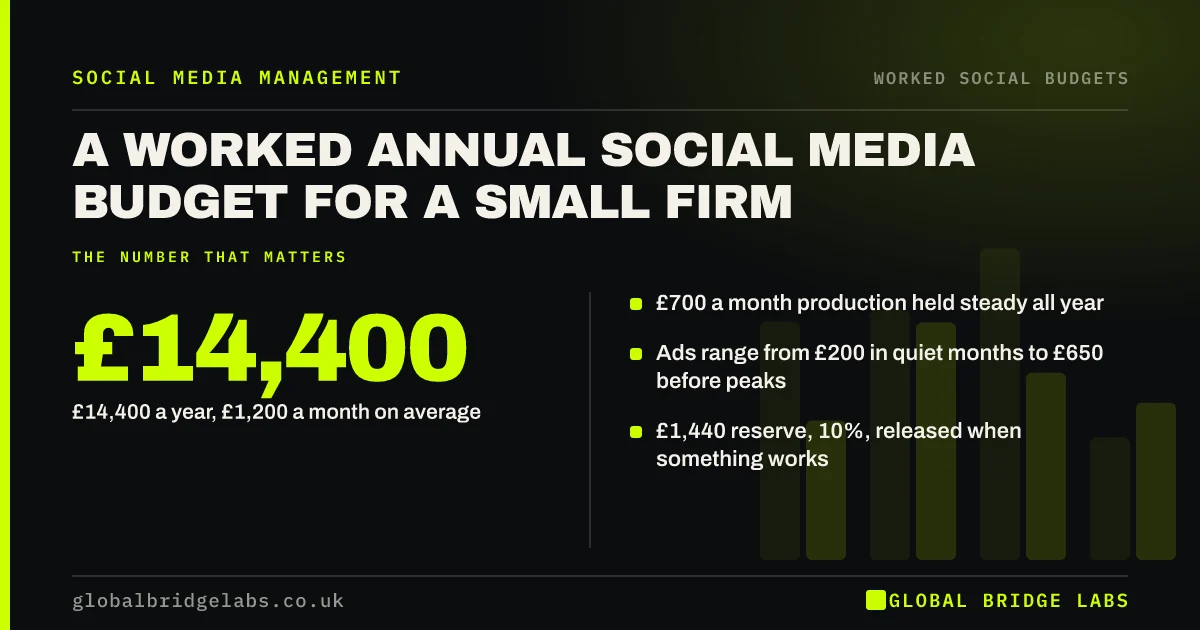
This social media budget example shows a small firm with an illustrative £14,400 a year, an average of £1,200 a month. Production stays steady at £700 a month, ads rise and fall with the season, and 10% is held as a reserve. Setting the figure annually and spending it seasonally beats an identical amount every month.
- £14,400 a year, £1,200 a month on average.
- £700 a month production held steady all year.
- Ads range from £200 in quiet months to £650 before peaks.
- £1,440 reserve, 10%, released when something works.
Want your own year planned? Message us on WhatsApp.
Chat on WhatsApp →Who is the example business?
An illustrative home improvement firm turning over about £450,000, with peaks in spring and early autumn and a quiet December and August. Social media is a main source of enquiries alongside Google. The figures are examples to show the method, not a recommendation for your business.
How is the year split?
Production: £700 a month, £8,400 a year. Tools: £50 a month, £600. Ads: £3,960 phased by season. Reserve: £1,440. Ads run at £650 in February, March, August and September, the lead-in months, £250 in other active months and £200 in December and January.
- Production: £8,400.
- Tools: £600.
- Ads: £3,960, phased by season.
- Reserve: £1,440.
- Total: £14,400.
Send us your busy and quiet months on WhatsApp and we will discuss your requirements.
Chat on WhatsApp →Why phase the ads but not production?
Content needs a steady rhythm to keep the account active and give ads fresh creative. Ads should follow demand, rising four to six weeks before buyers decide and falling in quiet months. Cutting production in quiet months leaves you with nothing ready when spend rises.
How is the reserve used?
Release it in the month something performs better than expected, such as a campaign with cost per enquiry well below target and capacity to take the work. If unused by the third quarter, fold it into the autumn lead-in.
What does this look like in practice?
A pattern we see: a firm spends the same amount on ads every month, including December, and runs out of budget before spring. Phasing the same annual total to the buying season usually brings more enquiries at no extra cost.
Annual budget checklist
- Set the annual figure from revenue and targets.
- Mark your busy and quiet months.
- Hold production steady all year.
- Phase ads to the lead-in before each peak.
- Keep a 10% reserve and review it quarterly.
Next step
Draw a 12-month row and shade your busy months. Place ad spend in the four to six weeks before each, and keep production flat.
Message us on WhatsApp with your year, or book a 30-minute consultation.
Chat on WhatsApp →Sources and further reading
- UK bank holidays · GOV.UK
- About budgets · Meta
Frequently asked questions
How do I plan a social media budget for a year?
Set an annual figure from revenue and sales targets, keep production steady each month, phase ad spend to the weeks before your busy periods, and hold around 10% in reserve. Review quarterly and move money towards whatever brings enquiries at the lowest cost.
Should social media spend be the same every month?
Production should be steady so content keeps its rhythm. Ad spend should follow demand, rising before your busy seasons and falling in quiet months. Spending the same on ads every month usually wastes money in quiet periods and runs short when it matters.
What should I do with an unused reserve?
Release it when a campaign performs well and you can take the work. If it is still unused by the third quarter, put it into the lead-in to your next busy period. Avoid spending it in December just to use it up.
Written by

Global Bridge Labs (GBL) is a UK–Sri Lanka partner for social media, websites and BPO. Everything here comes from client delivery, not theory.