On this page
- 01Key takeaways
- 02How much should a start-up spend on a website?
- 03What should a start-up launch with?
- 04Why should start-ups avoid a big first build?
- 05When should a start-up invest more?
- 06When does a start-up need more from day one?
- 07What does this look like in practice?
- 08Start-up website checklist
- 09Next step
- 10Sources and further reading
- 11Frequently asked questions
Key takeaways
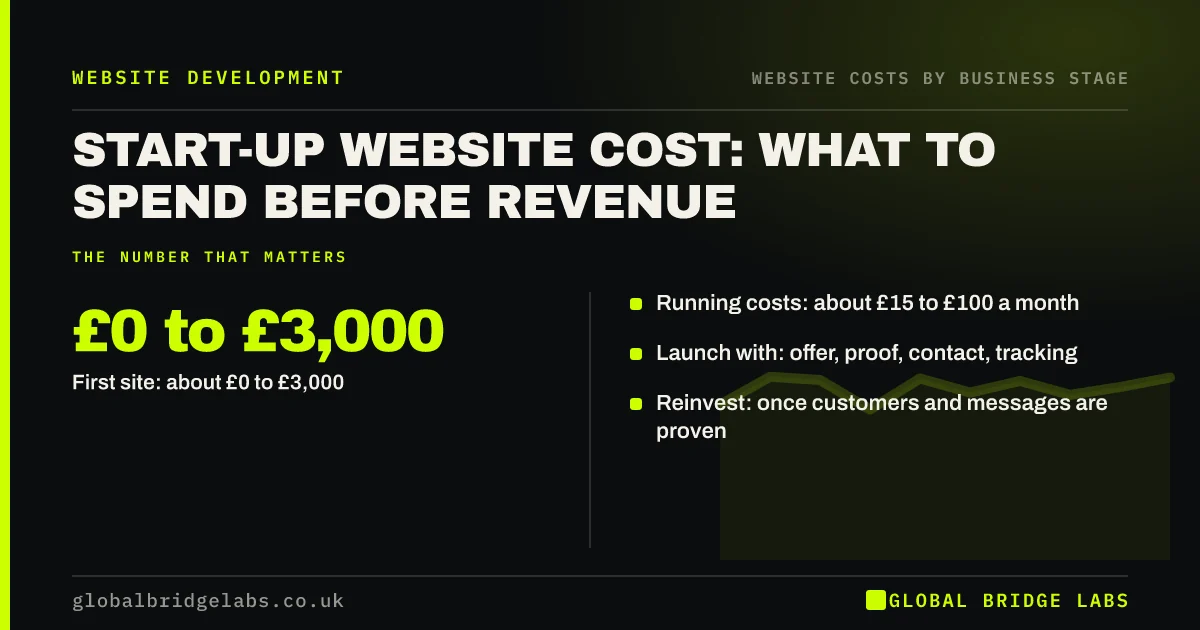
A UK start-up should usually spend £0 to £3,000 on its first website, plus £15 to £100 a month, and keep most of its budget for finding customers. Launch with a clear, credible site that explains the offer and captures enquiries, then reinvest once you know what sells. Overspending before revenue is one of the most common start-up website mistakes.
- First site: about £0 to £3,000.
- Running costs: about £15 to £100 a month.
- Launch with: offer, proof, contact, tracking.
- Reinvest: once customers and messages are proven.
Want a sensible start-up website budget? Message us on WhatsApp.
Chat on WhatsApp →How much should a start-up spend on a website?
A start-up should usually spend about £0 to £3,000 on its first website: a self-built builder site at the low end, a freelancer template site at the upper end. Running costs add about £15 to £100 a month. Most of the early budget should go on reaching customers.
What should a start-up launch with?
A start-up should launch with a clear statement of what it offers and for whom, a few lines of proof, a simple way to get in touch and analytics. Limited companies must also show company details. Everything else can wait until real customers show what they need.
- Clear offer and audience.
- Early proof: pilots, testimonials, credentials.
- Contact form or booking link.
- Analytics and enquiry tracking.
Want a launch-ready site scoped for your start-up? Message us on WhatsApp and we will discuss your requirements.
Chat on WhatsApp →Why should start-ups avoid a big first build?
Start-ups should avoid a big first build because their offer, audience and messages usually change in the first year. A £15,000 site built around early guesses often needs rewriting. A small site that is cheap to change lets you learn first and build properly later.
When should a start-up invest more?
Invest more once you know which customers buy, which messages work and where enquiries come from. That is often six to eighteen months in. At that point, a well-planned site built on proven messages tends to pay back.
When does a start-up need more from day one?
Some start-ups need more from day one: online shops, software products, or businesses raising investment where the site supports credibility with investors. Even then, scope tightly and prioritise what customers use.
What does this look like in practice?
At Global Bridge Labs (GBL), a UK start-up offering bookkeeping for trades launched on a £1,200 three-page site. Within six months, enquiries showed most clients were electricians, not builders. The later £5,000 rebuild centred on electricians, a change that would have meant rewriting an expensive first site.
Start-up website checklist
- Keep the first build small.
- Register the domain in your name.
- State the offer and audience clearly.
- Add analytics and enquiry tracking.
- Show company details if a limited company.
- Plan when you will reinvest.
Next step
Set a first-site budget no larger than one month of your marketing spend. Put the rest into reaching your first customers.
Message us on WhatsApp for a start-up website plan, or book a 30-minute consultation.
Chat on WhatsApp →Sources and further reading
- Business population estimates for the UK and regions 2025 · Department for Business and Trade
- SEO Starter Guide · Google Search Central
- Company, Limited Liability Partnership and Business Names (Trading Disclosures) Regulations 2015 · legislation.gov.uk
Frequently asked questions
How much does a website cost for a new business?
A new business website typically costs £0 to £3,000: a self-built builder site at the low end and a freelancer template site at the upper end. Running costs add about £15 to £100 a month. Keeping the first site small leaves budget for finding customers.
Should a start-up pay for a professional website?
A start-up benefits from a professional-looking site, but it does not need an expensive one. A clean template site with clear copy, proof and tracking is usually enough at launch. Invest in a bigger site once you know which customers buy and why.
What does a start-up website need legally?
A start-up website needs a privacy notice if it collects personal data, cookie consent where non-essential cookies are used, and, for limited companies, company details such as the registered name, number and office. Selling online to consumers adds information and cancellation requirements.
Written by

Global Bridge Labs (GBL) is a UK–Sri Lanka partner for social media, websites and BPO. Everything here comes from client delivery, not theory.