On this page
- 01Key takeaways
- 02What does a £500 website include?
- 03What are the risks of a very cheap website?
- 04When is a cheap website the right choice?
- 05How do you get more from a small budget?
- 06When does cheap become expensive?
- 07What does this look like in practice?
- 08Cheap website checklist
- 09Next step
- 10Sources and further reading
- 11Frequently asked questions
Key takeaways
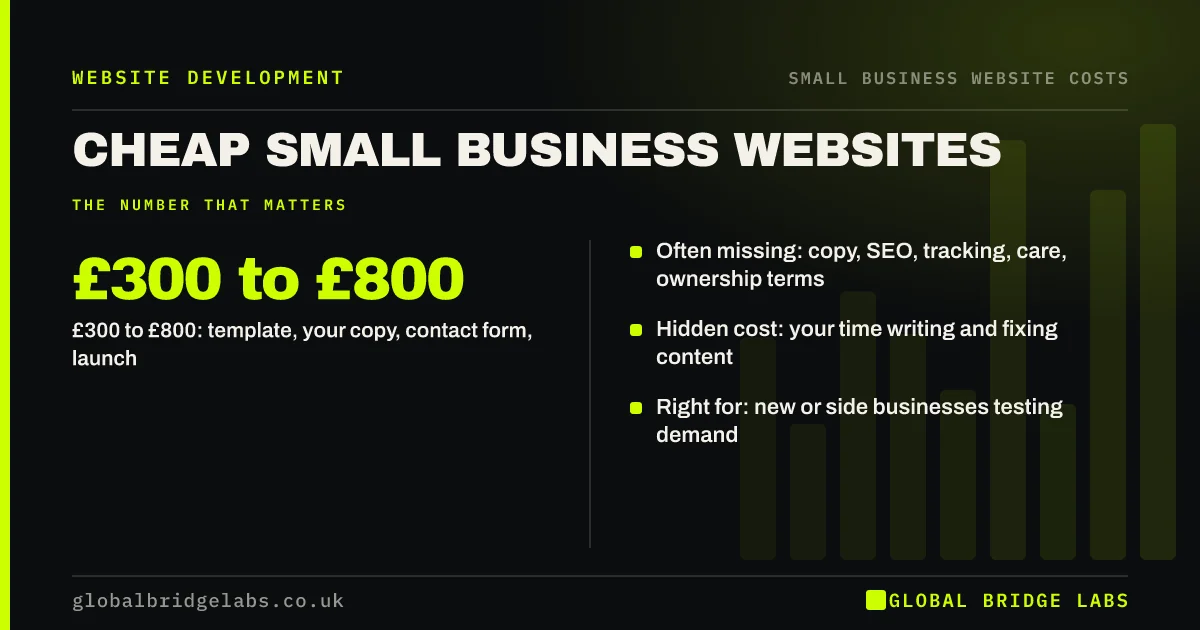
A cheap small business website in the UK costs about £300 to £800 and usually buys a template site with your own copy, a contact form and launch. It rarely includes copywriting, SEO set-up, tracking or care. A cheap site is fine to prove a business exists; it becomes expensive when it cannot be found, measured or updated.
- £300 to £800: template, your copy, contact form, launch.
- Often missing: copy, SEO, tracking, care, ownership terms.
- Hidden cost: your time writing and fixing content.
- Right for: new or side businesses testing demand.
Want to know if a cheap site will do the job? Message us on WhatsApp.
Chat on WhatsApp →What does a £500 website include?
A £500 website usually includes a pre-made template with your logo and colours, three to five pages using copy you provide, a contact form and launch on the supplier's hosting. It rarely includes written copy, keyword research, analytics with enquiry tracking or any support after launch.
- Included: template, basic layout, your text, form.
- Rarely included: copy, photos, SEO, tracking.
- Often unclear: who owns the site, domain and hosting.
What are the risks of a very cheap website?
The main risks of a very cheap website are poor findability, no measurement, weak security and unclear ownership. Some low-cost suppliers keep the domain in their name or host on platforms you cannot leave. Others never update the software, which the NCSC small business guide flags as a common way sites are compromised.
- Domain registered to the supplier, not you.
- No updates or backups after launch.
- No enquiry tracking, so you cannot judge results.
Want a low-cost site set up without these risks? Message us on WhatsApp and we will discuss your requirements.
Chat on WhatsApp →When is a cheap website the right choice?
A cheap website is the right choice when the business is new, unproven or a side project, and the site's job is simply to confirm you exist and show contact details. It is also fine as a short-term stop gap while you plan a proper site. Keep the domain in your name from day one.
How do you get more from a small budget?
Get more from a small budget by writing your own copy, using your own photos, choosing a hosted builder that handles updates, and spending saved money on tracking and a Google Business Profile. A clear three-page site often outperforms a cluttered ten-page one.
When does cheap become expensive?
Cheap becomes expensive when the site needs rebuilding within a year, when lost enquiries outweigh the saving, or when you cannot move it to another supplier. If a £500 site is replaced at month nine with a £4,000 one, the business has paid £4,500 for one working site.
What does this look like in practice?
At Global Bridge Labs (GBL), we often meet owners who paid £400 for a site where the supplier owned the domain. One UK tiler had to pay a £250 release fee to move it. The site itself had served them for two years, so the lesson was not to avoid cheap sites, but to check ownership first.
Cheap website checklist
- Register the domain in your own name.
- Ask what happens to the site if you leave.
- Check updates and backups are covered.
- Add free analytics and set up enquiry tracking.
- Write clear copy yourself.
- Plan when you will upgrade.
Next step
If you are buying a cheap site, ask the supplier three questions in writing: who owns the domain, who updates the software, and what it costs to leave.
Message us on WhatsApp for a cheap website checklist, or book a 30-minute consultation.
Chat on WhatsApp →Sources and further reading
- SEO Starter Guide · Google Search Central
- Small Business Guide: cyber security · National Cyber Security Centre
- Cookies and similar technologies under PECR · Information Commissioner's Office
Frequently asked questions
Is a cheap website worth it for a small business?
A cheap website can be worth it for a new or side business that mainly needs to show it exists. It is rarely enough for a business that wants regular enquiries from search. Check ownership, updates and tracking before buying, because those gaps are what turn a cheap site into an expensive one.
What is the cheapest way to get a business website?
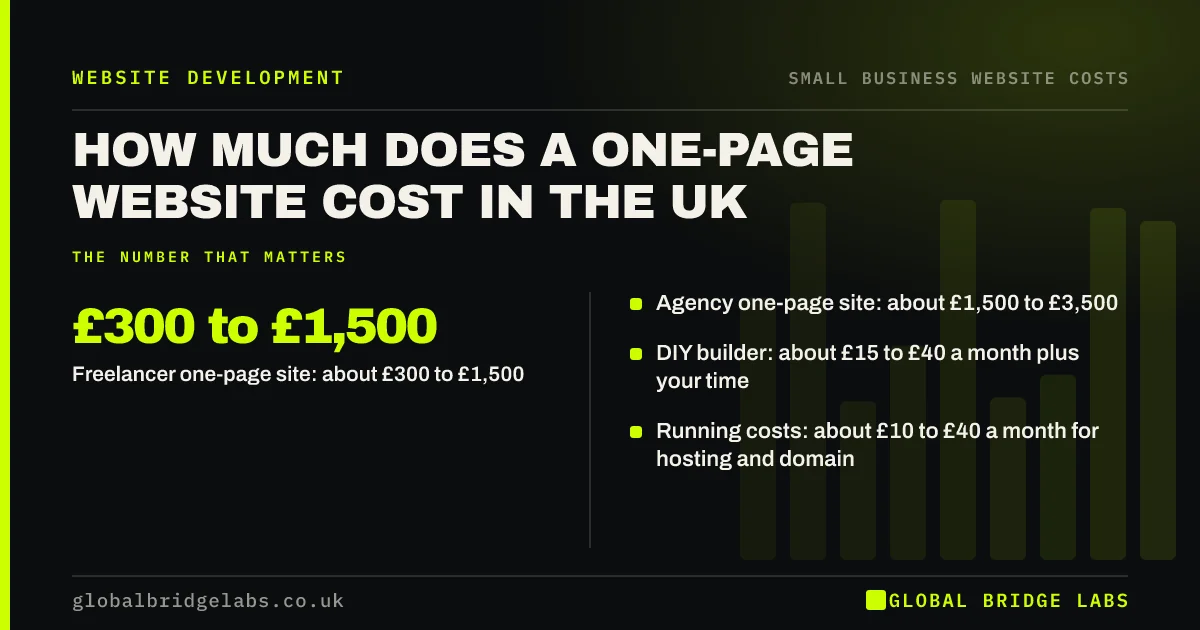
The cheapest way is a self-built site on a website builder, at about £15 to £40 a month plus your time. A freelancer template site at about £300 to £800 is the next step. Either way, register the domain yourself and add analytics so you can judge whether it works.
Why are some web designers so cheap?
Very cheap web designers usually reuse templates, use your copy, skip testing and offer little or no support after launch. Some make money from ongoing hosting fees or by keeping the domain. Others are new and building a portfolio. Ask exactly what is included and what happens if you leave.
Written by

Global Bridge Labs (GBL) is a UK–Sri Lanka partner for social media, websites and BPO. Everything here comes from client delivery, not theory.