On this page
- 01Key takeaways
- 02Why does seasonal content need lead time?
- 03How early for each kind of purchase?
- 04How does lead time change your planning dates?
- 05Do platforms change the lead time?
- 06When can you post later?
- 07What does this look like in practice?
- 08Seasonal lead time checklist
- 09Next step
- 10Sources and further reading
- 11Frequently asked questions
Key takeaways
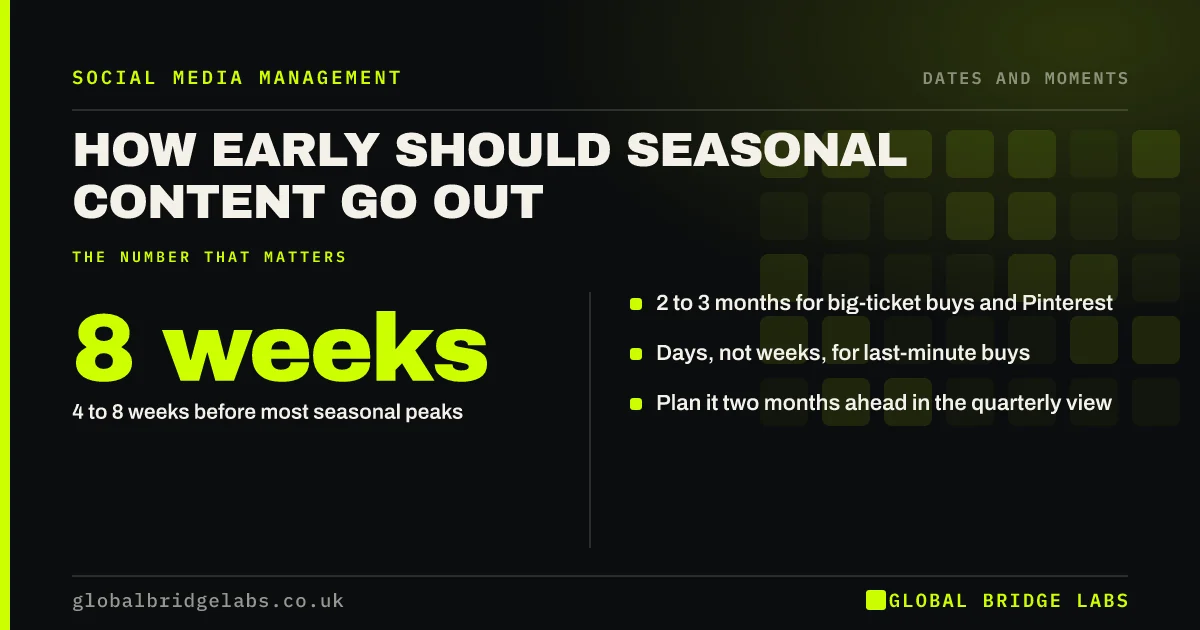
How early to post seasonal content depends on when buyers decide, not when the season starts. For most small UK businesses, posts that support a peak should start four to eight weeks before it. Big-ticket purchases and Pinterest need longer, often two to three months, and last-minute buys such as flowers or takeaways need only days.
- 4 to 8 weeks before most seasonal peaks.
- 2 to 3 months for big-ticket buys and Pinterest.
- Days, not weeks, for last-minute buys.
- Plan it two months ahead in the quarterly view.
Want your seasonal lead times mapped? Message us on WhatsApp.
Chat on WhatsApp →Why does seasonal content need lead time?
Seasonal content needs lead time because buyers decide before the season arrives. Families book Christmas parties in the autumn, homeowners book boiler services before the cold, and gardeners plan in late winter. A post published on the day the season starts reaches people who have already decided.
How early for each kind of purchase?
As GBL working rules of thumb, by how buyers decide:
- Big-ticket or booked services (kitchens, holidays, party venues): 2 to 3 months.
- Planned services (boiler service, garden design, tax returns): 4 to 8 weeks.
- Gifts and seasonal retail: 4 to 6 weeks, with reminders near the end.
- Last-minute buys (flowers, takeaways, same-day services): days before.
How does lead time change your planning dates?
If seasonal posts go out four to eight weeks ahead, they must be planned a month before that. So Christmas content for a hospitality business is planned in September and published in October. Keep a quarterly view above the monthly calendar, so each month's session knows which seasonal posts it must start.
Do platforms change the lead time?
Yes. Pinterest is used for planning, so seasonal ideas there need to go out earliest, often two to three months ahead. Instagram and Facebook suit the four to eight week window, with reminders closer to the date. Paid ads can be switched on later than organic posts, because they reach people straight away.
When can you post later?
Post later for impulse and last-minute buys, for reminders and for last-chance messages. A seasonal run usually starts early with the idea and finishes with reminders right up to the date, so both are right at different points.
What does this look like in practice?
A pattern with hospitality: Christmas party posts begin in December, when most work parties are already booked. Starting in early October, with reminders through November, usually fills more dates from the same number of posts.
Seasonal lead time checklist
- List your seasonal peaks.
- Note when buyers decide for each one.
- Start posts four to eight weeks before most peaks.
- Start two to three months ahead for big-ticket buys and Pinterest.
- Put the start dates on the quarterly view.
Next step
Take your next seasonal peak and count back eight weeks. If that date has passed, start the posts this week and plan the next peak properly.
Message us on WhatsApp with your peaks and we will set the start dates, or book a 30-minute consultation.
Chat on WhatsApp →Sources and further reading
- Pinterest Business help: get started · Pinterest
- Meta Business Help Centre · Meta
Frequently asked questions
How early should I start Christmas posts for my business?
It depends on how customers buy. Christmas parties and booked services need posts from early October, gifts and seasonal retail from early to mid November, and last-minute buys a few days before. Plan each a month before it starts.
How far ahead should seasonal social media content be planned?
About a month before it is published, which for most peaks means two to three months before the season itself. A quarterly view above the monthly calendar makes sure seasonal posts are started in time.
Is it too late to post seasonal content close to the date?
Not for reminders, last-chance messages and last-minute buys, which work best close to the date. What is usually too late is the first post about something buyers plan weeks ahead.
Written by

Global Bridge Labs (GBL) is a UK–Sri Lanka partner for social media, websites and BPO. Everything here comes from client delivery, not theory.