On this page
- 01Key takeaways
- 02How do always-on and burst advertising differ?
- 03Why does always-on suit small budgets?
- 04When does burst advertising make sense?
- 05How should you split a small budget?
- 06What are the risks of each?
- 07What does this look like in practice?
- 08What does a worked budget split look like?
- 09How do you keep always-on ads fresh?
- 10Next step
- 11Sources and further reading
- 12Frequently asked questions
Key takeaways
Always-on social advertising runs a small, steady budget continuously; burst advertising concentrates spend into short, intense periods. For small UK budgets, always-on usually works better for steady enquiries and recognition, while bursts suit launches, events and seasonal peaks. Many businesses combine a small always-on base with occasional bursts.
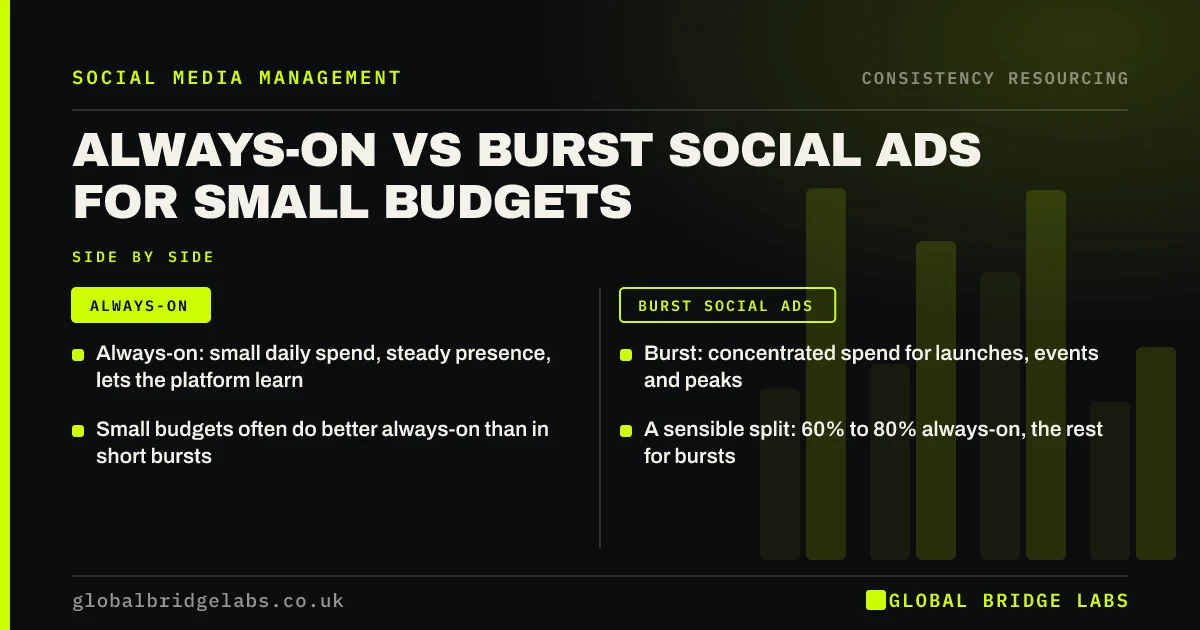
- Always-on: small daily spend, steady presence, lets the platform learn.
- Burst: concentrated spend for launches, events and peaks.
- Small budgets often do better always-on than in short bursts.
- A sensible split: 60% to 80% always-on, the rest for bursts.
- Ads amplify organic consistency. They do not replace it.
Want your ad budget split recommended? Message us on WhatsApp.
Chat on WhatsApp →How do always-on and burst advertising differ?
Always-on advertising keeps a campaign running continuously at a steady budget, keeping your business visible to a target audience week after week. Burst advertising, sometimes called flighting, spends heavily for a short period and then stops. They mirror the consistency versus viral choice in organic social media.
Why does always-on suit small budgets?
Because small budgets spread over time build the same repeated exposure that consistent organic posting does, and ad platforms generally optimise delivery better with steady data than with short bursts. Meta describes a learning phase during which its delivery system explores how to show your ads; campaigns that stop and restart often go back through that phase.
When does burst advertising make sense?
- Launches with a fixed date.
- Events, openings and ticket sales.
- Seasonal peaks such as Christmas or summer bookings.
- Time-limited offers.
Planning a burst? Message us on WhatsApp and we will help you time it.
Chat on WhatsApp →How should you split a small budget?
A practical starting point for many SMEs is 60% to 80% always-on and the remainder held for bursts around known peaks. Always-on spend often promotes your best-performing organic posts to a defined local or sector audience. Review monthly and adjust.
What are the risks of each?
- Always-on: ad fatigue if creative is not refreshed every few weeks.
- Always-on: budget too thin to reach a meaningful audience.
- Burst: nothing left once the burst ends.
- Burst: learning phases restart and costs per result can rise.
What does this look like in practice?
A UK dental clinic spent its full ad budget in two bursts a year, each producing a short rise in bookings. When it moved most of the budget to a small, always-on campaign promoting its patient question posts to local families, with a burst each January for new patient offers, bookings became steadier and cost per booking fell over the year.
What does a worked budget split look like?
- Total annual budget: £3,600.
- Always-on: £200 a month promoting best organic posts locally. £2,400 a year.
- Bursts: £600 each for a spring and a Christmas peak. £1,200 a year.
- Review monthly: cost per enquiry, frequency and creative fatigue.
How do you keep always-on ads fresh?
Rotate creative every three to six weeks, using your best recent organic posts. Watch frequency, the number of times each person sees an ad, and refresh when it climbs and results fall. Keep the audience defined, such as a radius around your location or a job function, so the budget reaches buyers.
Next step
If your ad spend is all bursts, test moving most of it to a steady always-on campaign for three months, keeping one burst for your main peak.
Message us on WhatsApp and we will design an always-on plan for your budget.
Chat on WhatsApp →Sources and further reading
Frequently asked questions
Is always-on advertising better than bursts?
For small budgets and steady enquiries, often yes. It builds repeated exposure and gives platforms steady data to optimise delivery. Bursts suit launches, events and peaks. Many businesses combine both.
How much should a small business spend on always-on social ads?
It depends on audience size and goals, but even a modest daily budget can keep a business visible to a defined local audience. Start small, promote your best organic posts, and review cost per enquiry monthly before increasing.
What is burst advertising?
Burst advertising, or flighting, concentrates spend into short, intense periods with gaps between them. It is useful for time-sensitive goals but leaves no presence between bursts.
Should I stop ads when they are not working?
Review first rather than stopping immediately. Check targeting, creative and the landing page, and allow enough time for the platform's learning phase. Frequent stopping and restarting can raise costs.
What is the minimum budget for always-on social ads?
There is no fixed minimum, but budgets need to be large enough to reach a meaningful share of your audience repeatedly. Many small local businesses start with a modest daily amount, promote their best organic posts and review cost per enquiry monthly before increasing.
Written by

Global Bridge Labs (GBL) is a UK–Sri Lanka partner for social media, websites and BPO. Everything here comes from client delivery, not theory.