On this page
- 01Key takeaways
- 02What has changed in UK employment costs?
- 03What does a full-time hire cost now?
- 04How are UK SMEs responding to higher costs?
- 05When should rising costs make you rethink staffing?
- 06How does outsourcing compare at today's rates?
- 07What should you not do in response to higher costs?
- 08Which roles are most affected by rising costs?
- 09What does this look like in practice?
- 10Rising costs checklist
- 11Next step
- 12Sources and further reading
- 13Frequently asked questions
Key takeaways
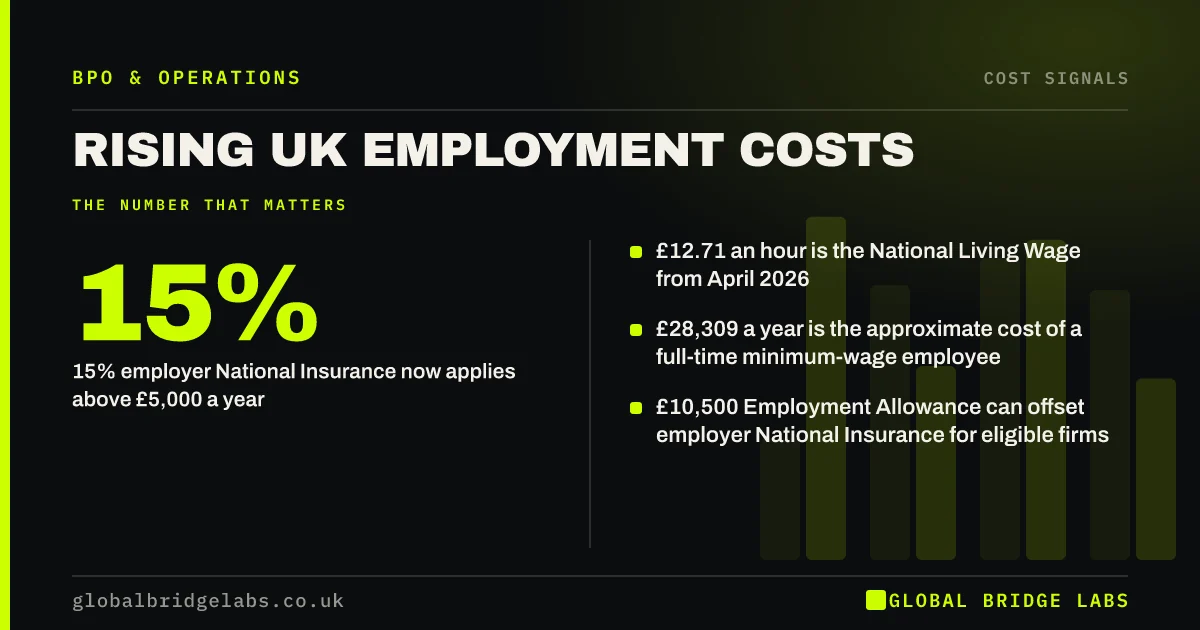
Rising employment costs in the UK have lifted the cost of every new hire. Employer National Insurance rose to 15% above £5,000 in April 2025, and the National Living Wage reached £12.71 in April 2026. A full-time minimum-wage employee now costs about £28,309 a year. For repeatable work, that makes outsourcing worth testing before recruiting.
- 15% employer National Insurance now applies above £5,000 a year.
- £12.71 an hour is the National Living Wage from April 2026.
- £28,309 a year is the approximate cost of a full-time minimum-wage employee.
- £10,500 Employment Allowance can offset employer National Insurance for eligible firms.
Rethinking a hire because of costs? Message us on WhatsApp with the role.
Chat on WhatsApp →What has changed in UK employment costs?
Two changes drive most of the increase. From April 2025, employer National Insurance rose from 13.8% to 15%, and the threshold at which it starts fell from £9,100 to £5,000 a year. From April 2026, the National Living Wage rose to £12.71 an hour. Both apply to every eligible employee, so the effect grows with headcount.
The Employment Allowance also rose to £10,500, which offsets part of the increase for eligible small employers.
What does a full-time hire cost now?
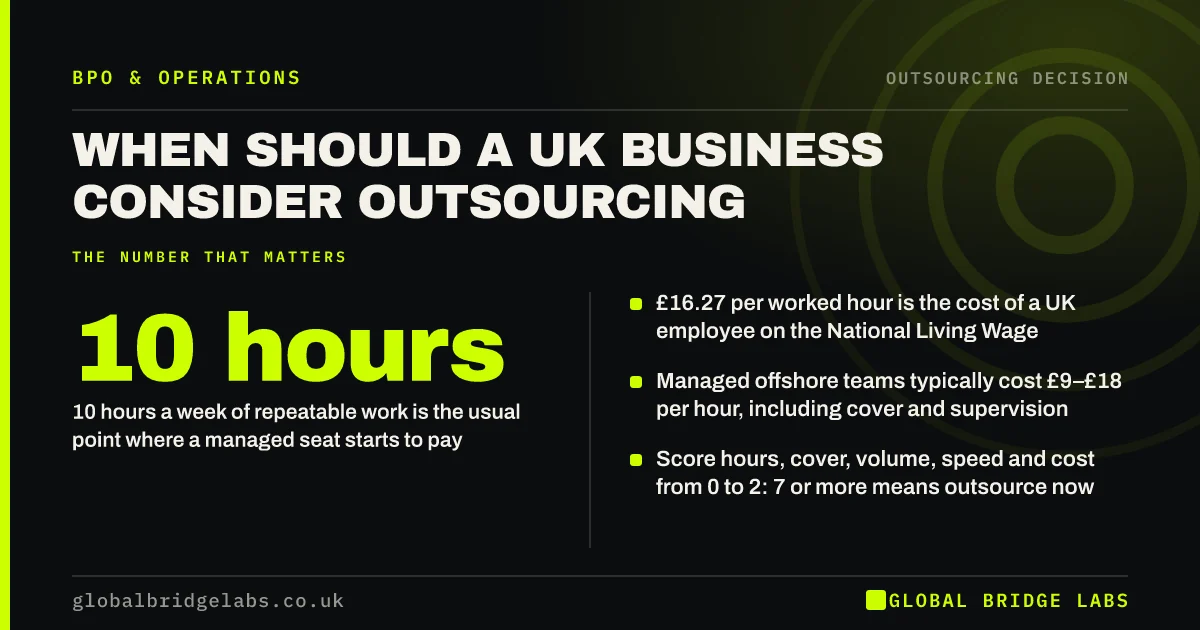
A full-time employee on the National Living Wage earns about £24,785 a year. Employer National Insurance adds about £2,968 and the 3% minimum pension about £556, for a total of about £28,309. After 28 days of holiday that is about £16.27 per worked hour, before recruitment, equipment, software, space and management.
Skilled roles cost more. An employee on £35,000 costs roughly £40,000 a year with the same on-costs.
How are UK SMEs responding to higher costs?
The common responses are to hire more slowly, raise prices, automate simple tasks and outsource repeatable work. Many businesses now test an outsourced seat before recruiting for admin or support roles, because it adds capacity without adding fixed employment costs. The ONS vacancy figures show where hiring has cooled across the economy.
When should rising costs make you rethink staffing?
Rethink when you are about to hire for repeatable work, when a role becomes vacant, or when overtime is rising. Those are the moments when the choice is open. For roles built on judgement, relationships or presence, hiring usually remains right; for inbox, phones, data entry and invoicing, compare outsourcing first.
About to recruit? Send us the job description on WhatsApp and we will compare it with an outsourced seat.
Chat on WhatsApp →How does outsourcing compare at today's rates?
As indicative market ranges, managed offshore teams cost £9–£18 per hour and onshore teams £20–£35, usually including cover and supervision. Against about £16.27 per worked hour for a minimum-wage hire, before overheads, offshore outsourcing is often cheaper for repeatable work. Onshore outsourcing tends to cost more than a direct hire but adds cover and flexibility.
What should you not do in response to higher costs?
Do not cut customer-facing capacity without a replacement, and do not move work offshore without the data protection paperwork. Cutting the phones or inbox saves wages and loses sales. Outsourcing done in a rush without a processor contract creates a compliance risk bigger than the saving.
Which roles are most affected by rising costs?
Lower-paid and part-time roles are hit hardest in percentage terms. The fall in the National Insurance threshold to £5,000 means employer contributions now start on much smaller salaries, so part-time roles that used to attract little or no employer National Insurance now attract more. Minimum-wage roles also rise every April with the National Living Wage.
Those are often exactly the admin, reception and support roles that follow repeatable processes, which is why they are the first to compare with outsourcing.
- Part-time roles earning between £5,000 and £9,100 now attract employer National Insurance.
- Minimum-wage roles rise every April with the National Living Wage.
- Roles with high turnover add recruitment costs on top.
What does this look like in practice?
A pattern we see in UK hospitality groups: rising wage costs lead managers to cut the hours of staff who answer booking calls, and unanswered calls rise. Outsourcing booking and enquiry handling across all venues keeps the phones covered at a lower cost per booking, while venue staff focus on guests.
Rising costs checklist
Use this when employment costs are squeezing margins.
- Recalculate the loaded cost of each role at 2026/27 rates.
- Check whether you claim the Employment Allowance.
- List roles that are mostly repeatable work.
- Compare each with an outsourced seat before recruiting.
- Protect customer-facing capacity.
- Review prices against your new cost base.
Next step
Tell us which roles are under pressure. We will help you compare the loaded cost of hiring with an outsourced seat, using current rates.
Message us on WhatsApp about your staffing costs, or book a 30-minute consultation.
Chat on WhatsApp →Sources and further reading
- Rates and thresholds for employers 2026 to 2027 · HM Revenue & Customs
- National Minimum Wage and National Living Wage rates · GOV.UK
- Workplace pensions: what you, your employer and the government pay · GOV.UK
- Employment Allowance · GOV.UK
- Vacancies and jobs in the UK (latest bulletin) · Office for National Statistics
Frequently asked questions
How much has employer National Insurance gone up?
From April 2025, the employer rate rose from 13.8% to 15%, and the threshold at which employers start paying fell from £9,100 to £5,000 a year. Eligible small employers can offset up to £10,500 through the Employment Allowance.
How much does it cost to employ someone on minimum wage in 2026?
At the National Living Wage of £12.71, a full-time employee costs about £28,309 a year including employer National Insurance and the 3% minimum pension. That is about £16.27 per worked hour after holiday, before recruitment, equipment and management costs.
Is outsourcing cheaper than hiring now?
For repeatable support and admin work, offshore outsourcing at an indicative £9–£18 per hour is often cheaper than a direct hire at about £16.27 per worked hour plus overheads. For judgement-heavy or on-site roles, hiring usually remains the better option.
Written by

Global Bridge Labs (GBL) is a UK–Sri Lanka partner for social media, websites and BPO. Everything here comes from client delivery, not theory.