On this page
- 01Key takeaways
- 02How do marketplace fees compare with your own website?
- 03What does a worked example look like?
- 04What does your own site cost that marketplaces do not?
- 05What do you gain from your own site?
- 06When should you stay on marketplaces?
- 07What does this look like in practice?
- 08Channel cost checklist
- 09Next step
- 10Sources and further reading
- 11Frequently asked questions
Key takeaways
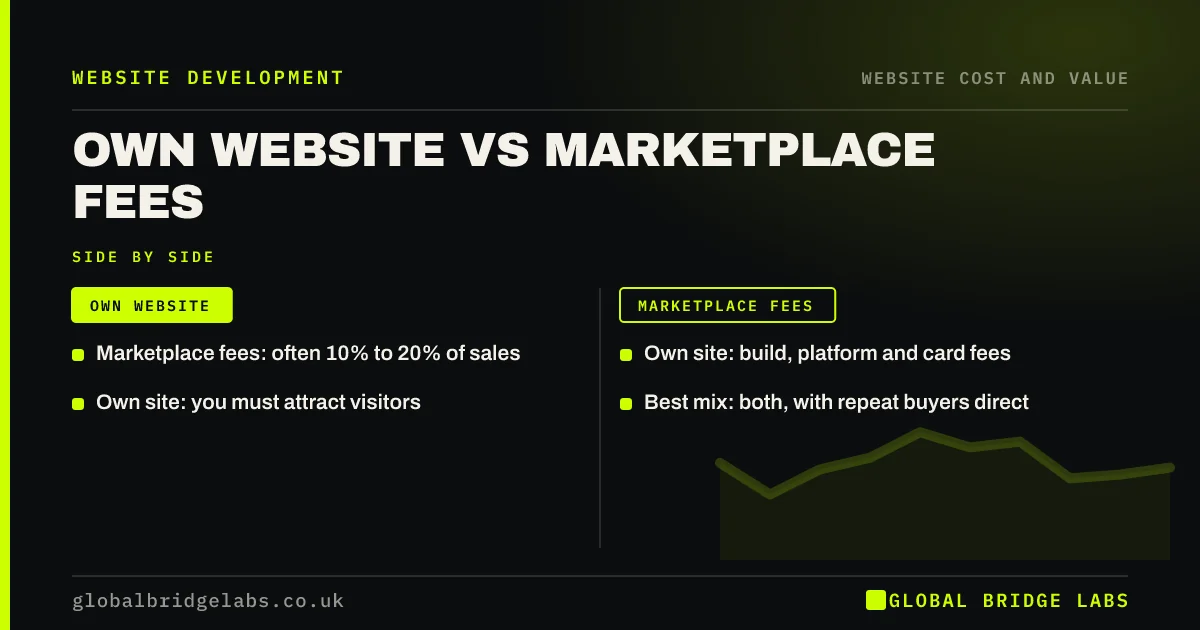
Marketplaces such as Amazon, Etsy and eBay charge commissions and fees that often total 10% to 20% of each sale, while your own website costs a build fee, platform fees and the cost of bringing visitors. Marketplaces bring ready buyers; your own site keeps margin and customer relationships. Many UK sellers use both and move repeat customers to their own site.
- Marketplace fees: often 10% to 20% of sales.
- Own site: build, platform and card fees.
- Own site: you must attract visitors.
- Best mix: both, with repeat buyers direct.
Want marketplace and own-site costs compared? Message us on WhatsApp.
Chat on WhatsApp →How do marketplace fees compare with your own website?
Marketplace fees typically total 10% to 20% of each sale once commissions, listing and payment fees are added, depending on the marketplace and category. An own website costs a build of £2,000 to £15,000, platform and card fees of a few per cent, plus marketing to bring visitors.
What does a worked example look like?
A worked example: a seller doing £5,000 a month on a marketplace at 15% total fees pays £750 a month, £9,000 a year. A Shopify site at about 3% to 4% in platform and card costs, £150 to £200, saves around £550 a month, before the cost of attracting visitors.
- Marketplace: about £750 a month in fees.
- Own site: about £150 to £200 in platform and card fees.
- Difference: about £550 a month before marketing.
Want this modelled on your own sales? Message us on WhatsApp and we will discuss your requirements.
Chat on WhatsApp →What does your own site cost that marketplaces do not?
Your own site needs traffic: search, social media, email or ads. That marketing costs time or money, sometimes more than marketplace fees at first. You also handle customer service, returns and legal information such as distance selling terms.
What do you gain from your own site?
Your own site gives you customer data, repeat sales without commission, control over branding and pricing, and protection from marketplace rule changes or account suspensions. These matter more as the business grows.
When should you stay on marketplaces?
Stay on marketplaces when you are testing products, sell mainly to one-off buyers who search there, or lack time to market your own site. Use marketplace sales to fund your own site gradually.
What does this look like in practice?
At Global Bridge Labs (GBL), a UK candle maker sold only on a marketplace, paying about £7,000 a year in fees. A £3,500 Shopify site with an insert card inviting repeat orders moved a growing share of repeat buyers direct. Within a year, direct repeat sales covered the site's build and running costs.
Channel cost checklist
- Total last year's marketplace fees.
- Model own-site platform and card fees.
- Estimate marketing costs for your own site.
- Plan how to move repeat buyers direct.
- Check distance selling requirements.
- Keep marketplaces for discovery.
Next step
Add up last year's marketplace fees. If that figure exceeds the cost of a simple store, start moving repeat customers to your own site.
Message us on WhatsApp for a marketplace vs own site calculator, or book a 30-minute consultation.
Chat on WhatsApp →Sources and further reading
- Shopify pricing (UK) · Shopify
- Internet sales as a percentage of total retail sales · Office for National Statistics
- Consumer Contracts (Information, Cancellation and Additional Charges) Regulations 2013 · legislation.gov.uk
Frequently asked questions
Is it cheaper to sell on my own website or a marketplace?
Per sale, your own website is usually cheaper, with platform and card fees of a few per cent against marketplace fees often totalling 10% to 20%. But you must attract visitors yourself, which costs time or money. Many sellers find a mix of both works best.
Should I leave Etsy or Amazon for my own website?
Usually not entirely. Marketplaces bring buyers you would struggle to reach alone. A better approach is to keep marketplace listings for discovery while building your own site for repeat customers and higher-margin sales, shifting the balance as your audience grows.
How much does it cost to set up an online shop instead of a marketplace?
Setting up your own online shop typically costs £2,000 to £15,000 with a designer, plus monthly platform fees, card fees and apps. Self-built shops cost less in cash. Budget also for marketing, because your own shop needs visitors that marketplaces provide.
Written by

Global Bridge Labs (GBL) is a UK–Sri Lanka partner for social media, websites and BPO. Everything here comes from client delivery, not theory.