On this page
- 01Key takeaways
- 02How much does a multilingual website cost?
- 03How much does website translation cost?
- 04What are the ongoing costs?
- 05How do you keep extra languages affordable?
- 06When is a multilingual site not worth it?
- 07What does this look like in practice?
- 08Multilingual checklist
- 09Next step
- 10Sources and further reading
- 11Frequently asked questions
Key takeaways
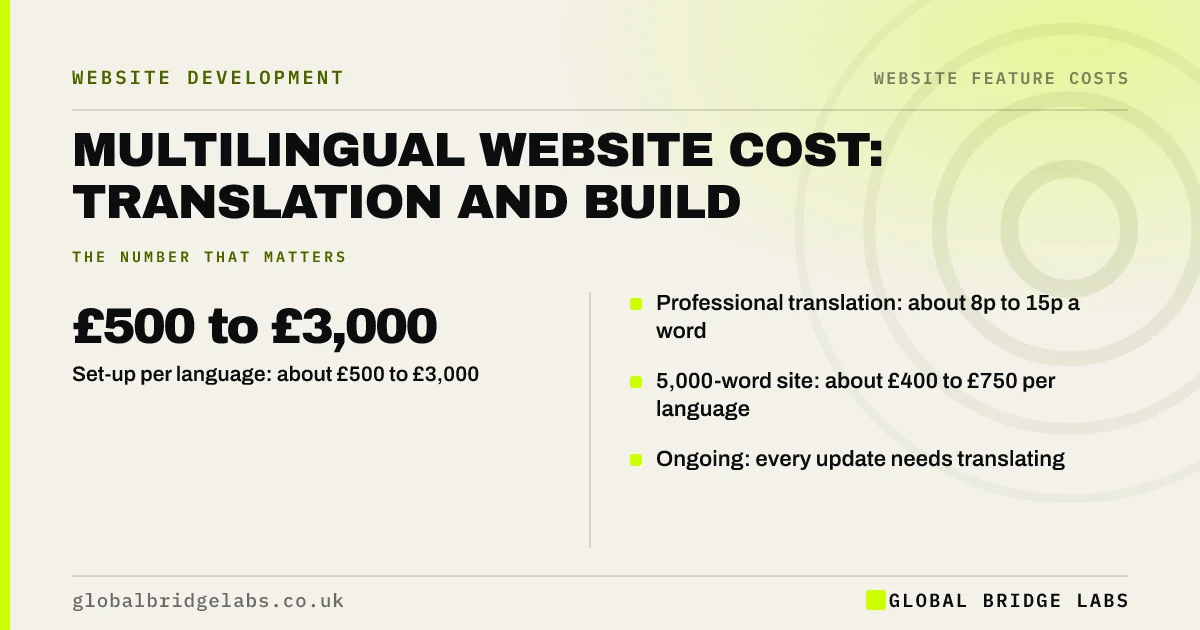
A multilingual small business website typically costs £500 to £3,000 per extra language to set up, plus translation at about 8p to 15p a word for professional work. A 5,000-word site costs roughly £400 to £750 to translate per language. Machine translation is cheaper but risks trust; translate key pages properly first.
- Set-up per language: about £500 to £3,000.
- Professional translation: about 8p to 15p a word.
- 5,000-word site: about £400 to £750 per language.
- Ongoing: every update needs translating.
Want extra languages costed for your site? Message us on WhatsApp.
Chat on WhatsApp →How much does a multilingual website cost?
A multilingual website costs about £500 to £3,000 per extra language to set up, based on typical UK quotes, plus translation. Set-up covers language switching, translated menus and forms, and search settings so each language version can be found. Translation is priced separately, usually per word.
How much does website translation cost?
Professional website translation typically costs about 8p to 15p a word in the UK, depending on the language pair and subject. Specialist legal or medical content costs more. Machine translation is near-free but needs human review for anything customers rely on.
- Standard business content: about 8p to 15p a word.
- Specialist content: higher.
- Machine translation plus review: lower, with risk.
Want a translation budget for your pages? Message us on WhatsApp and we will discuss your requirements.
Chat on WhatsApp →What are the ongoing costs?
Ongoing costs include translating every new page and update, any multilingual plugin or service licence, and checking each version still works. A site that changes weekly needs a translation process, not a one-off project.
How do you keep extra languages affordable?
Keep extra languages affordable by translating only pages that matter to that audience, such as home, key services and contact. Use clear, short source copy, which costs less to translate. Plan language support into the build rather than adding it later.
When is a multilingual site not worth it?
A multilingual site is not worth it if few customers need another language or would happily use English. Check analytics for visitor languages and ask sales staff before translating.
What does this look like in practice?
At Global Bridge Labs (GBL), a UK freight forwarder wanted its 40-page site in Polish and Romanian. Analytics showed most non-English visitors viewed five pages. Translating those five pages per language cost about a third of full translation and covered almost all relevant visitors.
Multilingual checklist
- Check analytics for visitor languages.
- Choose which pages to translate.
- Price translation per word.
- Plan language switching and search settings.
- Set a process for translating updates.
- Review machine translation with a native speaker.
Next step
Find the five pages non-English visitors use most. Price translating those before committing to a full multilingual site.
Message us on WhatsApp for a multilingual website plan, or book a 30-minute consultation.
Chat on WhatsApp →Sources and further reading
- SEO Starter Guide · Google Search Central
- Web Content Accessibility Guidelines (WCAG) 2.2 · W3C
- How copyright protects your work · GOV.UK
Frequently asked questions
How much does it cost to translate a website?
Professional translation typically costs about 8p to 15p a word in the UK, so a 5,000-word site costs about £400 to £750 per language. Specialist content costs more. Set-up of language versions on the site usually adds £500 to £3,000 per language.
Can I use Google Translate for my business website?
You can, but machine translation can produce errors that damage trust, especially on prices, terms and service descriptions. If you use it, have a native speaker review key pages. Professional translation is safer for anything customers rely on to make decisions.
Do multilingual websites help SEO?
They can, if each language version has its own URL and is set up so search engines know which version suits which audience. Properly translated pages can rank in searches in that language. Automatic translation widgets that do not create separate pages usually do not help search.
Written by

Global Bridge Labs (GBL) is a UK–Sri Lanka partner for social media, websites and BPO. Everything here comes from client delivery, not theory.