On this page
Key takeaways
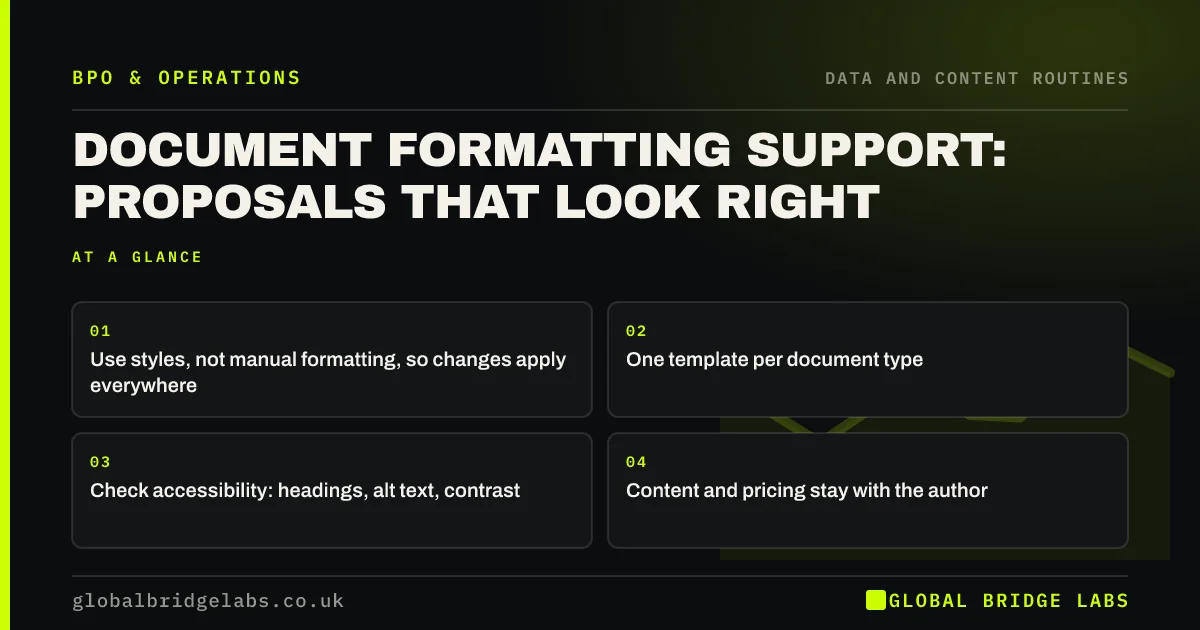
Document formatting support applies your templates and styles to proposals, reports, tenders and letters: headings, numbering, tables, contents pages, accessibility and final checks. It is repetitive and rule-based, but often done by senior staff at the last minute. A template and a dedicated formatter make every document consistent and save the late nights.
- Use styles, not manual formatting, so changes apply everywhere.
- One template per document type.
- Check accessibility: headings, alt text, contrast.
- Content and pricing stay with the author.
Senior people formatting documents at midnight? Message us on WhatsApp with what you produce each month.
Chat on WhatsApp →What does document formatting involve?
It involves applying the right template, setting heading styles, fixing numbering and cross-references, formatting tables, inserting the contents page, checking images and captions, making the document accessible, and running final checks on fonts, spacing and page breaks. Each document type has its own rules, but the steps repeat.
Why do styles and templates matter?
Styles let a document change consistently: one edit to the heading style updates every heading. Manually formatted documents break when edited, which is why they take so long to tidy. Templates with built-in styles also make accessibility easier, because screen readers rely on real headings.
- Heading styles for structure and navigation.
- Numbered lists and captions that update.
- Tables with header rows.
- Alt text on images and charts.
What does formatting take?
In an illustrative example, a 30-page proposal with tables and images takes about 2 to 4 hours to format properly from a rough draft. A firm sending eight a month spends 16 to 32 hours, often senior. These are example figures. Moving that to a dedicated formatter returns the hours and reduces errors in the final version.
Send us a sample document on WhatsApp and we will estimate the formatting time with you.
Chat on WhatsApp →When should formatting stay in-house?
Keep it in-house for documents that change until the last minute and need the author's hands on them, or for highly confidential material. Content, pricing and commitments in any document should always stay with the author; a formatter should not edit meaning.
What does this look like in practice?
A pattern we see: a professional firm's proposals all look slightly different because each partner formats their own. A shared template and one formatter make the firm look consistent and save partner time.
Formatting checklist
Check every document against these points.
- Correct template and styles.
- Headings, numbering and contents update.
- Tables and images captioned.
- Accessibility checks passed.
- Final read for page breaks and fonts.
Next step
Send us one of your standard documents. We will suggest a template and say plainly what a formatter could take on each month.
Message us on WhatsApp about document formatting, or book a 30-minute consultation.
Chat on WhatsApp →Sources and further reading
Frequently asked questions
What is document formatting support?
Document formatting support means someone applies your templates and styles to documents such as proposals, reports and tenders: headings, numbering, tables, contents pages, images and accessibility checks. The author writes the content; the formatter makes it consistent and ready to send.
Why use styles in Word documents?
Styles make formatting consistent and easy to change: updating a style updates every place it is used. They also create a proper structure for contents pages and screen readers, which improves accessibility. Manually formatted documents are slower to edit and break easily.
Can document formatting be outsourced?
Yes. Formatting is rule-based and repetitive, so a dedicated team working from your templates can turn drafts round quickly. Keep content, pricing and commitments with the author, and agree turnaround times that fit your deadlines.
Written by

Global Bridge Labs (GBL) is a UK–Sri Lanka partner for social media, websites and BPO. Everything here comes from client delivery, not theory.