On this page
- 01Key takeaways
- 02What is a minimum viable business website?
- 03What does it cost?
- 04What must it include?
- 05What should you add first when money allows?
- 06When is a tight-budget site a false economy?
- 07What does this look like in practice?
- 08Tight-budget checklist
- 09Next step
- 10Sources and further reading
- 11Frequently asked questions
Key takeaways
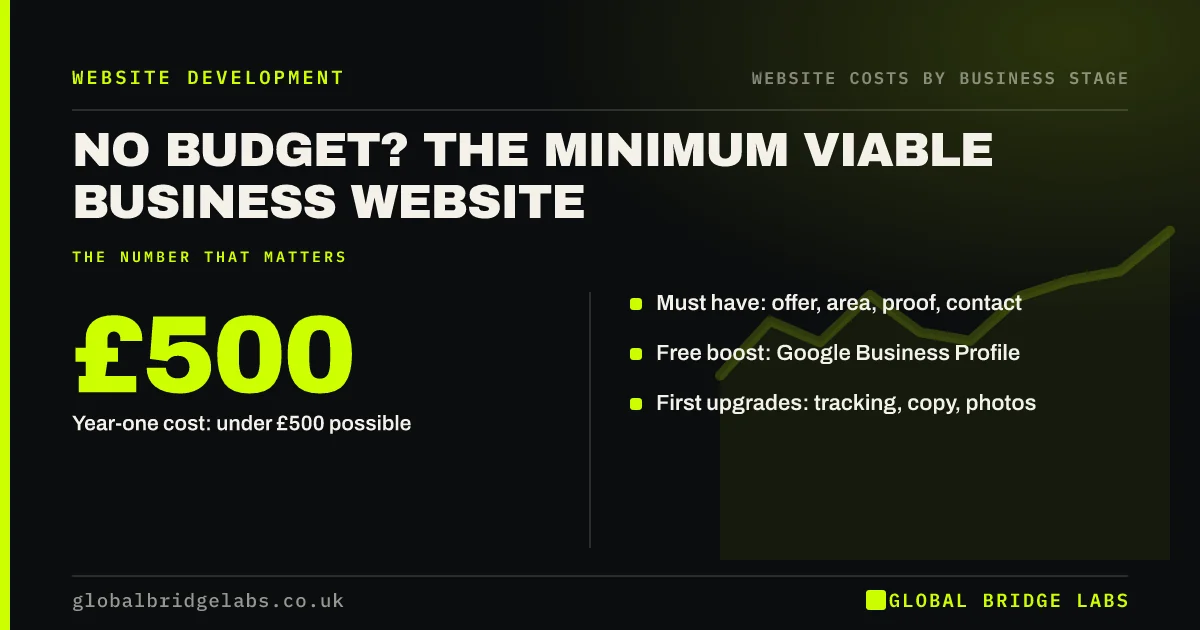
A minimum viable business website can cost under £500 in year one: a builder plan or simple hosting, a domain and your own copy and photos. It needs only what customers check: what you do, where, prices or ranges, proof and how to contact you. When money allows, add tracking, better copy and photography before design extras.
- Year-one cost: under £500 possible.
- Must have: offer, area, proof, contact.
- Free boost: Google Business Profile.
- First upgrades: tracking, copy, photos.
Want a minimum viable website plan? Message us on WhatsApp.
Chat on WhatsApp →What is a minimum viable business website?
A minimum viable business website is the smallest site that lets a customer understand what you do, trust you and get in touch. Often one to three pages on a builder or simple hosting, with your own words and photos. It replaces nothing more than it needs to.
What does it cost?
A minimum viable website typically costs about £180 to £500 in year one: a builder plan at about £15 to £40 a month or cheap hosting, a domain at about £5 to £20 a year, and free tools. Your own time is the largest hidden cost.
- Builder plan or hosting: about £180 to £480 a year.
- Domain: about £5 to £20 a year.
- Free analytics and Google Business Profile.
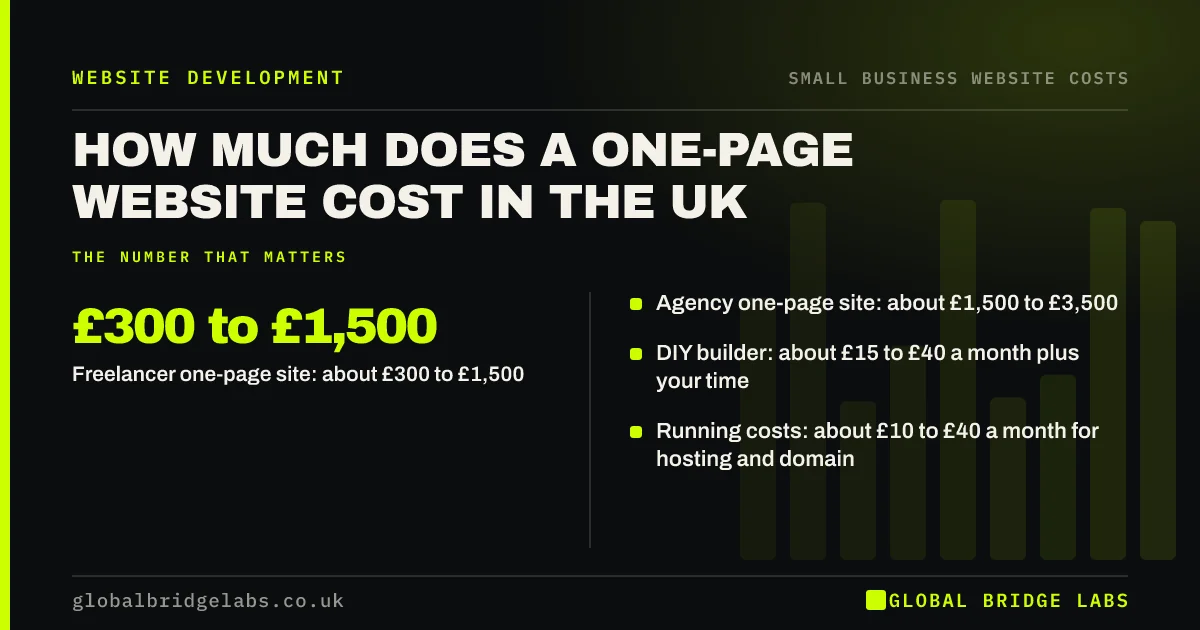
- How much does a one-page website cost in the UK?
- Domain name cost in the UK: registration and renewal
Want a tight-budget site set up properly? Message us on WhatsApp and we will discuss your requirements.
Chat on WhatsApp →What must it include?
It must include what you do, who for, where you work, prices or typical ranges, proof such as reviews or photos, and contact details that work on a phone. A cookie banner is needed if you use non-essential cookies, under ICO guidance.
What should you add first when money allows?
Add enquiry tracking first, so you can see what works. Then better copy, real photography, and service pages for your best-selling services. Leave design extras such as animations or bespoke layouts until the basics produce results.
When is a tight-budget site a false economy?
A tight-budget site is a false economy if it looks broken on phones, has the domain in someone else's name, or hides how to contact you. Fix those before anything else, even on a small budget.
What does this look like in practice?
At Global Bridge Labs (GBL), a UK window cleaner launched a two-page site for about £250 in its first year: services, areas, prices, reviews and a contact form. Paired with a Google Business Profile, it brought enough work to fund a proper five-page site in year two.
Tight-budget checklist
- Use a builder or simple hosting.
- Register the domain yourself.
- Write offer, area and prices.
- Add reviews and real photos.
- Set up a Google Business Profile.
- Add tracking as soon as possible.
Next step
Write the five facts a customer needs before calling you. If your site shows those clearly, it is enough to start.
Message us on WhatsApp for a minimum viable website checklist, or book a 30-minute consultation.
Chat on WhatsApp →Sources and further reading
- SEO Starter Guide · Google Search Central
- Google Business Profile Help · Google
- Cookies and similar technologies under PECR · Information Commissioner's Office
Frequently asked questions
Can I get a business website for under £500?
Yes. A builder plan or simple hosting plus a domain can cost about £180 to £500 in the first year, using your own words and photos. The site should cover what you do, where, prices or ranges, proof and contact details. Add tracking and better content as money allows.
What is the most important part of a cheap website?
Clarity. Visitors must understand what you offer, where you work and how to contact you within seconds, on a phone. Real reviews or photos build trust. A cheap site that does these well usually outperforms a more expensive one that is cluttered or vague.
Is a Google Business Profile enough without a website?
A Google Business Profile is free and very useful for local searches, and some businesses manage with it alone at first. A website adds space for services, prices and proof that you control. Ideally use both, with the profile linking to even a simple site.
Written by

Global Bridge Labs (GBL) is a UK–Sri Lanka partner for social media, websites and BPO. Everything here comes from client delivery, not theory.