On this page
- 01Key takeaways
- 02What does adding social media to a job really cost?
- 03What are the hidden costs?
- 04When does a staff member work well?
- 05When is an agency cheaper overall?
- 06What does this look like in practice?
- 07Staff or agency checklist
- 08Next step
- 09Sources and further reading
- 10Frequently asked questions
Key takeaways
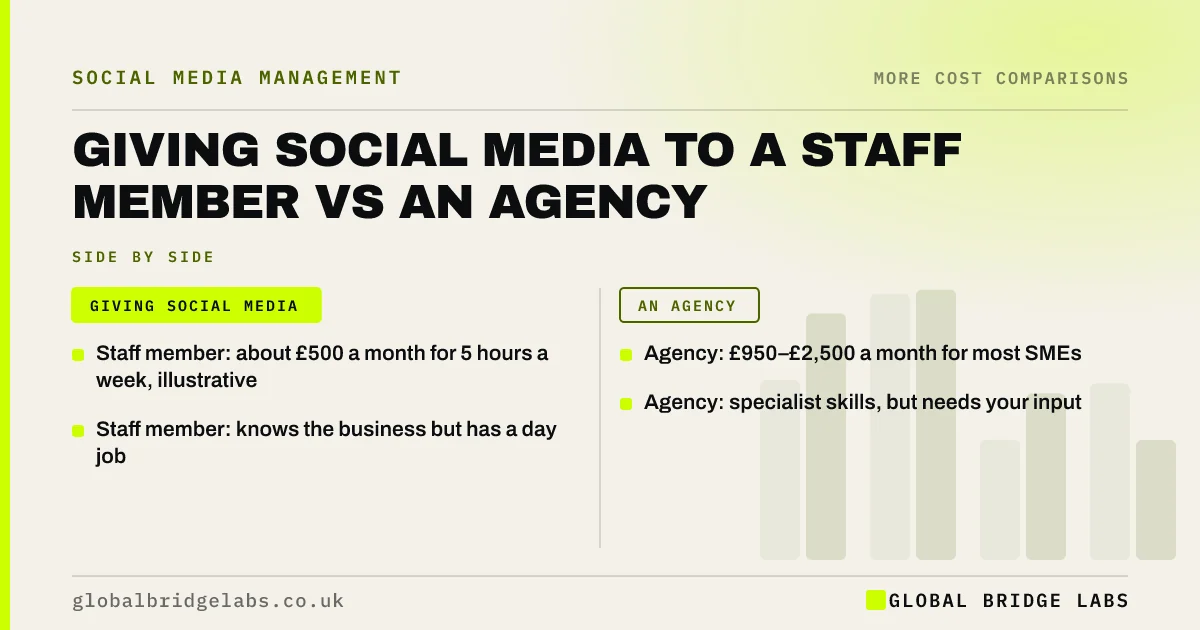
Giving social media to a staff member vs an agency looks free but is not. Illustratively, a £35,000 salary costs about £23.20 per worked hour, so 5 hours a week is roughly £500 a month of paid time, before the cost of their main job slipping. An agency at £950–£2,500 costs more in cash but brings skills and consistency.
- Staff member: about £500 a month for 5 hours a week, illustrative.
- Agency: £950–£2,500 a month for most SMEs.
- Staff member: knows the business but has a day job.
- Agency: specialist skills, but needs your input.
Wondering whether to keep social in-house? Message us on WhatsApp.
Chat on WhatsApp →What does adding social media to a job really cost?
When a receptionist, office manager or salesperson takes on social media, the business pays for those hours whether or not posts appear. On a £35,000 salary, the employer's cost is about £40,363 a year, or £23.20 per worked hour. Five hours a week is about 21.7 hours a month, roughly £500.
What are the hidden costs?
The main job slips when posting takes longer than planned. Social media gets dropped in busy weeks, so consistency breaks. Training, tools and design help add cost: training at £450–£1,200 and tools at £20–£80 a month. If the person leaves, the knowledge and sometimes the account access go with them.
- Paid time: about £500 a month at 5 hours a week.
- Training: £450–£1,200 once.
- Tools: £20–£80 a month.
- Lost output from their main job: not on any invoice.
Tell us who posts for you now on WhatsApp and we will discuss your requirements.
Chat on WhatsApp →When does a staff member work well?
When the person enjoys it, has protected time in their week, is trained and has a simple plan. Staff often capture the best behind-the-scenes content because they are there. Some businesses keep a staff member for photos and replies and use an agency for planning and design.
When is an agency cheaper overall?
When the staff member's main job earns more than their social media does, when posting keeps stopping, or when results need skills such as ads or design that the person does not have. Then the agency's higher cash cost buys back time and consistency.
What does this look like in practice?
A pattern we see: social media is added to an office manager's job, posts stop every busy month and the account looks abandoned. Keeping them as the content collector while an agency plans and publishes usually restores consistency without a new hire.
Staff or agency checklist
- Count the hours social media really takes each week.
- Price them at the person's hourly cost.
- Ask what their main job loses.
- Keep account access in the business's name.
- Compare with an agency or hybrid quote.
Next step
Ask the person to log their social media time for two weeks. Price it, then compare with outside help.
Message us on WhatsApp for a cost comparison, or book a 30-minute consultation.
Chat on WhatsApp →Sources and further reading
- Rates and thresholds for employers 2026 to 2027 · HM Revenue & Customs
- Workplace pensions: what you, your employer and the government pay · GOV.UK
Frequently asked questions
Is it cheaper to have an employee do social media?
In cash, often yes. In total cost, not always: their hours cost money, their main job slips and posting tends to stop in busy periods. Compare the hourly cost and the results with an agency or hybrid option.
Should social media be in someone's job description?
If someone is expected to do it, yes, with protected hours and clear expectations. Adding it informally usually means it is the first task dropped when work gets busy.
What happens to social accounts if the staff member leaves?
If accounts are in their personal name, you can lose access. Keep pages and ad accounts owned by the business, give staff their own roles and remove access when they leave.
Written by

Global Bridge Labs (GBL) is a UK–Sri Lanka partner for social media, websites and BPO. Everything here comes from client delivery, not theory.