On this page
- 01Key takeaways
- 02What is short-form video production?
- 03What does a social media video cost?
- 04What drives the price of video up?
- 05How does batching reduce the cost?
- 06Should video be inside the retainer or extra?
- 07When is paid video production not worth it?
- 08What should a video brief contain?
- 09What does this look like in practice?
- 10Video cost checklist
- 11Next step
- 12Sources and further reading
- 13Frequently asked questions
Key takeaways
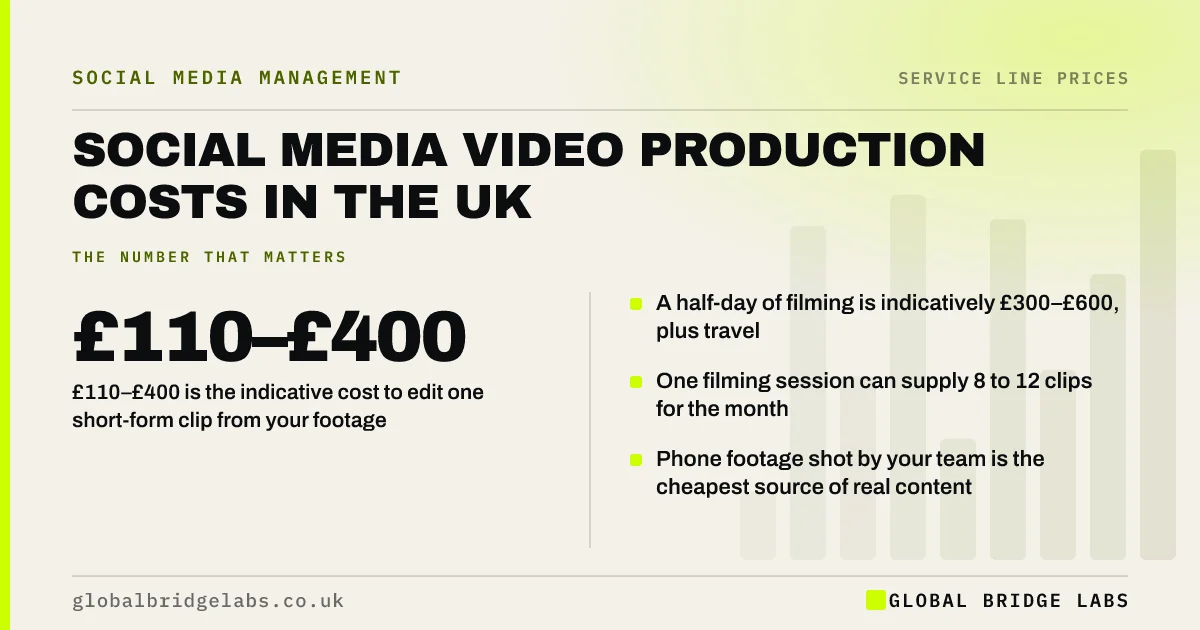
Social media video production cost in the UK depends on filming and editing time. As indicative figures, editing one short-form clip from supplied footage costs about £110–£400, and a half-day of filming about £300–£600. Batching 8 to 12 clips in one session is what makes video affordable.
- £110–£400 is the indicative cost to edit one short-form clip from your footage.
- A half-day of filming is indicatively £300–£600, plus travel.
- One filming session can supply 8 to 12 clips for the month.
- Phone footage shot by your team is the cheapest source of real content.
Want video in your plan without a studio budget? Message us on WhatsApp.
Chat on WhatsApp →What is short-form video production?
Short-form video production is the planning, filming and editing of vertical clips, usually 15 to 60 seconds, for Instagram Reels, TikTok, YouTube Shorts and Facebook. It includes a shot list, recording, cutting, captions, sound and a version sized for each platform.
What does a social media video cost?
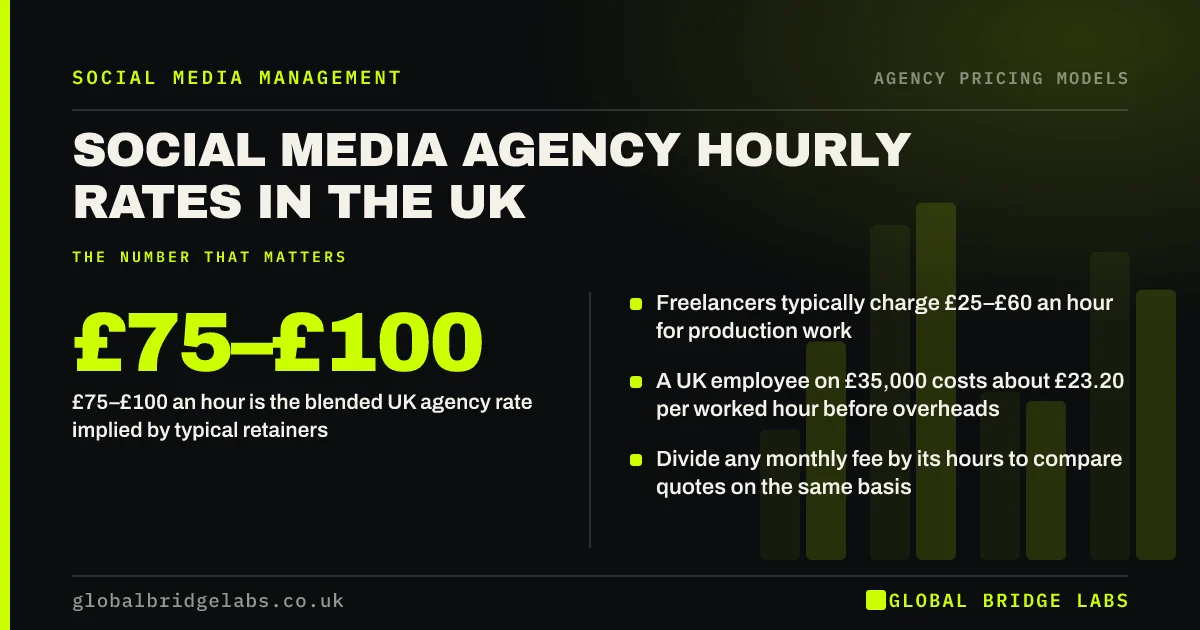
Editing a clip from supplied footage takes roughly 1.5 to 4 hours including captions and revisions. At the £75–£100 an hour implied by typical UK retainers, that is about £110–£400 a clip. Filming adds a half-day or day rate. These are indicative market figures, not a GBL price list.
- Edit from supplied phone footage: indicative £110–£400 a clip.
- Half-day filming on site: indicative £300–£600.
- Travel, locations and presenters: usually extra.
- Paid usage of creator content: negotiated separately.
Want a monthly video allowance costed? Send us your channels on WhatsApp and we will discuss your requirements.
Chat on WhatsApp →What drives the price of video up?
Four things raise the price: filming on location, multiple people on camera, complex editing such as animation, and many revision rounds. A talking-head clip filmed on a phone with clean audio is at the low end. A scripted, multi-location piece with graphics is at the high end.
- Location filming and travel time.
- Scripts, presenters and retakes.
- Animation, motion graphics and subtitles in several languages.
- More than two rounds of changes.
How does batching reduce the cost?
Batching means filming many clips in one session. The set-up, travel and briefing are paid for once, so a half-day that yields 10 clips costs far less per clip than ten separate visits. Plan the shot list in advance and film answers to real customer questions.
Should video be inside the retainer or extra?
Either works if it is written down. Retainers in the £2,500–£5,000 band often include regular video. Lower bands usually include a small allowance, such as a set number of edited clips from your footage, with filming days priced separately. An allowance stated as a number avoids disputes.
When is paid video production not worth it?
Polished production is not worth it when your buyers respond to real work. For trades, clinics, cafes and local services, a steady phone clip with clear sound often beats a glossy film. Spend on editing and captions before you spend on cameras and crews.
What should a video brief contain?
A short brief saves editing time and revisions. For each clip, note the question it answers, the opening line, the shots needed and what the viewer should do next. Ten briefs of four lines each are enough for a filming session and keep the edit to one round.
- The customer question the clip answers.
- The first sentence, written out.
- Three to five shots to capture.
- The call to action at the end.
What does this look like in practice?
A pattern we see with UK hospitality and training clients: staff film short clips on a phone during a normal week, and the production team edits, captions and schedules them. Global Bridge Labs (GBL) produces short-form video as part of the monthly content plan from material the client supplies.
Video cost checklist
Confirm these before you agree a video price.
- Number of clips per month.
- Who films: your team, the agency or a videographer.
- Revision rounds included.
- Captions and platform versions included.
- Who owns the raw footage and edits.
Next step
Tell us how many clips a month you want and whether your team can film on a phone. We will show the most cost-effective way to produce them.
Message us on WhatsApp for a video production plan, or book a 30-minute consultation.
Chat on WhatsApp →Sources and further reading
- TikTok for Business · TikTok
- Create a YouTube channel · YouTube Help
- Meta Business Help Centre · Meta
Frequently asked questions
How much does a social media video cost in the UK?
As an indication, editing one short-form clip from supplied footage costs about £110–£400, and a half-day of filming about £300–£600 plus travel. The cost per clip falls sharply when 8 to 12 clips are filmed in one session.
Is video included in a social media retainer?
Sometimes. Higher retainers of £2,500 a month and above often include regular video. Lower retainers usually include a small allowance of edited clips, with filming days charged separately. Ask for the allowance as a number. Check whether the allowance covers filming, editing or both.
Can I film social media videos on my phone?
Yes. A recent phone, natural light and a clip-on microphone costing £30–£40 are enough for most small businesses. Real footage of your work, edited well, often performs better than polished studio video. Clear sound matters more than picture quality.
How many videos should a small business post each month?
Enough to hold a steady rhythm, which for many small businesses is one or two short clips a week. Consistency matters more than volume, so choose a number you can keep supplying footage for. Start low and add clips once the routine holds.
Written by

Global Bridge Labs (GBL) is a UK–Sri Lanka partner for social media, websites and BPO. Everything here comes from client delivery, not theory.