On this page
- 01Key takeaways
- 02What is a social media content shoot?
- 03How much does a content shoot cost?
- 04How many posts does one shoot supply?
- 05What licence terms should you check?
- 06Do you need permission to photograph people?
- 07When is a professional shoot not worth it?
- 08How do you brief a photographer for social media?
- 09What does this look like in practice?
- 10Shoot planning checklist
- 11Next step
- 12Sources and further reading
- 13Frequently asked questions
Key takeaways
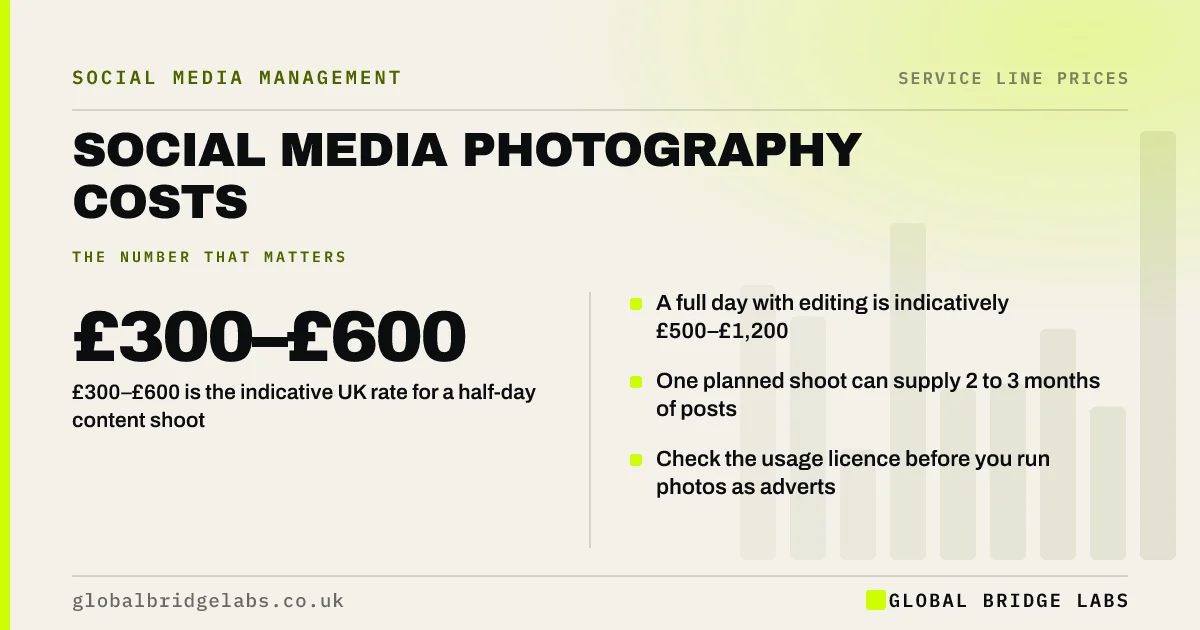
Social media photography cost in the UK is indicatively £300–£600 for a half-day and £500–£1,200 for a full day with a commercial photographer, including basic editing. A well-planned half-day can supply two to three months of posts, which makes it cheaper per image than it first looks.
- £300–£600 is the indicative UK rate for a half-day content shoot.
- A full day with editing is indicatively £500–£1,200.
- One planned shoot can supply 2 to 3 months of posts.
- Check the usage licence before you run photos as adverts.
Planning a content shoot? Message us on WhatsApp and we will help you plan the shot list.
Chat on WhatsApp →What is a social media content shoot?
A social media content shoot is a planned photography session, often with short video, that produces a library of images of your people, premises, products and work for use across social channels over the following weeks or months.
How much does a content shoot cost?
Rates vary by region and specialism. As an indication, a half-day costs about £300–£600 and a full day £500–£1,200, usually including basic editing of a set number of images. Travel, studio hire, models and extended licences are extra. These are indicative market figures, not a GBL price list.
- Half-day on site: indicative £300–£600.
- Full day on site: indicative £500–£1,200.
- Extras: travel, studio, models, props, rush editing.
- Licence: social use is usually included; advertising use may not be.
Want photography built into a monthly plan? Send us your location on WhatsApp and we will discuss your requirements.
Chat on WhatsApp →How many posts does one shoot supply?
A half-day with a shot list typically yields 40 to 80 usable images. At three to four image posts a week, that is two to three months of content. If a £450 half-day supplies 60 images, each costs about £7.50, far less than commissioning images one at a time.
What licence terms should you check?
Check who owns the images and how you may use them. In the UK the photographer usually owns copyright unless it is assigned in writing. A licence may cover organic social posts but not paid adverts, print or use by third parties. Get the scope of use in writing before the shoot.
Do you need permission to photograph people?
If people can be identified, their image is personal data. For staff and customers you need a lawful basis under UK GDPR, and in practice clear, recorded permission is the safest route. Tell people how the photos will be used and make it easy to say no.
When is a professional shoot not worth it?
A professional shoot is not worth it when the work changes daily and buyers want to see it as it happens. Trades, cafes and events are better served by regular phone photos. Use a professional for the images that last: team, premises, products and the header shots.
How do you brief a photographer for social media?
Brief for use, not for beauty. Tell the photographer which platforms the images are for, that you need vertical and square crops, and that you want variety over perfection. A shot list grouped by content pillar means the day produces posts, not a gallery of similar pictures.
- Platforms and crops: vertical, square, horizontal.
- Shot list by pillar: people, work, product, place.
- Space in the frame for text overlays.
- A mix of wide, detail and action shots.
What does this look like in practice?
A pattern we see with UK hospitality and accommodation clients: one planned shoot of rooms, food and staff supplies the evergreen images, and weekly phone photos supply the fresh ones. The mix keeps the feed current without a monthly photography bill.
Shoot planning checklist
Prepare these before the day.
- Shot list grouped by content pillar.
- People, products and locations confirmed.
- Written permission from anyone identifiable.
- Licence covering social and advertising use.
- Delivery date and number of edited images.
- Vertical and horizontal versions requested.
Next step
Tell us what you sell and where you would shoot. We will suggest a shot list that gives you the most content from one session.
Message us on WhatsApp to plan a content shoot, or book a 30-minute consultation.
Chat on WhatsApp →Sources and further reading
- How copyright protects your work · GOV.UK
- Lawful basis for processing personal data · Information Commissioner's Office
Frequently asked questions
How much does a social media photographer cost in the UK?
As an indication, £300–£600 for a half-day and £500–£1,200 for a full day, usually including basic editing. Travel, studio hire, models and wider usage licences cost extra. Rates vary by region and specialism. Ask for a written quote that lists what is included.
How often should a business book a content shoot?
Two to four times a year suits most small businesses. A planned half-day yields 40 to 80 usable images, enough for two to three months of posts when mixed with phone photos of day-to-day work. Book shoots before your busiest seasons, not during them.
Can I use photographer images in paid adverts?
Only if your licence allows it. Many licences cover organic social posts but not advertising. Ask for advertising use to be included in writing before the shoot, as adding it later usually costs more. The same applies to footage from a videographer.
Is photography included in a social media retainer?
Rarely as standard. Most retainers work from photos you supply and price shoot days as an extra or a stated quarterly allowance. Ask what is included and what a shoot day would cost. A quarterly half-day is a common arrangement.
Written by

Global Bridge Labs (GBL) is a UK–Sri Lanka partner for social media, websites and BPO. Everything here comes from client delivery, not theory.