On this page
- 01Key takeaways
- 02What is niche content, and what is broad content?
- 03How do the two compare?
- 04How narrow is too narrow?
- 05Can you niche the content without niching the business?
- 06When is broad content the right choice?
- 07How do you move from broad to niche safely?
- 08What does this look like in practice?
- 09Niche decision checklist
- 10Next step
- 11Sources and further reading
- 12Frequently asked questions
Key takeaways
Niche vs broad social media content is a trade between reach and relevance. Niche content reaches fewer people and brings better-matched enquiries. Broad content reaches more people and brings more noise. For most UK small businesses with limited hours, niche wins, provided the niche is large enough to feed the business.
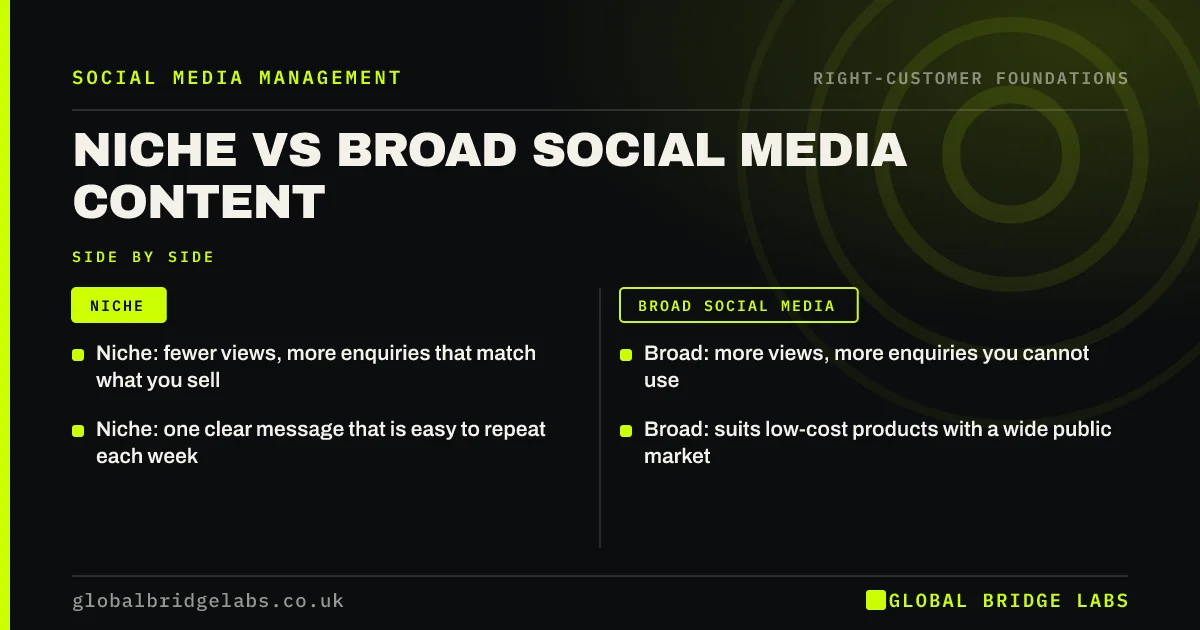
- Niche: fewer views, more enquiries that match what you sell.
- Broad: more views, more enquiries you cannot use.
- Niche: one clear message that is easy to repeat each week.
- Broad: suits low-cost products with a wide public market.
Unsure how narrow to go? Send us your services list on WhatsApp.
Chat on WhatsApp →What is niche content, and what is broad content?
Niche content is written for a defined group with a defined problem, such as dentists opening a second practice. Broad content is written for anyone in a wide category, such as small business owners. The difference is not the subject. It is how many people could reasonably say 'that is me'.
How do the two compare?
Niche content loses on reach and wins on almost everything a small business is paid for. The comparison below assumes the same hours spent on each.
- Reach: broad is higher; niche is lower but concentrated.
- Enquiry fit: niche is high; broad is mixed.
- Ideas: niche comes from customer questions; broad competes with everyone.
- Competition: niche faces few rivals; broad faces national brands.
- Workload: niche reuses one message; broad needs constant novelty.
- Risk: niche depends on one market; broad spreads it.
How narrow is too narrow?
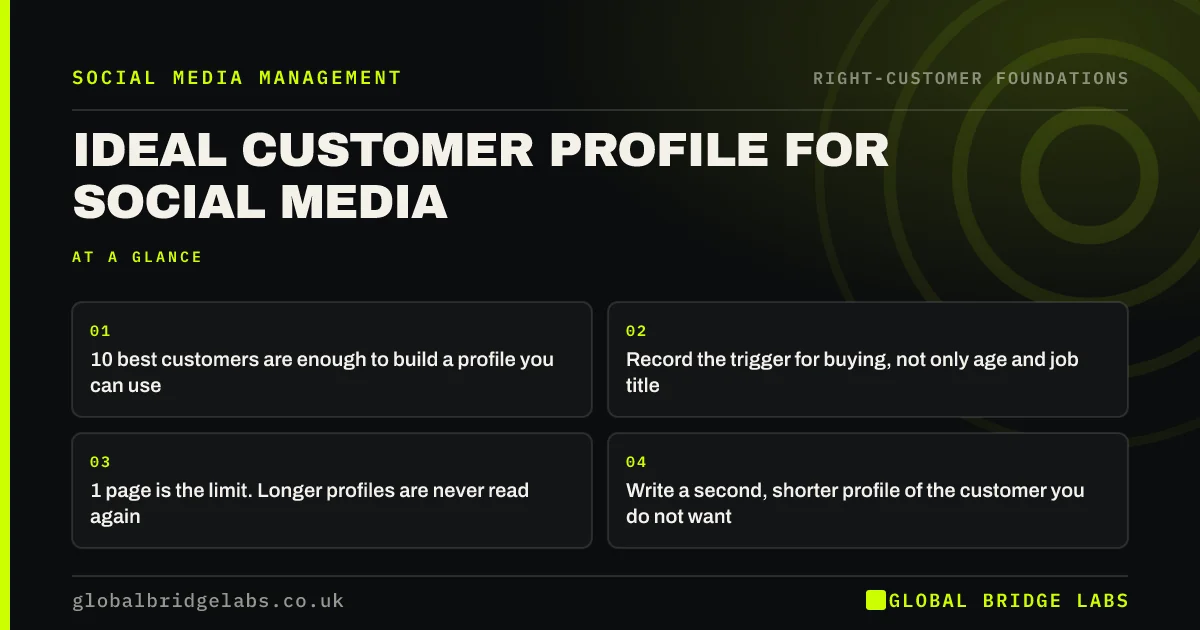
A niche is too narrow when there are not enough buyers in it to meet your sales target. Estimate the number of potential customers in your area or sector, the share likely to buy in a year, and your realistic share of those. If the answer is below what you need, widen by one step.
- Count potential customers you can actually serve.
- Estimate how many buy in a year.
- Apply a modest share you could win.
- Compare with the customers you need.
Want the niche arithmetic checked? Message us on WhatsApp and we will discuss your requirements.
Chat on WhatsApp →Can you niche the content without niching the business?
Yes. You can keep serving everyone who is a fit while aiming your content at the buyers you most want. The account leads with one audience, and the bio and website make clear what else you do. This gives you the sharper message without turning work away.
When is broad content the right choice?
Broad content is right when you sell an inexpensive product to a wide public, when you are new and still learning who buys, or when local reach matters more than specialism, as for a café. In those cases the market itself is broad, and narrowing would cut real customers.
How do you move from broad to niche safely?
Move gradually. Shift one post in three to the niche for a month, then two in three. Watch enquiry fit, not likes. Keep the bio broad enough to cover your other services until the niche is producing steady work. A sudden switch can confuse existing followers and customers.
What does this look like in practice?
A pattern we see with UK business-to-business firms: general 'marketing tips' or 'HR tips' posts compete with thousands of similar accounts. The same firm writing for one sector it knows well, with examples from that sector, is quickly recognised by people in it and is referred within it.
Niche decision checklist
Answer these before narrowing.
- Which customers are most profitable and easiest to serve?
- Are there enough of them to meet your target?
- Can you show proof from that group?
- Will the bio still cover your other services?
- Have you set a month to review enquiry fit?
Next step
Name the one group you would choose if you could only serve one for the next year. Aim a third of next month's posts at them and compare the enquiries.
Message us on WhatsApp for a view on your niche, or book a 30-minute consultation.
Chat on WhatsApp →Sources and further reading
- Business population estimates · Department for Business and Trade
- The 95-5 rule: most B2B buyers are out of market · LinkedIn B2B Institute
- LinkedIn relevance: optimising the member experience · LinkedIn Help
Frequently asked questions
Should a small business niche down on social media?
Usually, yes. With limited time, content aimed at one defined group brings better-matched enquiries than general content. Check first that the group is large enough to meet your sales target, and keep your bio clear about other services. You can still serve others who find you.
Will niche content limit my growth?
It limits follower growth more than business growth. Fewer people see niche posts, but a higher share are potential buyers. If the niche proves too small, widen by one step, for example from one profession to a sector. Review the size of the niche once a year.
Can I have more than one niche?
Two at most for a small account. Each niche needs its own examples and its own share of posts. Decide the split in advance, such as two posts in three for the main audience, so the account still reads clearly.
How long before niche content shows results?
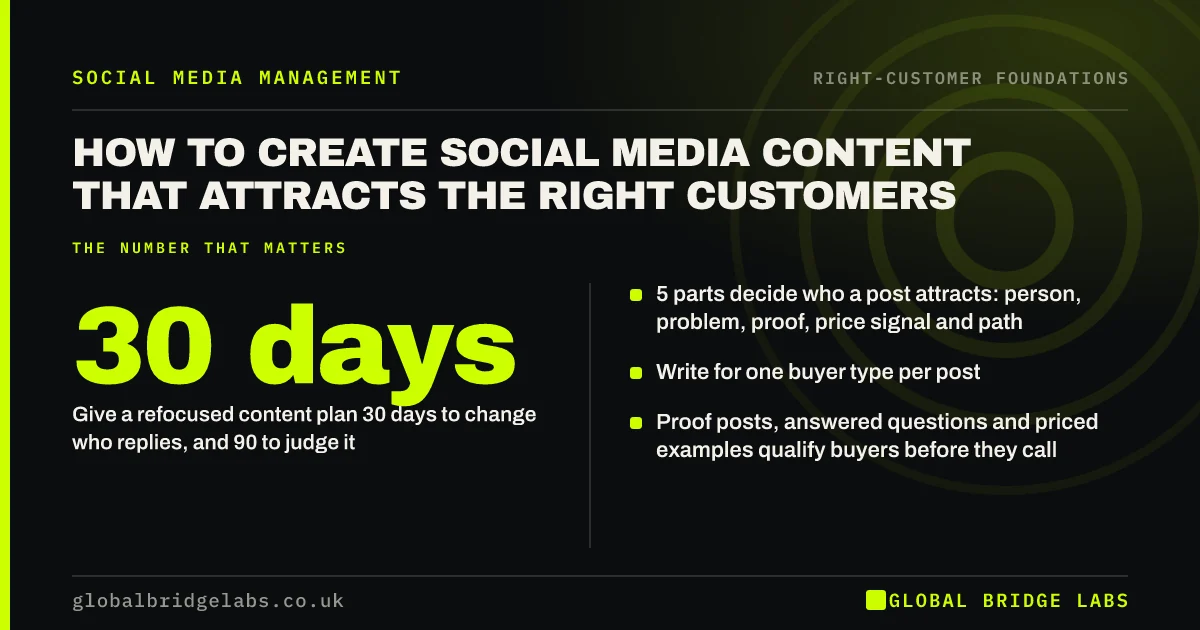
Allow about 90 days. Expect likes to dip in the first month. Look instead for messages that mention a specific post, enquiries describing the right kind of work, and referrals within the niche. Keep the same niche for the whole period, or the test tells you nothing.
Written by

Global Bridge Labs (GBL) is a UK–Sri Lanka partner for social media, websites and BPO. Everything here comes from client delivery, not theory.