On this page
Key takeaways
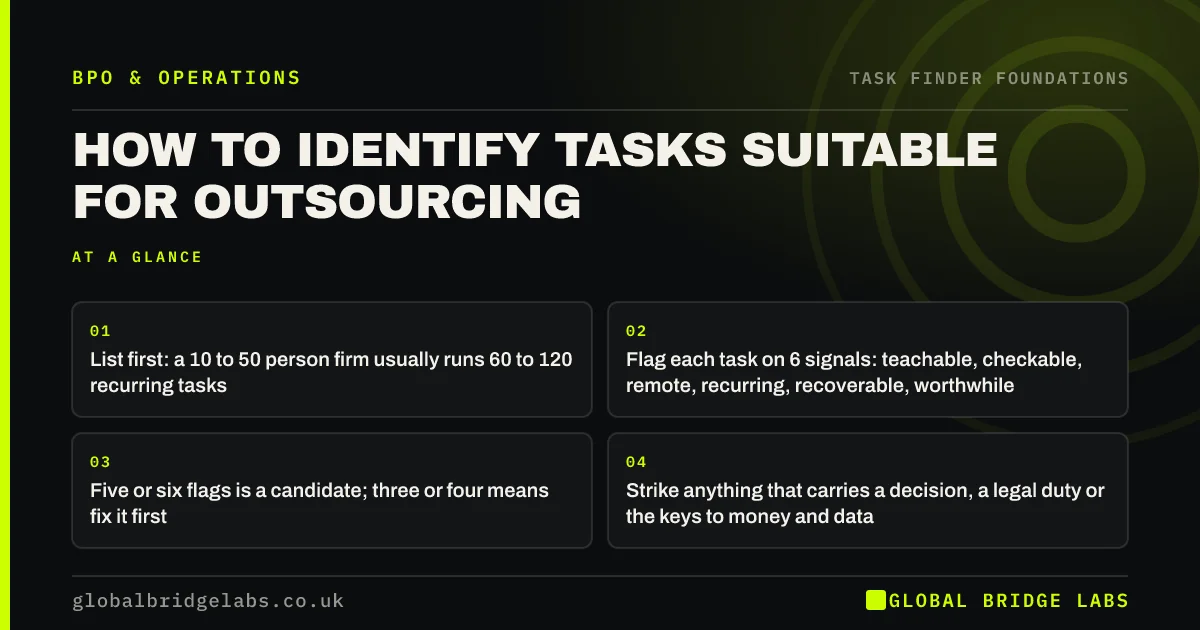
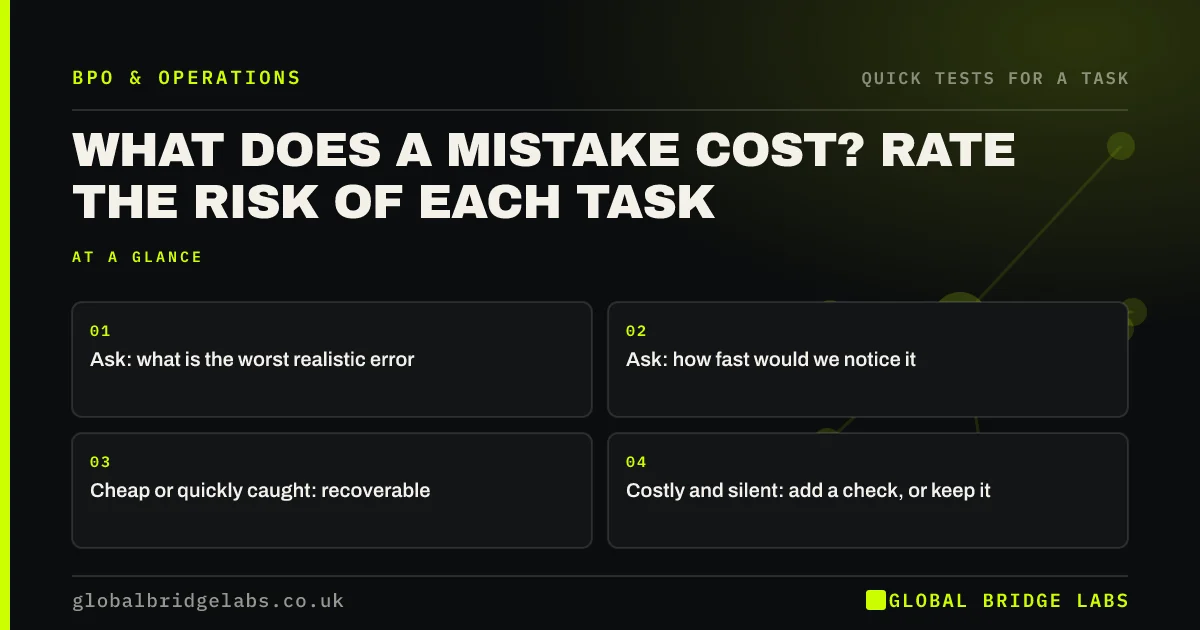
The cost of a mistake in a task depends on two things: how much harm one error does, and how quickly it would be noticed. A typo in an internal report is cheap and visible. A wrong bank detail on a supplier payment is expensive and silent. Tasks where mistakes are cheap or caught quickly pass the recoverable signal; the rest need a control.
- Ask: what is the worst realistic error?
- Ask: how fast would we notice it?
- Cheap or quickly caught: recoverable.
- Costly and silent: add a check, or keep it.
Want help rating the risk of your candidate tasks? Message us on WhatsApp.
Chat on WhatsApp →Why rate mistakes before outsourcing?
Everyone makes mistakes, inside or outside the business. HSE research on human failure separates slips and lapses, which happen to skilled people doing routine work, from mistakes and violations. What matters for outsourcing is not whether errors occur but whether they are caught before they reach a customer, a bank account or a regulator.
How do you rate a task's mistake cost?
Answer two questions for each task and combine them.
- Harm: low (internal rework), medium (customer annoyed, small cost), high (money lost, legal breach, safety).
- Detection: fast (seen the same day), slow (seen at month end), silent (seen only when it hurts).
- Low harm, any detection: recoverable.
- Medium harm, fast detection: recoverable with a check.
- High harm or silent detection: control required or keep.
What controls make a risky task recoverable?
A check before release, such as approving a payment run. A second person confirming changes to bank details. Limits, such as refunds over £100 needing approval. Control totals that flag missing items. Each moves a task from 'silent and costly' to 'caught before harm', which is often enough to make it a candidate.
What does this look like in practice?
A pattern we see: supplier payments look too risky to move. Rated step by step, invoice matching is low harm and fast detection; changing bank details is high harm and silent. The matching moves, bank detail changes stay inside with a call-back check, and the payment run stays with a director's approval.
Mistake cost checklist
- Write down the worst realistic error for each task.
- Rate harm low, medium or high.
- Rate detection fast, slow or silent.
- Add controls to medium and high risk tasks.
- Keep tasks that stay high and silent.
Next step
For each task on your shortlist, write the worst realistic mistake in one sentence and how you would find out. The answers sort your list by risk.
Message us on WhatsApp for the mistake cost grid, or book a 30-minute consultation.
Chat on WhatsApp →Sources and further reading
- Human factors: managing human failures · Health and Safety Executive
- Late commercial payments: charging interest and debt recovery · GOV.UK
Frequently asked questions
How do I assess the risk of outsourcing a task?
Ask what the worst realistic mistake would be and how quickly you would notice it. Low-harm or quickly spotted errors make a task recoverable. Costly, silent errors need a control, such as an approval or second check, before the task moves, or the task should stay inside.
Do outsourced teams make more mistakes?
Not inherently. Routine work produces slips and lapses wherever it is done. Outsourced teams often make fewer once a task is documented and checked, because the steps are written down. The early weeks carry more risk, which is why checks are heavier at the start.
Which tasks are too risky to outsource?
Tasks where a single error is costly and would not be noticed until too late, and where no practical check can be added: approving payments, changing bank details without verification, and regulated sign-offs. The admin around them can often move with the risky step kept inside.
Written by

Global Bridge Labs (GBL) is a UK–Sri Lanka partner for social media, websites and BPO. Everything here comes from client delivery, not theory.