On this page
- 01Key takeaways
- 02What does Facebook Group management involve?
- 03How much does group management cost?
- 04Which businesses benefit from a group?
- 05What rules should a group have?
- 06When is a Facebook Group not worth it?
- 07What does this look like in practice?
- 08Group management checklist
- 09Next step
- 10Sources and further reading
- 11Frequently asked questions
Key takeaways
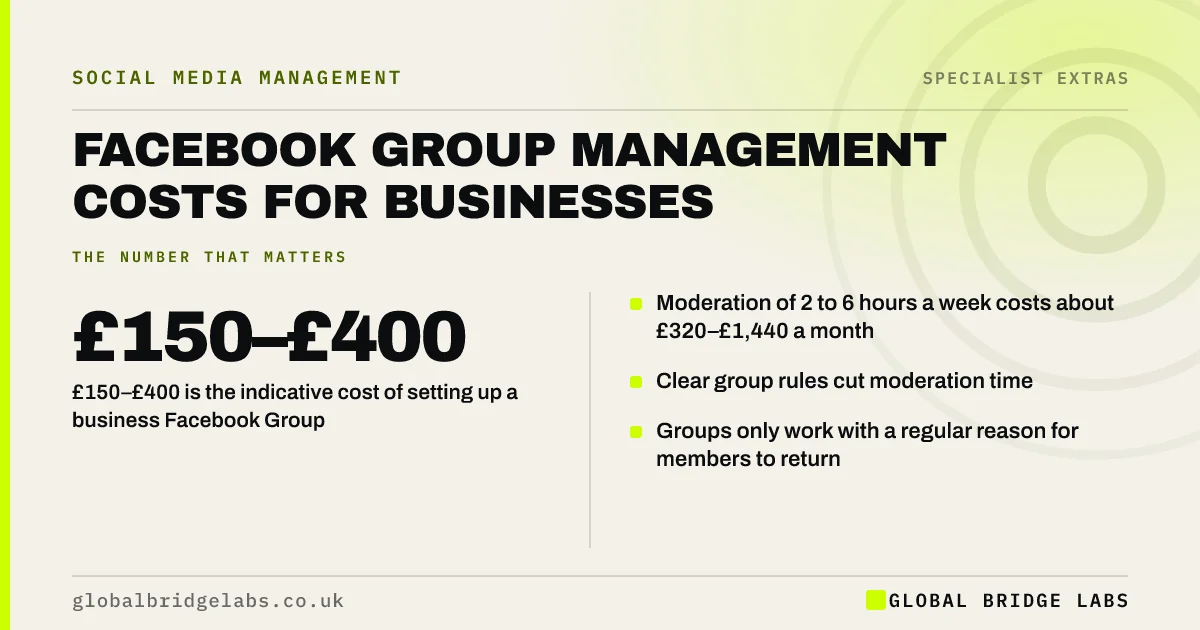
Facebook Group management cost for a UK business is mostly moderation and engagement time. As indicative figures, set-up takes 2 to 4 hours, about £150–£400, and 2 to 6 hours a week of moderation at community rates of £40–£60 an hour costs about £320–£1,440 a month.
- £150–£400 is the indicative cost of setting up a business Facebook Group.
- Moderation of 2 to 6 hours a week costs about £320–£1,440 a month.
- Clear group rules cut moderation time.
- Groups only work with a regular reason for members to return.
Thinking of starting a group for your customers? Message us on WhatsApp.
Chat on WhatsApp →What does Facebook Group management involve?
Facebook Group management is running a members' group linked to your business: approving members, posting prompts and updates, answering questions, removing spam and rule-breaking posts, and keeping conversations useful. It is more hands-on than running a page because members post too.
How much does group management cost?
Set-up, including rules, questions for joiners and welcome posts, takes 2 to 4 hours, about £150–£400 at UK agency rates. Ongoing moderation of 2 to 6 hours a week costs about £320–£1,440 a month at £40–£60 an hour. These are indicative figures, not a GBL price list.
- Set-up: indicative £150–£400.
- Light moderation, 2 hours a week: about £320–£480 a month.
- Active group, 6 hours a week: about £960–£1,440 a month.
- Live sessions or events in the group: priced separately.
Want group moderation costed for your size? Send us the details on WhatsApp and we will discuss your requirements.
Chat on WhatsApp →Which businesses benefit from a group?
Groups suit businesses whose customers want to talk to each other: fitness studios, coaches, course providers, hobby retailers, membership businesses and local community businesses. A group gives members a reason to return beyond your own posts.
What rules should a group have?
Write short rules: what the group is for, no spam or selling by members unless allowed, respectful language, and how complaints are handled. Pin them and enforce them consistently. Clear rules cut moderation time and keep the group useful.
When is a Facebook Group not worth it?
A group is not worth it when customers buy once and have no reason to talk to each other, or when nobody will post and moderate regularly. An empty or spam-filled group does more harm than no group. Your page and inbox may be all you need.
What does this look like in practice?
A pattern we see with UK coaches and fitness businesses: a group starts with energy, then spam and unanswered questions take over. Global Bridge Labs (GBL) sets clear rules and a weekly prompt routine, approves members and answers questions within UK business hours, so the group stays useful.
Group management checklist
Agree these before launch.
- Group purpose and rules, pinned.
- Joining questions to filter spam.
- Weekly prompts or content.
- Moderation hours and reply time.
- Who handles complaints.
Next step
Tell us who the group is for and how active you want it. We will tell you whether a group makes sense and what it costs.
Message us on WhatsApp for a group plan, or book a 30-minute consultation.
Chat on WhatsApp →Sources and further reading
- Meta Business Help Centre · Meta
- Defamation Act 2013 · legislation.gov.uk
- Advice for small organisations · Information Commissioner's Office
Frequently asked questions
How much does Facebook Group management cost?
As indicative UK figures, set-up takes 2 to 4 hours and costs about £150–£400. Ongoing moderation of 2 to 6 hours a week costs about £320–£1,440 a month at community management rates of £40–£60 an hour.
Is a Facebook Group better than a Facebook page?
They do different jobs. A page is your public shop window and where people message you. A group is a community where members talk to each other. Most businesses need a page; only some benefit from a group as well.
How do I stop spam in a business Facebook Group?
Use joining questions, approve members before they join, set clear rules about selling and links, and use Facebook's admin tools to filter posts. Regular moderation catches the rest before it spreads.
How often should I post in a business group?
Two or three prompts or updates a week is enough for most small groups, plus replies to member posts. The aim is to get members talking to each other, so questions and discussion prompts work better than announcements.
Written by

Global Bridge Labs (GBL) is a UK–Sri Lanka partner for social media, websites and BPO. Everything here comes from client delivery, not theory.