Short, practical writing on visibility, conversion and capacity, from the team doing the work for 120+ UK startups, SMEs and enterprises.
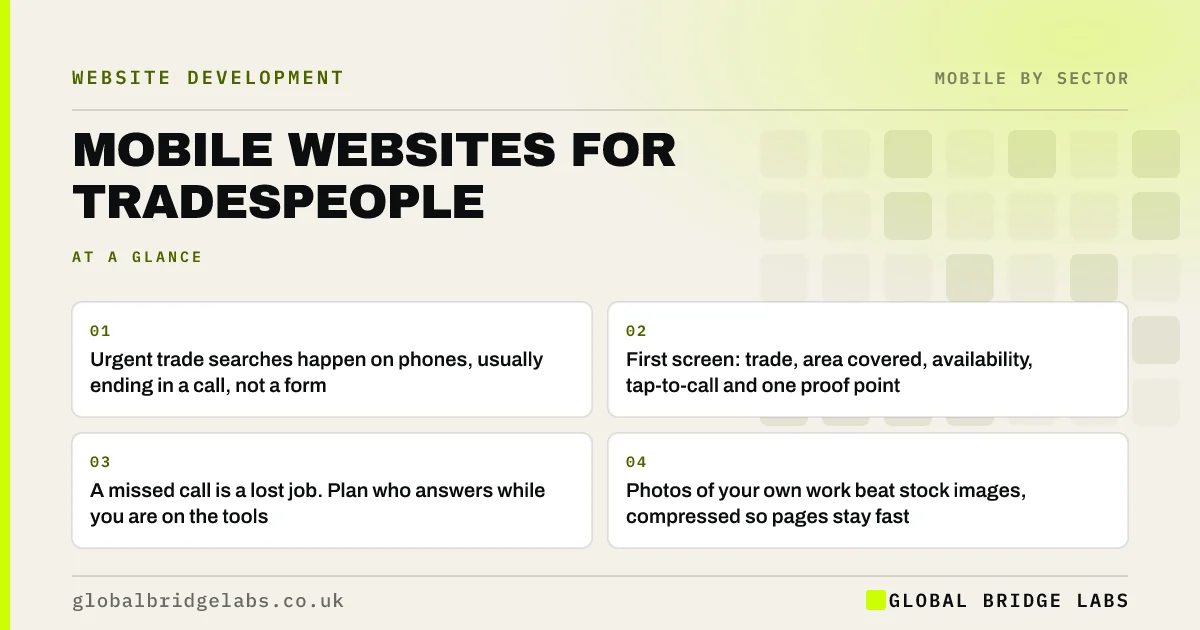
A mobile website for tradespeople has seconds to win an urgent job. What the first screen needs, how to handle calls on site and what to leave out.
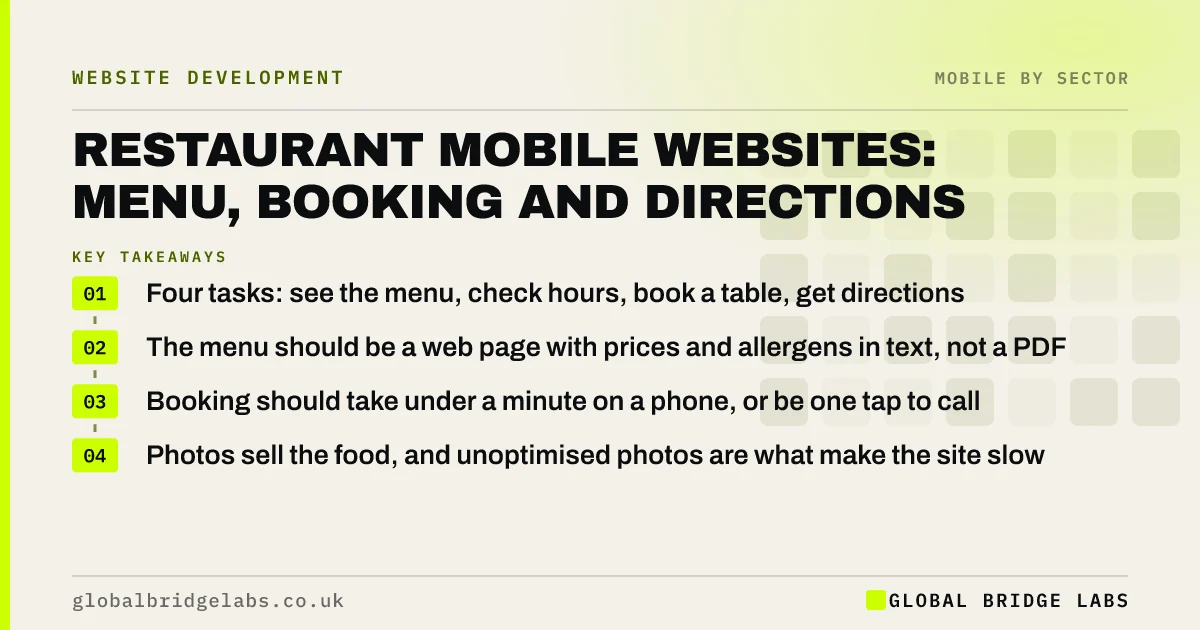
A restaurant mobile website has three jobs: show the menu, take the booking and get people to the door. How to do each well on a phone, and what to drop.
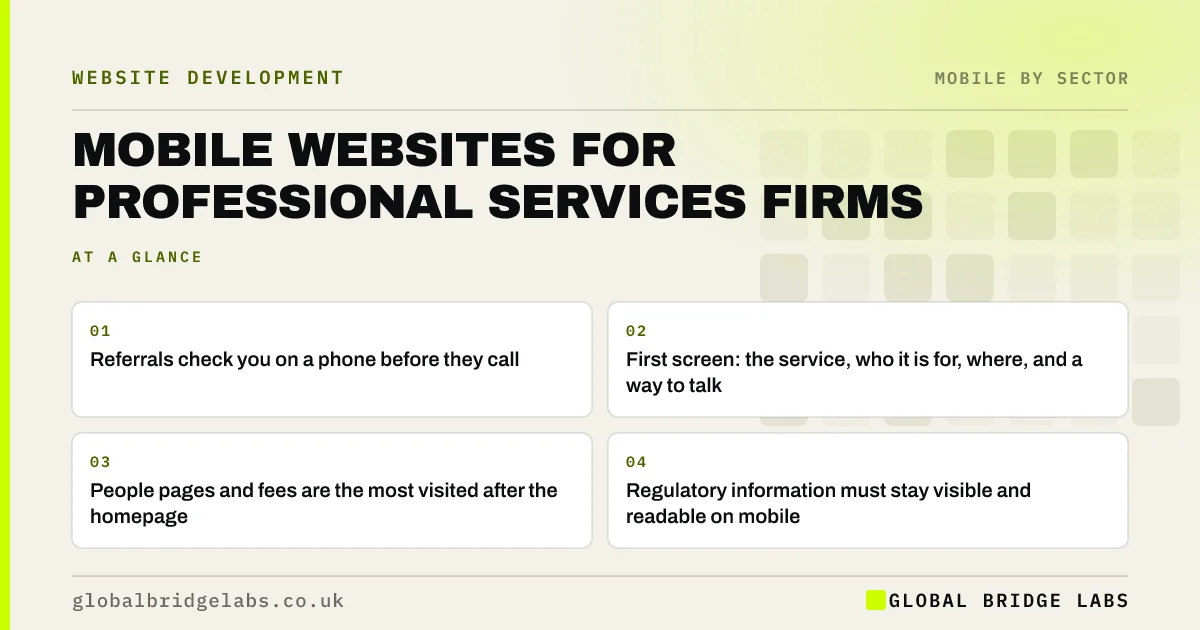
A mobile website for professional services has to earn trust on a small screen. What solicitors, accountants and advisers should show first on a phone.
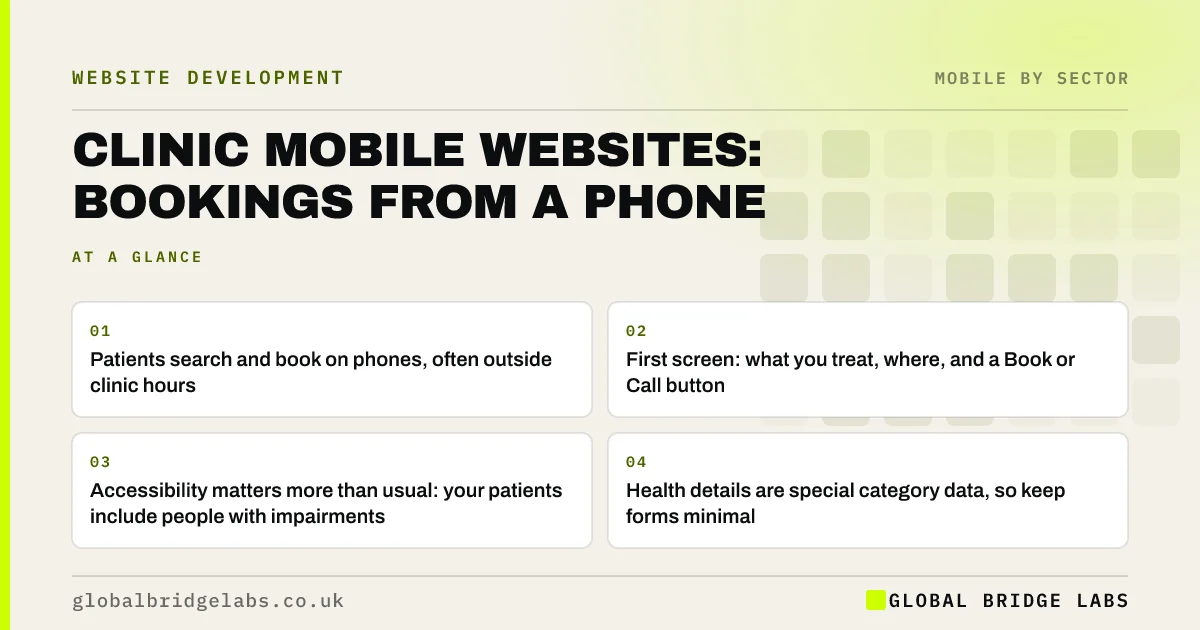
A clinic mobile website should let a patient understand a treatment, check the price and book from a phone in minutes, accessibly and with care for data.
A logistics mobile website serves shippers on the move, customers tracking deliveries and drivers looking for work. What each needs on a phone.
Does mobile matter for B2B? Yes, but differently. How to read your own device data, which B2B moments happen on phones and where to put the effort.
A local shop mobile website should answer three questions before a customer sets off: are you open, do you have it, and how do I get there?
Mobile job applications decide who applies. Why CV uploads and long forms lose candidates on phones, and a short apply flow small employers can use.
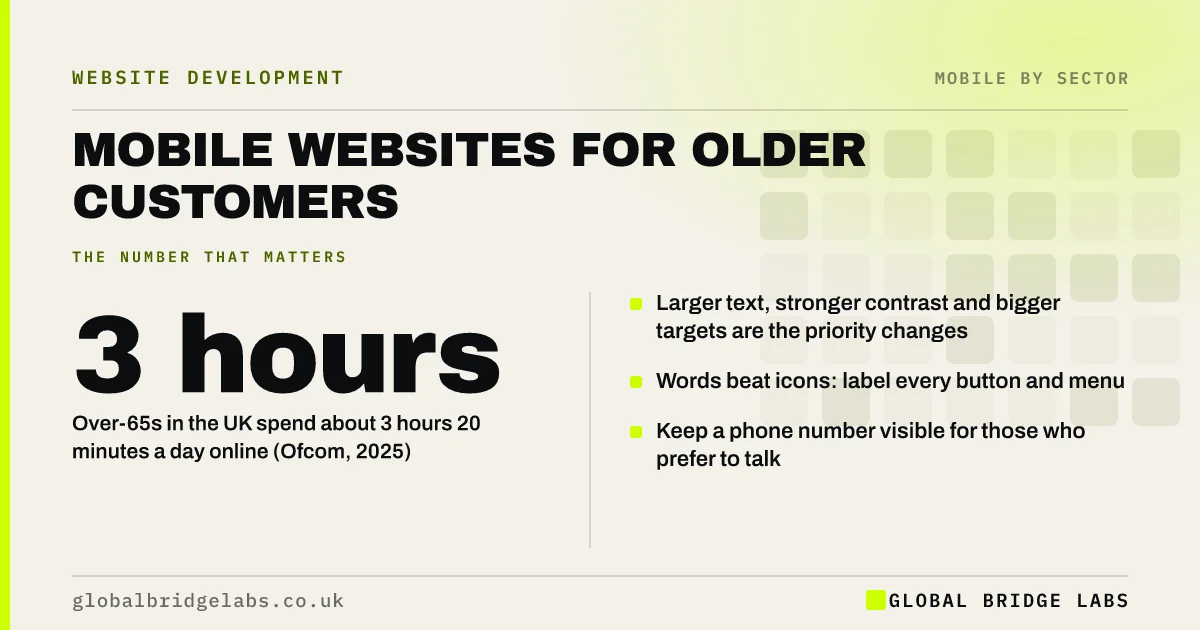
A website for older users on mobile needs larger text, bigger targets, plain labels and a phone number in view. What to change and what to leave alone.
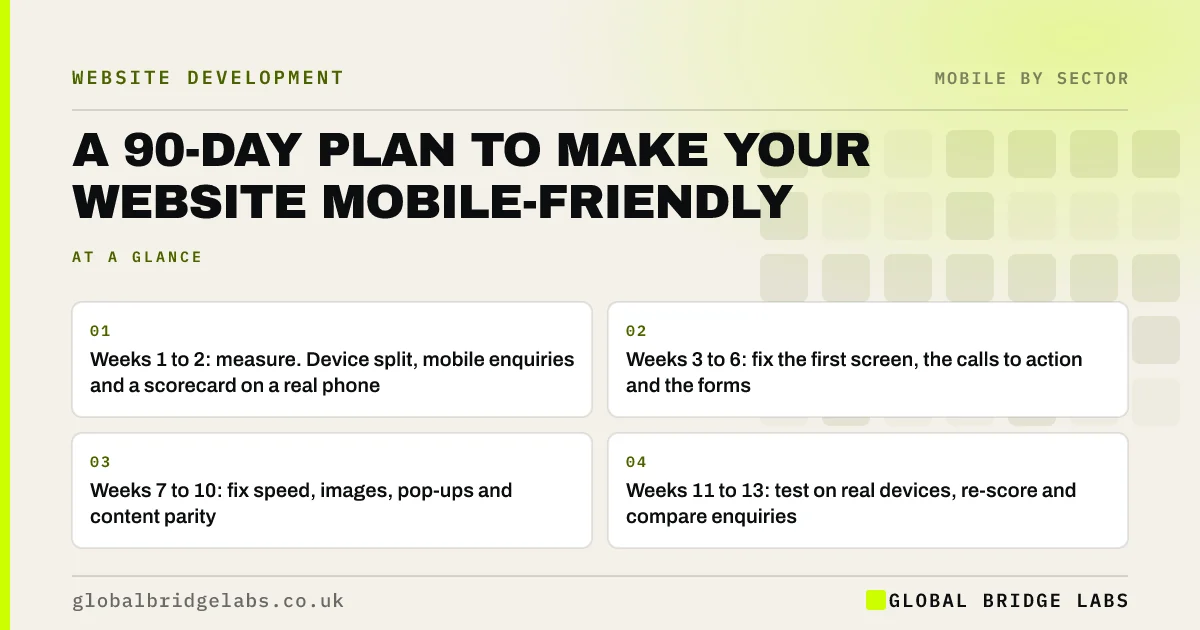
A mobile website improvement plan for UK small businesses: measure in weeks 1 to 2, fix the first screen and forms, then speed, then review at day 90.
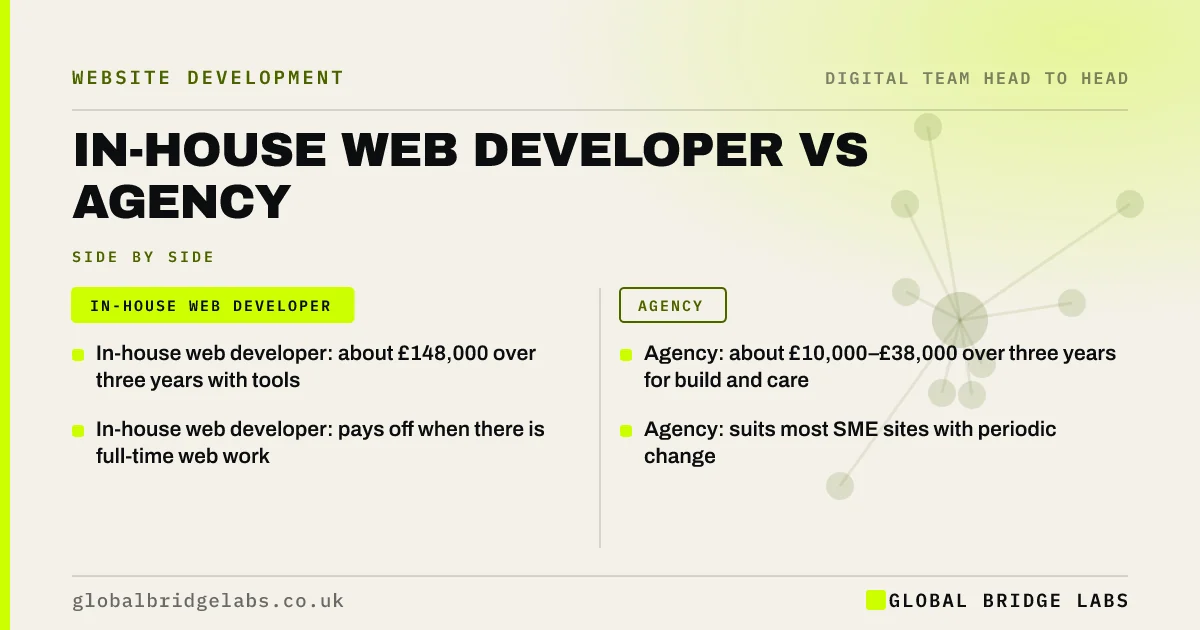
In-house web developer vs agency cost for UK businesses: a developer fully loaded, agency build and care costs over three years, and when a hire pays off.
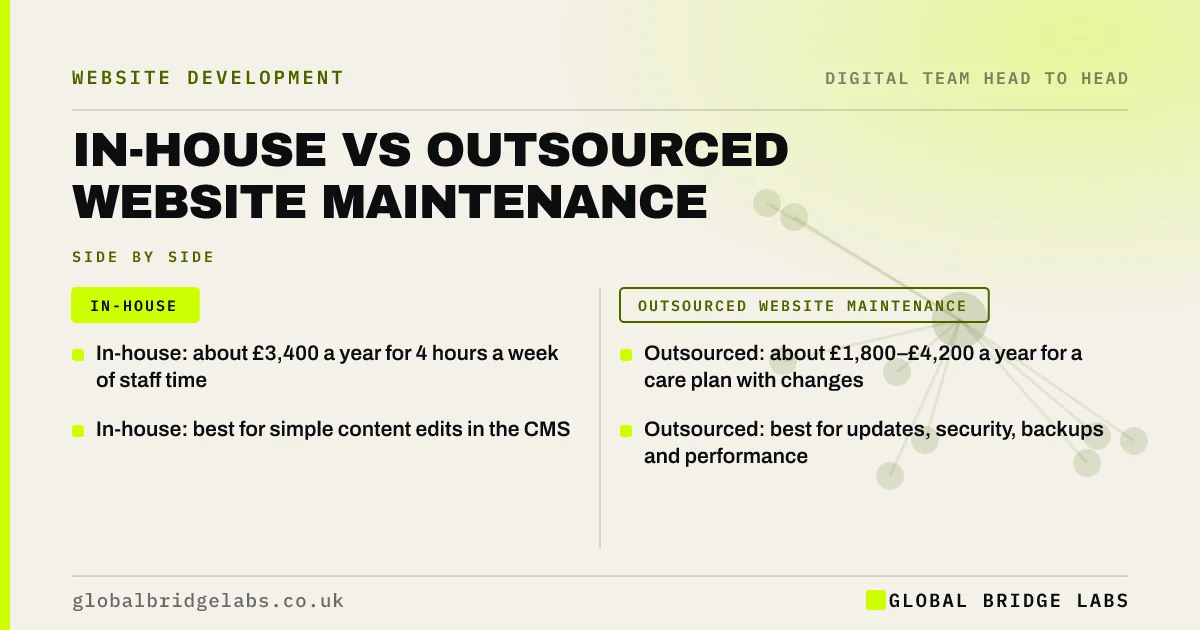
In-house vs outsourced website maintenance: the staff time, skills and security risk of doing it yourself against UK care plans at £50–£500 a month.
30 minutes with our team and you'll know exactly which of the three problems to fix first.
