On this page
- 01Key takeaways
- 02How do you negotiate a website price?
- 03Which levers reduce cost fairly?
- 04What should you not negotiate away?
- 05Can payment terms help?
- 06When is negotiating a bad idea?
- 07What does this look like in practice?
- 08Negotiation checklist
- 09Next step
- 10Sources and further reading
- 11Frequently asked questions
Key takeaways
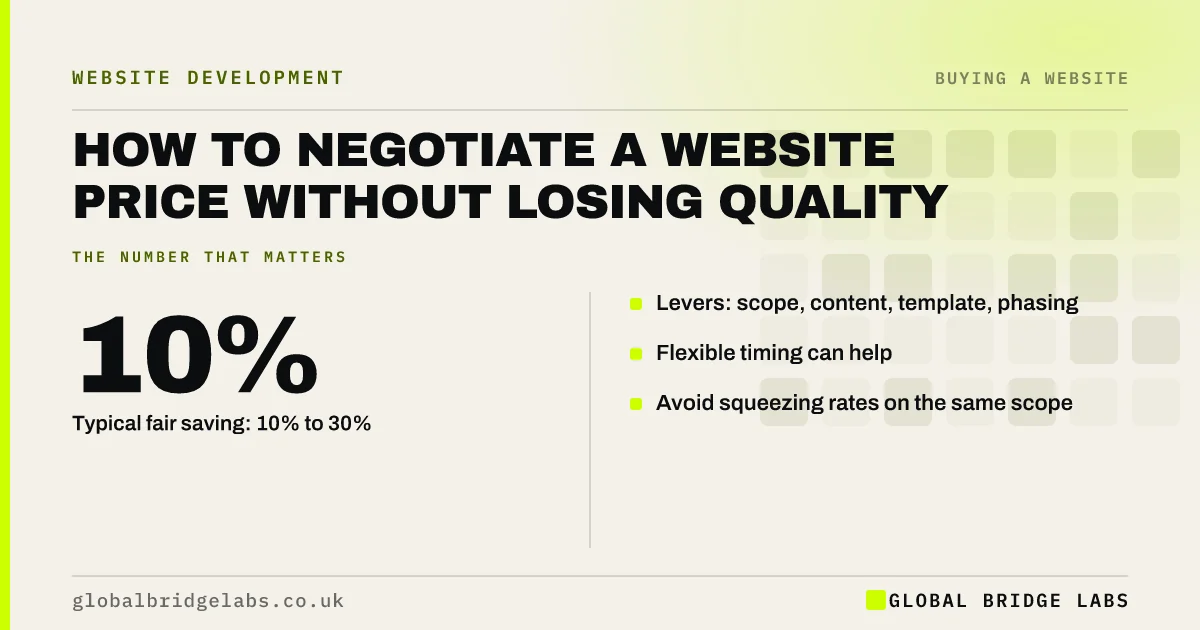
The best way to negotiate a website price is to change what you buy, not to ask for the same work cheaper. Reduce scope, supply content yourself, use a template, phase features or offer flexible timing. Squeezing a supplier's rate on unchanged scope often leads to rushed work. Most small businesses can cut 10% to 30% fairly this way.
- Typical fair saving: 10% to 30%.
- Levers: scope, content, template, phasing.
- Flexible timing can help.
- Avoid squeezing rates on the same scope.
Want help finding savings in your quote? Message us on WhatsApp.
Chat on WhatsApp →How do you negotiate a website price?
Negotiate a website price by asking what would bring it to your budget: fewer custom layouts, supplying content yourself, starting from a template, phasing features or flexible timing. Suppliers are usually happy to adjust scope; cutting price on unchanged work often means corners get cut elsewhere.
Which levers reduce cost fairly?
The levers that reduce cost fairly change the work involved. Each one removes time from the supplier's estimate without lowering standards.
- Fewer unique page layouts.
- Your own copy and photos.
- A good template instead of custom design.
- Phasing features after launch.
- Flexible start date in quieter periods.
Want the right levers found for your project? Message us on WhatsApp and we will discuss your requirements.
Chat on WhatsApp →What should you not negotiate away?
Do not negotiate away testing, accessibility, redirects, tracking, security or the fix period. These protect results and cost more to add later. Saving money there usually costs more after launch.
Can payment terms help?
Prompt, reliable payment and a fair deposit help suppliers plan, and some will reflect that in price. Paying on time also avoids statutory late payment interest under UK rules. Offering a longer care contract can also earn a better build price.
When is negotiating a bad idea?
Negotiating is a bad idea when a quote is already at the low end of market rates, or when the supplier is your best fit and the gap is small. Pressuring a good supplier into an unprofitable project rarely gets their best work.
What does this look like in practice?
At Global Bridge Labs (GBL), a UK interiors shop had a £9,000 quote against a £7,000 budget. Supplying their own product photos, reducing unique layouts from eight to five and moving a lookbook feature to phase two brought the price to £6,800, with no change to testing or tracking.
Negotiation checklist
- Share your budget range honestly.
- Ask what would bring the price down.
- Offer to supply content.
- Phase non-essential features.
- Keep testing, tracking and fix period.
- Offer reliable payment terms.
Next step
Ask your preferred supplier: "What would we need to change to bring this to our budget?" Their answer shows the fair levers.
Message us on WhatsApp for a website negotiation guide, or book a 30-minute consultation.
Chat on WhatsApp →Sources and further reading
- Consumer Rights Act 2015 · legislation.gov.uk
- Late commercial payments: charging interest and debt recovery · GOV.UK
- SEO Starter Guide · Google Search Central
Frequently asked questions
Can you negotiate with a web designer?
Yes. Most web designers will discuss price, especially if you adjust scope, supply your own content, accept a template or phase features. Asking for the same work at a lower price is less effective and can lead to rushed work. Be open about your budget to find fair options.
How can I make my website cheaper?
Reduce unique page layouts, write your own copy and supply photos, start from a good template, phase non-essential features after launch and be flexible on timing. Keep testing, tracking, redirects and the fix period, because cutting those usually costs more after launch.
Is it rude to ask for a discount on a website?
Not if done fairly. Asking what changes would bring the price to your budget is normal and helps both sides. Pushing for large discounts on unchanged scope can damage the relationship and quality. Suppliers respond better to honest budgets than to haggling.
Written by

Global Bridge Labs (GBL) is a UK–Sri Lanka partner for social media, websites and BPO. Everything here comes from client delivery, not theory.