On this page
- 01Key takeaways
- 02What does social media do for a membership organisation?
- 03What drives the cost?
- 04How do you show member value on social media?
- 05When is a lower budget enough?
- 06What does this look like in practice?
- 07Membership organisation checklist
- 08Next step
- 09Sources and further reading
- 10Frequently asked questions
Key takeaways
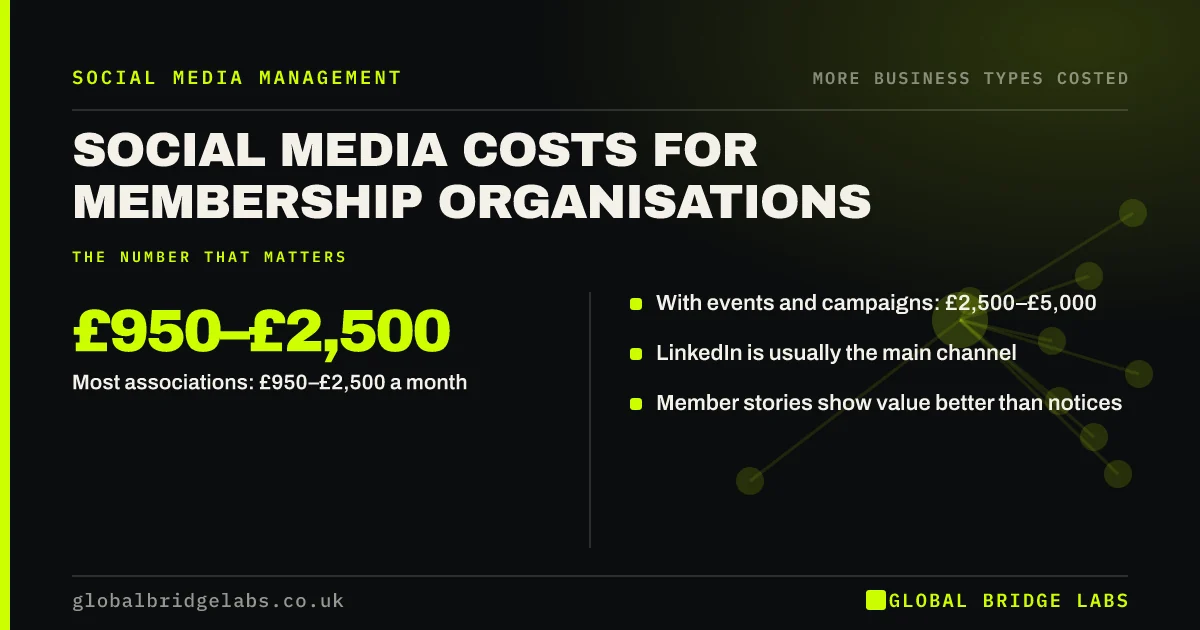
Social media costs for membership organisations and trade bodies usually sit in the £950–£2,500 a month band, rising to £2,500–£5,000 with events, video and paid membership campaigns. The work is two jobs: showing members the value of belonging and representing the sector publicly. LinkedIn is usually the main channel.
- Most associations: £950–£2,500 a month.
- With events and campaigns: £2,500–£5,000.
- LinkedIn is usually the main channel.
- Member stories show value better than notices.
Run a membership body? Message us on WhatsApp for a costed plan.
Chat on WhatsApp →What does social media do for a membership organisation?
For a membership organisation, social media recruits and keeps members, promotes events and training, shares sector news and shows the organisation's voice on policy. It must speak to current members, prospective members and outside audiences such as government and media.
What drives the cost?
Events are the biggest driver: promotion before, live coverage on the day and follow-up content. Policy commentary needs senior input and quick approval. Membership recruitment campaigns add paid social management of £300–£1,000 a month. Multiple committees approving posts add time.
- Event coverage: campaign fees.
- Policy content: senior time.
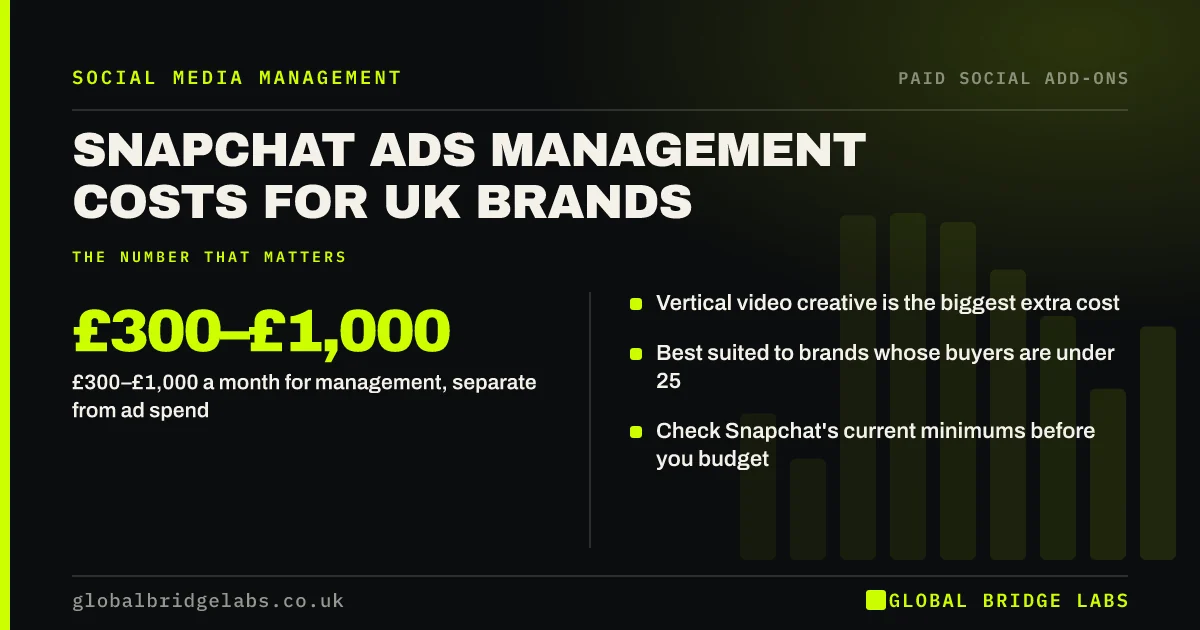
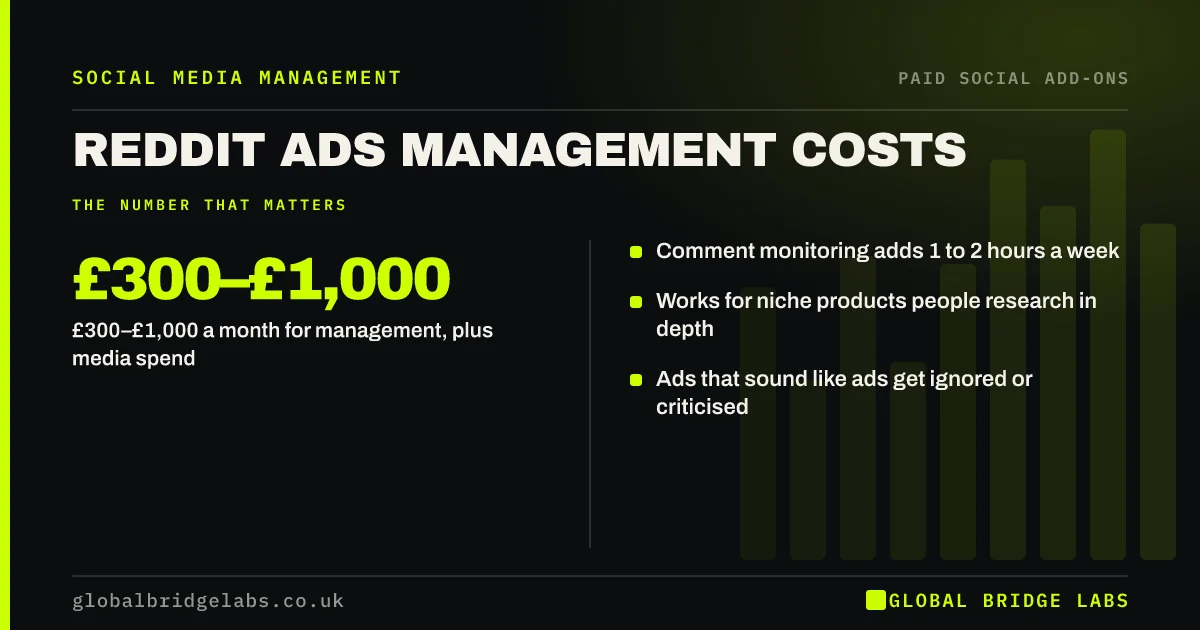
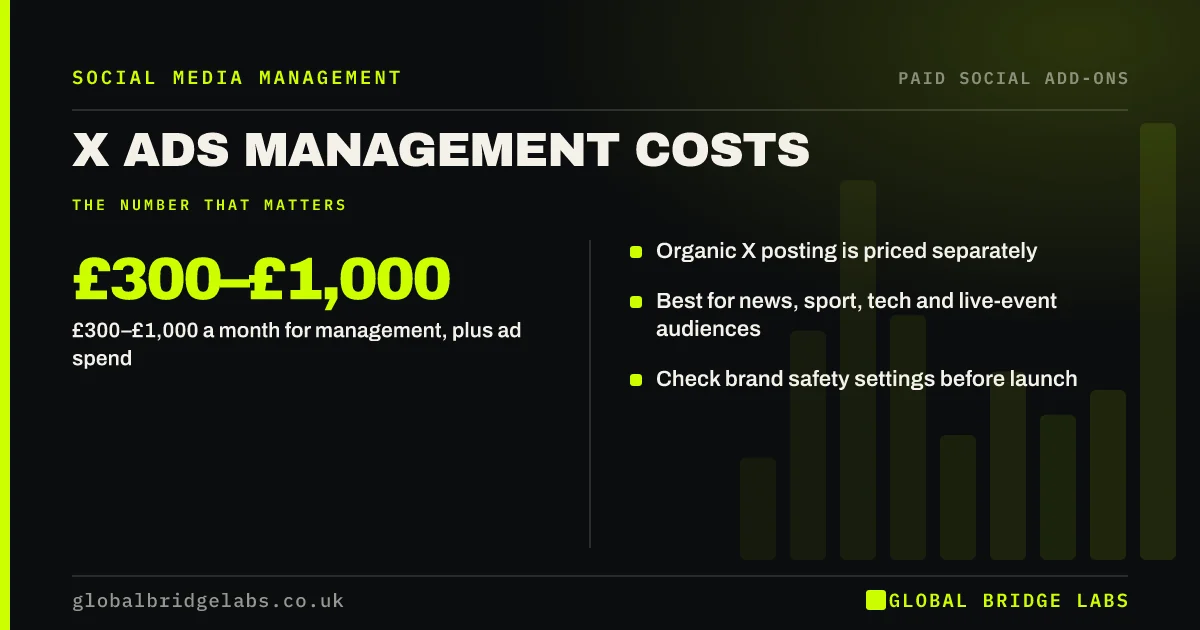
- Membership ads: £300–£1,000 a month management.
- Approval rounds: build into the scope.
Tell us your events calendar on WhatsApp and we will discuss your requirements.
Chat on WhatsApp →How do you show member value on social media?
Show members benefiting: a member story, a training success, a policy win, a supplier discount used. These persuade prospective members more than announcements. Ask members for permission before featuring them, and keep email for member-only content.
When is a lower budget enough?
Small associations with a few events a year can manage in the £500–£950 publishing band, using LinkedIn and email. Larger budgets earn their keep when membership income depends on recruitment campaigns or major annual events.
What does this look like in practice?
A pattern we see: an association's feed is a stream of notices that members ignore. Swapping half of them for short member stories and event highlights usually raises engagement and enquiries from prospective members.
Membership organisation checklist
- Feature members, not just notices.
- Plan each event's before, during and after.
- Set a fast approval path for policy posts.
- Use LinkedIn as the main channel for B2B.
- Get consent before featuring members.
Next step
Ask five members what they value most. Those answers become your recruitment content.
Message us on WhatsApp for a membership plan, or book a 30-minute consultation.
Chat on WhatsApp →Sources and further reading
- Direct marketing and privacy and electronic communications · Information Commissioner's Office
- LinkedIn Pages best practices · LinkedIn
Frequently asked questions
How much does social media cost for a trade association?
Most UK associations pay £950–£2,500 a month for managed social media, rising to £2,500–£5,000 with major events, video and paid membership campaigns.
Which platform suits membership organisations?
For professional and trade bodies, LinkedIn is usually the main channel, with email for members. Consumer-facing membership organisations may also use Facebook and Instagram.
Can we email people who follow us on social media?
Only if they have given consent or fall under a permitted basis such as the soft opt-in for existing members. Use social posts to invite sign-ups rather than adding followers to email lists.
Written by

Global Bridge Labs (GBL) is a UK–Sri Lanka partner for social media, websites and BPO. Everything here comes from client delivery, not theory.