On this page
- 01Key takeaways
- 02What does social media need to do for a food brand?
- 03What drives the cost for food and drink brands?
- 04Which rules affect food and drink posts?
- 05When is a lower budget enough?
- 06What does this look like in practice?
- 07Food and drink social media checklist
- 08Next step
- 09Sources and further reading
- 10Frequently asked questions
Key takeaways
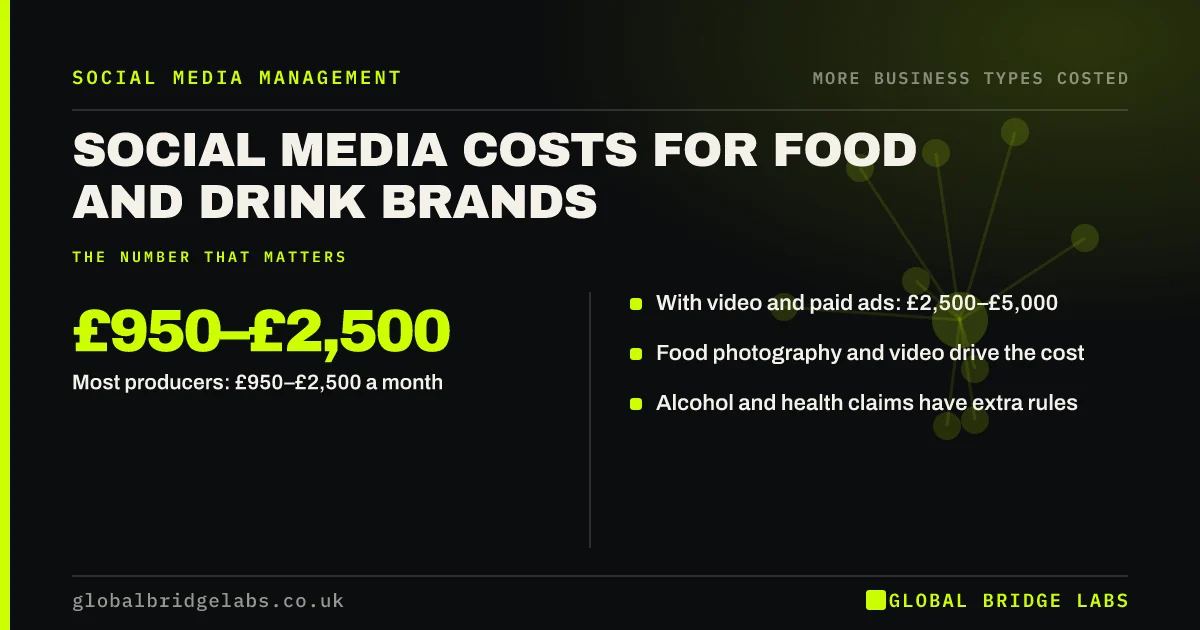
Social media costs for food and drink brands usually sit in the £950–£2,500 a month band for UK producers selling through shops and online, rising to £2,500–£5,000 with regular video and paid ads. Food photography and recipe video drive the fee. Allergen information, health claims and alcohol marketing rules shape what you can post.
- Most producers: £950–£2,500 a month.
- With video and paid ads: £2,500–£5,000.
- Food photography and video drive the cost.
- Alcohol and health claims have extra rules.
Run a food or drink brand? Message us on WhatsApp for a costed plan.
Chat on WhatsApp →What does social media need to do for a food brand?
For a food or drink producer, social media builds a brand people ask for by name in shops, drives online orders and supports stockists. Content is visual: products, recipes, ingredients, makers and where to buy. Consistent, appetising imagery matters more than in most sectors.
What drives the cost for food and drink brands?
Food photography and short recipe or serving videos are the main cost: a photography day costs £500–£1,200 and clip edits £110–£400. Supporting stockists with shareable content adds time. Paid social to launch products or reach new areas adds management of £300–£1,000 a month.
- Photography day: £500–£1,200.
- Clip edits: £110–£400 each.
- Paid social management: £300–£1,000 a month.
- Stockist content packs: extra hours.
Send us your product range on WhatsApp and we will discuss your requirements.
Chat on WhatsApp →Which rules affect food and drink posts?
Nutrition and health claims must be authorised and accurate. Allergen information must be right where products are sold online. Alcohol marketing must not appeal to under-18s or link drinking with social or sexual success, under the CAP Code and Portman Group codes. Creator posts must be labelled as ads.
When is a lower budget enough?
A small producer selling at markets and a few local shops can do well in the £500–£950 publishing band using its own photos. Bigger budgets earn their keep when you sell online nationally or are launching into new retailers.
What does this look like in practice?
A pattern we see: a producer gains a big stockist but shoppers do not know the brand. Giving the stockist ready-made posts and running local ads around its stores usually helps product move off the shelf.
Food and drink social media checklist
- Plan a quarterly product photo day.
- Show where to buy in every few posts.
- Check health and nutrition claims.
- Follow alcohol marketing rules if relevant.
- Send stockists shareable content.
Next step
List your stockists and online channels. Plan content that sends people to each.
Message us on WhatsApp for a food brand plan, or book a 30-minute consultation.
Chat on WhatsApp →Sources and further reading
- Allergen guidance for food businesses · Food Standards Agency
- Codes of practice on alcohol marketing · The Portman Group
- UK Code of Non-broadcast Advertising and Direct & Promotional Marketing (CAP Code) · ASA / CAP
Frequently asked questions
How much does social media cost for a food brand?
Most UK food and drink producers pay £950–£2,500 a month for managed social media, or £2,500–£5,000 with regular video and paid ads. Small market producers can start in the £500–£950 publishing band.
Can alcohol brands advertise on social media?
Yes, within rules. Ads must not target or appeal to under-18s, and must follow the CAP Code and Portman Group codes. Platforms also restrict alcohol ad targeting by age and country.
Do I need professional food photography?
For core product images and ads, usually yes, as food must look appetising. Day-to-day behind-the-scenes posts can be phone photos. A quarterly shoot often covers the essentials.
Written by

Global Bridge Labs (GBL) is a UK–Sri Lanka partner for social media, websites and BPO. Everything here comes from client delivery, not theory.