On this page
- 01Key takeaways
- 02How much sickness absence should you plan for?
- 03What does sickness absence cost an employer?
- 04What does a worked example look like?
- 05Why does absence hit small teams hardest?
- 06How does outsourcing handle sickness?
- 07How can you reduce the cost of absence in-house?
- 08How should you record and review absence?
- 09What does this look like in practice?
- 10Absence cost checklist
- 11Next step
- 12Sources and further reading
- 13Frequently asked questions
Key takeaways
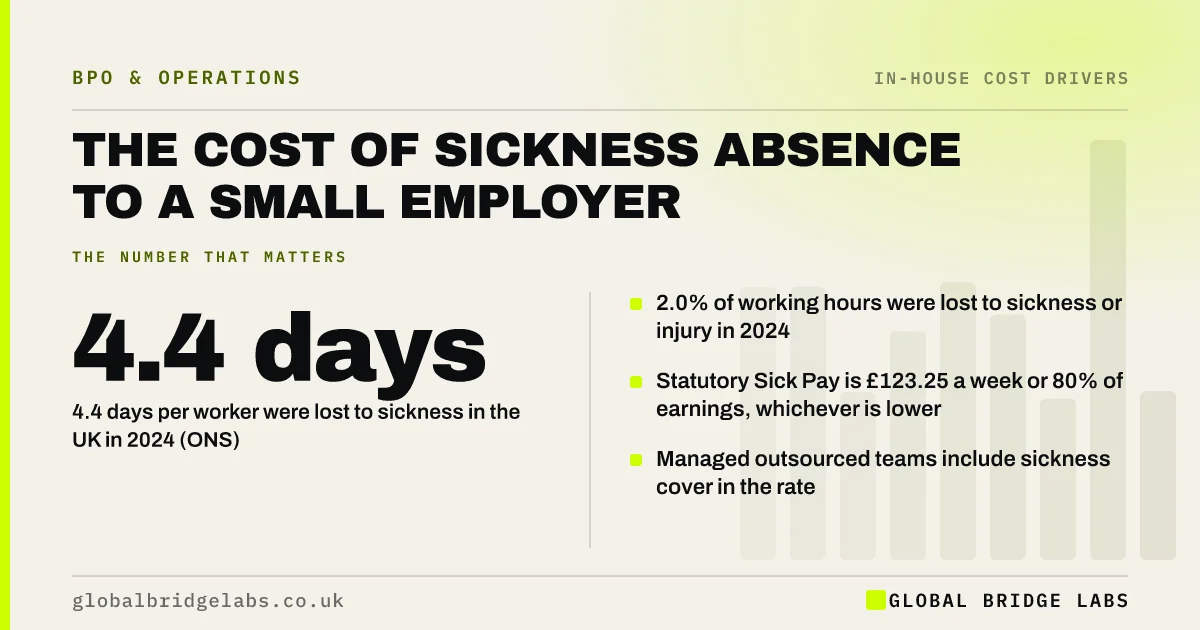
The cost of sickness absence to employers is the pay for time not worked plus the cost of covering or delaying the work. The ONS reports that UK workers lost an average of 4.4 days to sickness in 2024, a 2.0% absence rate. In a small team, the backlog and cover usually cost more than the sick pay itself.
- 4.4 days per worker were lost to sickness in the UK in 2024 (ONS).
- 2.0% of working hours were lost to sickness or injury in 2024.
- Statutory Sick Pay is £123.25 a week or 80% of earnings, whichever is lower.
- Managed outsourced teams include sickness cover in the rate.
Want to know what absence costs your team? Message us on WhatsApp.
Chat on WhatsApp →How much sickness absence should you plan for?
According to the Office for National Statistics (ONS), the UK sickness absence rate was 2.0% in 2024, with 148.9 million working days lost, an average of 4.4 days per worker. Absence varies by role and person, so use your own records where you have them and the ONS figure where you do not.
What does sickness absence cost an employer?
Absence costs in three ways: pay for time not worked, the cost of cover, and the cost of work delayed or lost. Employers must pay at least Statutory Sick Pay, currently £123.25 a week or 80% of average weekly earnings, whichever is lower, for eligible employees; many pay full company sick pay for the first days.
- Pay: statutory or company sick pay for days not worked.
- Cover: overtime, temps or a manager stepping in.
- Delay: backlog, slower replies, missed sales or bookings.
What does a worked example look like?
A £28,000 employee costs about £138 per working day in employment costs. At the ONS average of 4.4 days, full company sick pay costs about £610 a year. If a colleague covers at overtime rates of about £25 an hour for half those hours, add around £410. Missed replies or bookings come on top.
Across a team of five, that is roughly £5,000 a year before any lost sales, and one longer absence can multiply it.
Want absence cost included in your in-house vs outsourcing comparison? Send us the numbers on WhatsApp.
Chat on WhatsApp →Why does absence hit small teams hardest?
In a team of one or two, there is no one spare to cover. The work stops, or the owner does it. Customer-facing work suffers most, because enquiries and calls do not wait. That is why cover, not sick pay, is the main cost for small businesses.
How does outsourcing handle sickness?
A managed provider covers sickness within its team, so the service continues at the agreed level. You do not pay extra when someone is off, and you do not have to find cover. Ask how cover works and what the service levels are during absence.
How can you reduce the cost of absence in-house?
Cross-train at least two people on every critical task, keep procedures written down, and have an overflow option for customer-facing work. Supporting staff wellbeing also matters: the Health and Safety Executive treats work-related stress as a risk employers must manage.
How should you record and review absence?
Record every absence with dates and a reason category, in one system rather than in emails. Review the pattern quarterly: frequent short absences, absence clustered on certain days or rising absence in one team are signals to act on, often by talking to the person and checking workload.
What does this look like in practice?
A pattern we see in UK clinics: when the one receptionist is off sick, calls go to voicemail and the practice manager spends the day on the phone. An outsourced overflow line keeps appointments being booked when the front desk is short.
Absence cost checklist
Use these steps to cost absence.
- Record days lost per person last year.
- Cost sick pay at your policy rate.
- Estimate cover hours and their cost.
- Estimate work delayed or lost.
- Add the total to your in-house cost comparison.
Next step
Tell us how your team covers absence today. We will cost it and show what a managed overflow or cover option would cost in a 30-minute call.
Message us on WhatsApp for an absence cost estimate, or book a 30-minute consultation.
Chat on WhatsApp →Sources and further reading
- Sickness absence in the UK labour market · Office for National Statistics
- Statutory Sick Pay (SSP): employer guide · GOV.UK
- Work-related stress and how to manage it · Health and Safety Executive
Frequently asked questions
What is the average sickness absence in the UK?
The Office for National Statistics reports a sickness absence rate of 2.0% of working hours in 2024, an average of 4.4 days lost per worker, and 148.9 million working days lost in total. Rates vary by role, sector, age and whether people have long-term health conditions.
How much is Statutory Sick Pay?
GOV.UK currently sets Statutory Sick Pay at £123.25 a week or 80% of average weekly earnings, whichever is lower, for up to 28 weeks for eligible employees. Many employers pay more under their own company sick pay policy, which raises the direct cost of absence.
Does outsourcing cover staff sickness?
A managed provider covers sickness within its own team, so the service continues at the agreed level without extra cost to you. Confirm the cover arrangements and service levels in the contract, and ask how the provider handles a longer absence or several people off at once.
What is the biggest cost of absence for a small business?
Usually cover, not sick pay. In a team of one or two, nobody is spare, so the work stops or the owner does it. Customer-facing work suffers most, because enquiries and calls do not wait. Planning cover in advance is the most effective way to cut the cost.
Written by

Global Bridge Labs (GBL) is a UK–Sri Lanka partner for social media, websites and BPO. Everything here comes from client delivery, not theory.