On this page
- 01Key takeaways
- 02What does social media do for a care home?
- 03How much does care home social media cost?
- 04What rules apply to posting about residents?
- 05Should care homes mention CQC ratings?
- 06When is an agency not worth it for a care home?
- 07What does this look like in practice?
- 08Care home social media checklist
- 09Next step
- 10Sources and further reading
- 11Frequently asked questions
Key takeaways
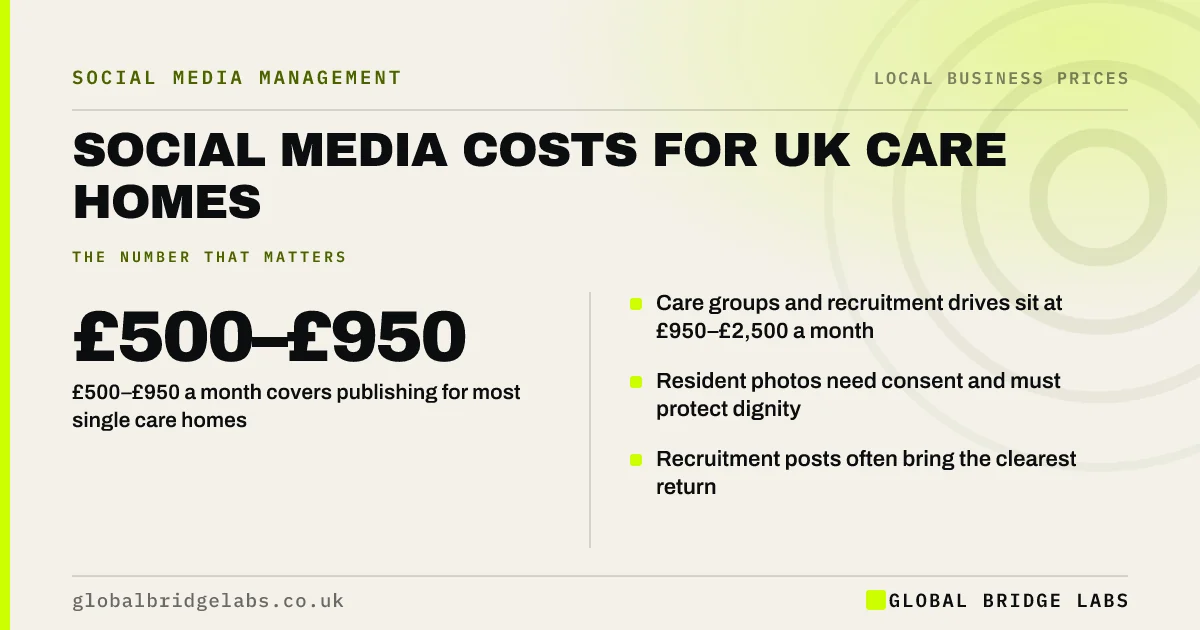
Social media management cost for UK care homes usually sits in the £500–£950 publishing band for a single home, or £950–£2,500 for groups and recruitment campaigns. Resident consent and dignity come first. Recruitment is often as important as reaching families.
- £500–£950 a month covers publishing for most single care homes.
- Care groups and recruitment drives sit at £950–£2,500 a month.
- Resident photos need consent and must protect dignity.
- Recruitment posts often bring the clearest return.
Want your care home's social media costed? Message us on WhatsApp.
Chat on WhatsApp →What does social media do for a care home?
For care homes, social media reassures families, shows daily life and activities, supports recruitment and keeps the local community involved. Families choosing a home often look at its Facebook page to see whether residents seem happy and staff engaged.
How much does care home social media cost?
A single home publishing activity posts and updates from staff photos typically sits in the £500–£950 a month band. Groups with several homes, recruitment campaigns and message handling sit at £950–£2,500. These are indicative figures, not a GBL price list.
- Single home publishing: £500–£950 a month.
- Care group with recruitment: £950–£2,500 a month.
- Per extra home: indicative £150–£500 a month.
- Recruitment ads: separate media budget.
Want a plan for your home or group? Send us the number of homes on WhatsApp and we will discuss your requirements.
Chat on WhatsApp →What rules apply to posting about residents?
Resident photos and stories need informed consent, from the resident or someone with legal authority where they lack capacity. Information about health is special category data under UK GDPR. Never post anything that compromises dignity, and remove posts promptly if consent is withdrawn.
Should care homes mention CQC ratings?
Care Quality Commission (CQC) registered providers must display their ratings, including on their website. Mentioning a good rating on social media builds trust, but it must be current and accurate. Link to the full report rather than quoting selectively.
When is an agency not worth it for a care home?
It is not worth it if staff cannot share photos and updates, because an agency cannot invent daily life. Agencies earn their fee by turning staff photos into regular posts, managing consent records alongside content and running recruitment campaigns.
What does this look like in practice?
A pattern we see with UK care providers: activity coordinators take lovely photos but posting depends on who is on shift. Global Bridge Labs (GBL) sets up a consent-checked photo routine, publishes regular activity posts and runs recruitment posts when the home is hiring.
Care home social media checklist
Agree these before you start.
- Consent records for every resident shown.
- Who approves posts before publishing.
- Current CQC rating and report link.
- Recruitment posts and where applicants go.
- How family messages are answered.
Next step
Tell us how many homes you run and whether you are recruiting. We will tell you which band to expect and what to post first.
Message us on WhatsApp for a care home social media estimate, or book a 30-minute consultation.
Chat on WhatsApp →Sources and further reading
- Display your CQC ratings · Care Quality Commission
- Special category data · Information Commissioner's Office
- What is valid consent? · Information Commissioner's Office
Frequently asked questions
How much does social media cost for a care home?
Most single care homes fall in the £500–£950 a month publishing band when staff supply photos. Care groups with several homes, recruitment campaigns and message handling usually sit at £950–£2,500 a month. Recruitment ads need a separate media budget.
Can care homes post photos of residents?
Only with informed consent from the resident, or from someone with legal authority where the resident lacks capacity. Protect dignity at all times, avoid sharing health information, and remove photos promptly if consent is withdrawn. Keep a record of every consent.
Which platform is best for care homes?
Facebook is usually the main platform, because many families and local communities use it. Instagram can help with recruitment of younger carers. LinkedIn helps care groups recruit managers and nurses. Start with Facebook and a clear recruitment page.
Does social media help care home recruitment?
Often, yes. Posts showing real staff, the team culture and clear job details can bring local applicants. Recruitment campaigns work best with a simple application route and a fast reply to anyone who applies.
Written by

Global Bridge Labs (GBL) is a UK–Sri Lanka partner for social media, websites and BPO. Everything here comes from client delivery, not theory.