On this page
- 01Key takeaways
- 02Why do businesses bring social media in-house?
- 03What does the switch cost?
- 04What must you get back from the agency?
- 05When is bringing it in-house a mistake?
- 06What does this look like in practice?
- 07In-house switch checklist
- 08Next step
- 09Sources and further reading
- 10Frequently asked questions
Key takeaways
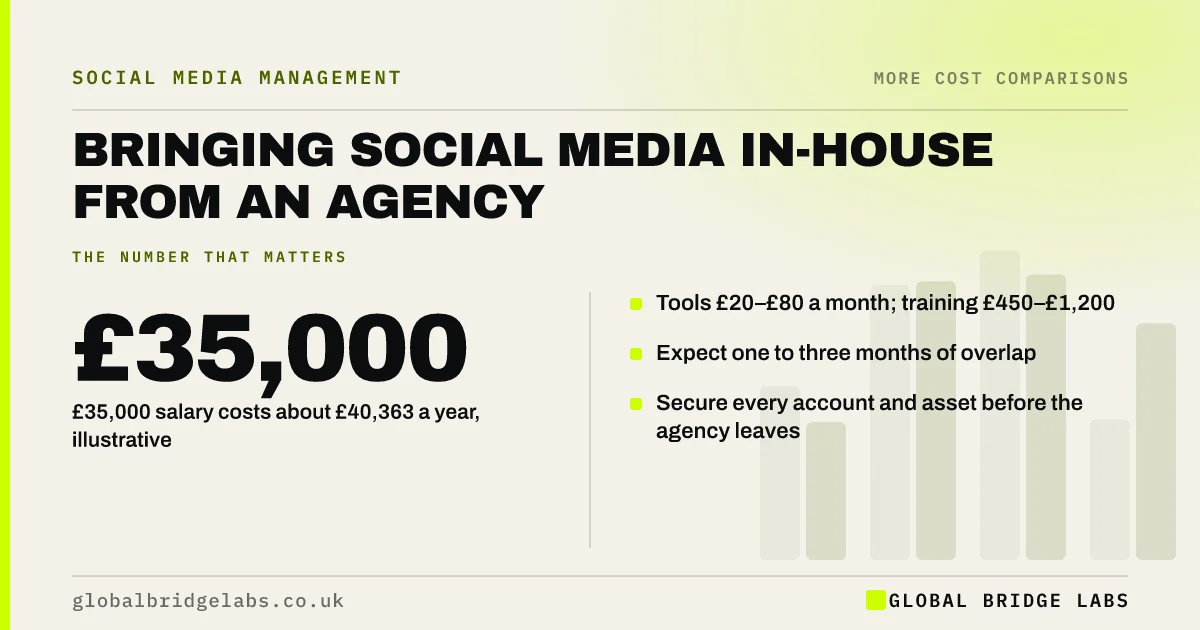
Bringing social media in-house from an agency costs more than the new salary. Illustratively, a £35,000 hire costs about £40,363 a year, plus tools at £20–£80 a month, training at £450–£1,200 and a handover period where you pay both. Plan a one to three-month overlap so content does not stop while the new person learns.
- £35,000 salary costs about £40,363 a year, illustrative.
- Tools £20–£80 a month; training £450–£1,200.
- Expect one to three months of overlap.
- Secure every account and asset before the agency leaves.
Planning to bring social media in-house? Message us on WhatsApp for a handover plan.
Chat on WhatsApp →Why do businesses bring social media in-house?
Usually because volume has grown enough to keep a person busy, the business wants someone on site daily, or the agency relationship has not worked. The decision itself belongs to the in-house versus agency comparison; this article is about what the switch costs.
What does the switch cost?
The new hire's employment cost, recruitment time or fees, tools that the agency used to supply, training and a period of overlap. If the agency's notice period is a month and the hire needs two months to get up to speed, you pay for both for a while.
- Employment: about £3,360 a month on £35,000, illustrative.
- Tools: £20–£80 a month.
- Training: £450–£1,200.
- Overlap: one to three months of agency fees.
Tell us your timeline on WhatsApp and we will discuss your requirements.
Chat on WhatsApp →What must you get back from the agency?
Admin access to every account and ad account, brand files, templates, original photos and videos, the content calendar, audience lists and past reports. Check the contract for who owns the content and give the agency a clear handover list.
When is bringing it in-house a mistake?
When one person is expected to replace a strategist, designer, writer and ads specialist. When there is no cover for holidays. Or when the real problem was a poor agency, which a better agency would fix for less. A hybrid can keep specialist help for ads or design.
What does this look like in practice?
A pattern we see: an agency is dropped, the new hire starts a month later and the accounts go quiet in between. Overlapping by a month and keeping the agency for ads during the first quarter usually avoids the dip.
In-house switch checklist
- Hire before giving notice to the agency.
- List every account, asset and file to hand over.
- Move all admin access to business-owned logins.
- Budget for tools and training.
- Decide what specialist help, if any, to keep.
Next step
Write the handover list now, even if the switch is months away. It shows how much you depend on the agency.
Message us on WhatsApp for a handover checklist, or book a 30-minute consultation.
Chat on WhatsApp →Sources and further reading
- Rates and thresholds for employers 2026 to 2027 · HM Revenue & Customs
- Business transfers, takeovers and TUPE · GOV.UK
Frequently asked questions
Is it cheaper to bring social media in-house?
Sometimes, at higher volumes. A full-time hire usually costs more than a typical SME agency fee once employer costs, tools and training are included, but it gives daily presence. Compare total cost and output, not salary against fee.
How long does the switch from agency to in-house take?
Plan for one to three months: recruiting, onboarding and a handover where the agency and new hire overlap. Rushing it usually means a gap in posting.
Does TUPE apply when bringing work back in-house?
Rarely for a small agency contract, but it can apply where an identifiable team mainly worked on your account. Take employment advice if you are unsure.
Written by

Global Bridge Labs (GBL) is a UK–Sri Lanka partner for social media, websites and BPO. Everything here comes from client delivery, not theory.