On this page
- 01Key takeaways
- 02What does YouTube channel management include?
- 03How much does YouTube management cost?
- 04Why can YouTube be better value than it looks?
- 05Long-form or Shorts: which should you pay for?
- 06What should a YouTube quote state?
- 07When is paid YouTube management not worth it?
- 08Which videos should a business make first?
- 09What does this look like in practice?
- 10YouTube cost checklist
- 11Next step
- 12Sources and further reading
- 13Frequently asked questions
Key takeaways
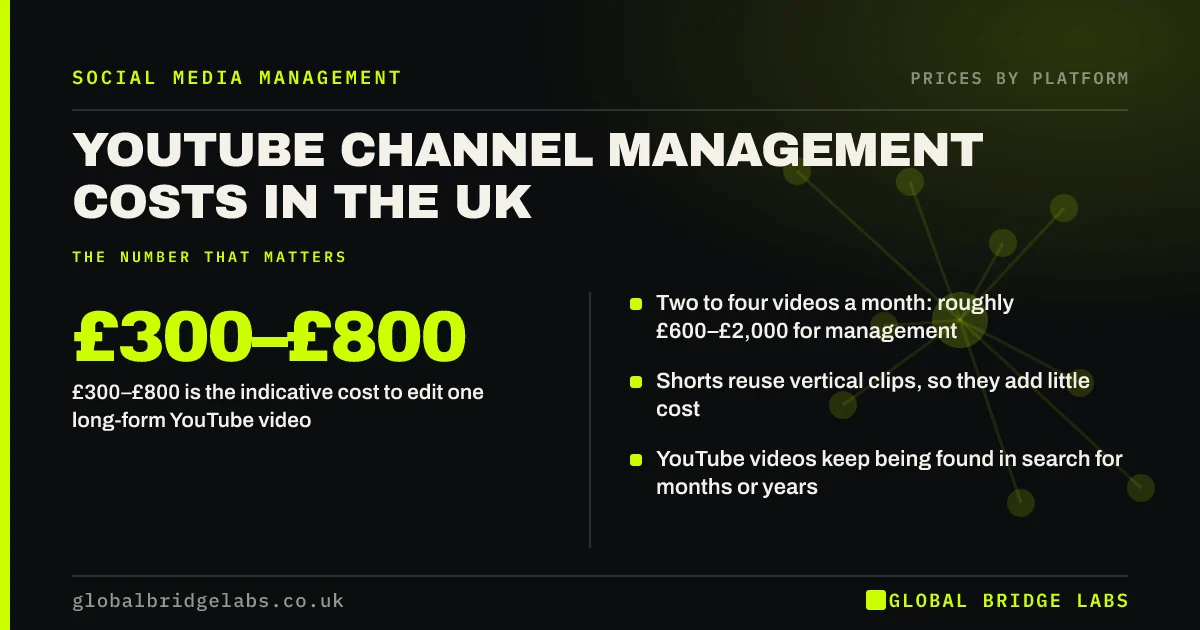
YouTube channel management cost in the UK depends on video length. As an indication, editing one long-form video takes 4 to 8 hours, or about £300–£800, and a channel publishing two to four videos a month costs roughly £600–£2,000. Shorts cost far less because they reuse clips made for other channels.
- £300–£800 is the indicative cost to edit one long-form YouTube video.
- Two to four videos a month: roughly £600–£2,000 for management.
- Shorts reuse vertical clips, so they add little cost.
- YouTube videos keep being found in search for months or years.
Wondering whether YouTube is worth the cost? Message us on WhatsApp.
Chat on WhatsApp →What does YouTube channel management include?
YouTube channel management is the ongoing work of planning video topics, editing footage, writing titles and descriptions, designing thumbnails, publishing, organising playlists, replying to comments and reporting on views, watch time and enquiries.
How much does YouTube management cost?
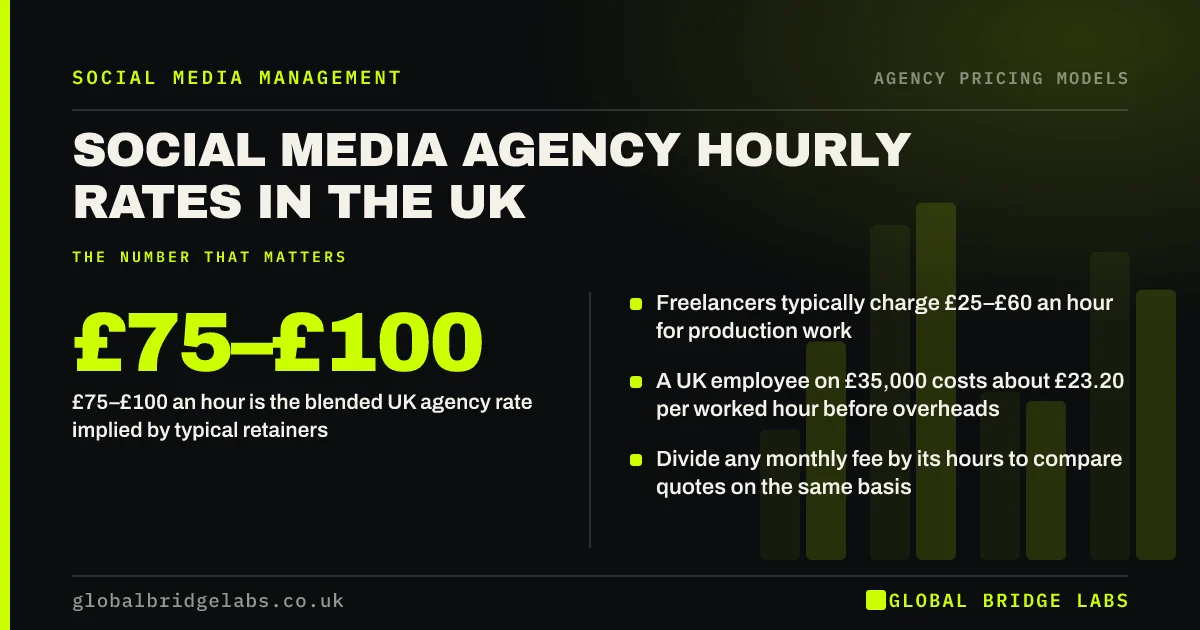
At the £75–£100 an hour implied by typical UK retainers, a long-form edit of 4 to 8 hours costs about £300–£800 including the title, description and thumbnail. Two to four videos a month is therefore roughly £600–£2,000, with filming extra. These are indicative figures, not a GBL price list.
- Long-form edit with thumbnail and description: indicative £300–£800.
- Shorts from existing clips: a small addition per clip.
- Filming days: separate.
- Channel set-up and branding: a one-off project.
Want a YouTube plan costed for your business? Send us your channel on WhatsApp and we will discuss your requirements.
Chat on WhatsApp →Why can YouTube be better value than it looks?
YouTube behaves like a search engine. A video answering a common customer question can be found for years, while a feed post fades in days. The cost per video is higher, but the working life is far longer, which changes the sum.
Long-form or Shorts: which should you pay for?
Start with Shorts if you already make vertical clips, because the extra cost is small. Add long-form when you have questions that need a proper answer, such as how a service works or what it costs. One good long-form video a month is enough for most small businesses.
What should a YouTube quote state?
A YouTube quote should state videos per month, target length, who films, revision rounds, and whether titles, descriptions, thumbnails and captions are included. Ask whether the editor also cuts Shorts from each long video, which gets more from the same footage.
- Videos per month and target length.
- Thumbnails, titles and descriptions included.
- Captions and chapters included.
- Shorts cut from each long video.
- Channel ownership and access.
When is paid YouTube management not worth it?
It is not worth it when nobody will appear on camera regularly, or when your customers do not search for answers before buying. It is also a poor first channel for a business that needs enquiries this quarter, because YouTube builds slowly.
Which videos should a business make first?
Start with the questions buyers ask before they commit. Videos that explain what a service costs, how it works, how long it takes and what can go wrong are searched for all year. Five of those will do more for enquiries than fifty clips about company news.
- What it costs and what changes the price.
- How the process works, step by step.
- How long it takes.
- Common mistakes and how to avoid them.
What does this look like in practice?
A pattern we see with UK trades and professional firms: five videos answering the questions customers ask most often keep bringing visitors long after publication, and sales calls get shorter because buyers have already watched the answer.
YouTube cost checklist
Decide these before commissioning.
- List the ten questions customers ask most.
- Name who presents and who films.
- Agree videos per month and length.
- Include Shorts cut from each video.
- Keep the channel in your Google account.
Next step
Send us the questions your customers ask before they buy. We will tell you which deserve a video and what producing them involves.
Message us on WhatsApp for a YouTube plan, or book a 30-minute consultation.
Chat on WhatsApp →Sources and further reading
- Create a YouTube channel · YouTube Help
- Recognising ads: brand-owned and paid social media · ASA / CAP
Frequently asked questions
How much does YouTube channel management cost in the UK?
As an indication, roughly £600–£2,000 a month for two to four long-form videos, based on 4 to 8 hours of editing each. Filming is extra. Shorts made from existing clips add little. Ask for a price per video and a monthly total.
How much does it cost to edit a YouTube video?
As an indication, £300–£800 for a long-form business video including the thumbnail, title and description, based on 4 to 8 hours of work. Simple talking-head videos are at the lower end. Videos with graphics, several cameras or location footage cost more.
Is YouTube worth it for a small business?
It can be if customers search for answers before buying and someone will present regularly. Videos keep being found for months or years, so the cost is spread over a long working life. Start with the questions customers ask most.
Are YouTube Shorts cheaper than long videos?
Yes. Shorts are vertical clips under a few minutes and usually reuse edits made for Instagram Reels or TikTok. Adding them to an existing video plan costs little extra. Ask your editor to cut two or three from each long video.
Written by

Global Bridge Labs (GBL) is a UK–Sri Lanka partner for social media, websites and BPO. Everything here comes from client delivery, not theory.