
On this page
- 01Key takeaways
- 02What does DIY marketing cost?
- 03Where does DIY marketing go wrong?
- 04Which parts are worth keeping in-house?
- 05When is DIY marketing the right choice?
- 06How do you judge whether it is working?
- 07What does inconsistency cost?
- 08How much do DIY ads waste?
- 09Which other DIY jobs sit alongside marketing?
- 10What should you do in the next 30 days?
- 11What does this look like in practice?
- 12DIY marketing checklist
- 13Next step
- 14Sources and further reading
- 15Frequently asked questions
Key takeaways
DIY marketing for a small business costs hours, not fees. An owner spending 6 hours a week on it, valued at £40 an hour, is investing about £11,000 a year. The return is often poor because the work is squeezed between other jobs, done inconsistently, and spread across more channels than one person can run well.
- 6 hours a week at £40 an hour is about £11,000 a year of owner time.
- Inconsistency is the main failure: activity stops in every busy month.
- Beginner-run ads commonly waste a share of the budget.
- Keep strategy and customer knowledge in-house; buy production.
Doing your own marketing between everything else? Message us on WhatsApp with what you currently run.
Chat on WhatsApp →What does DIY marketing cost?
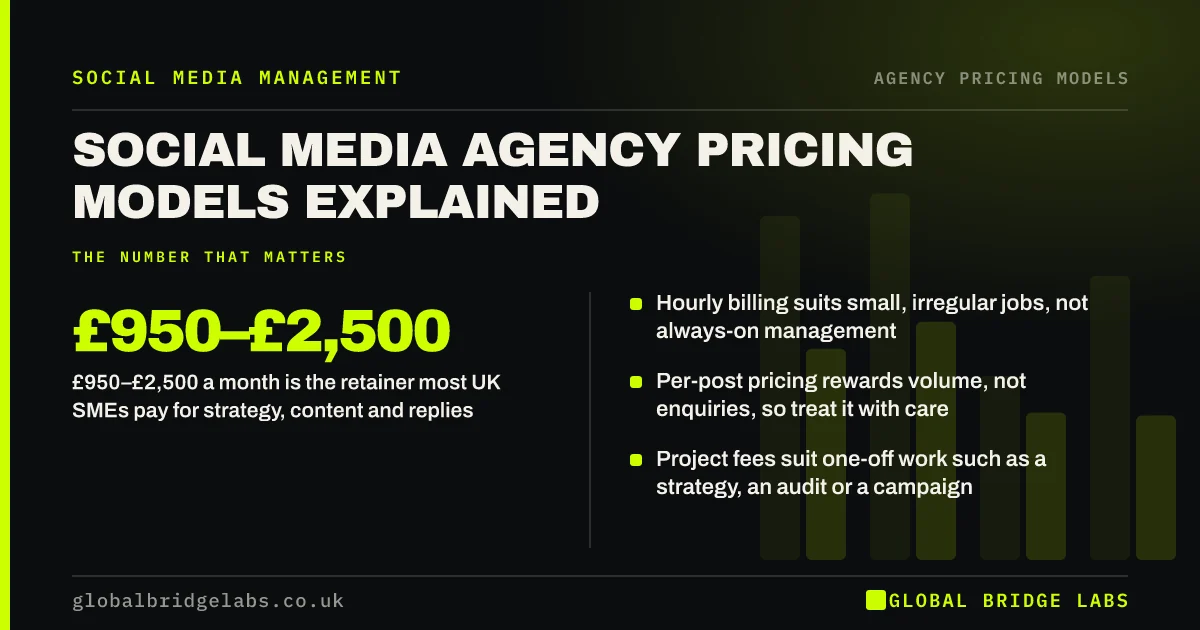
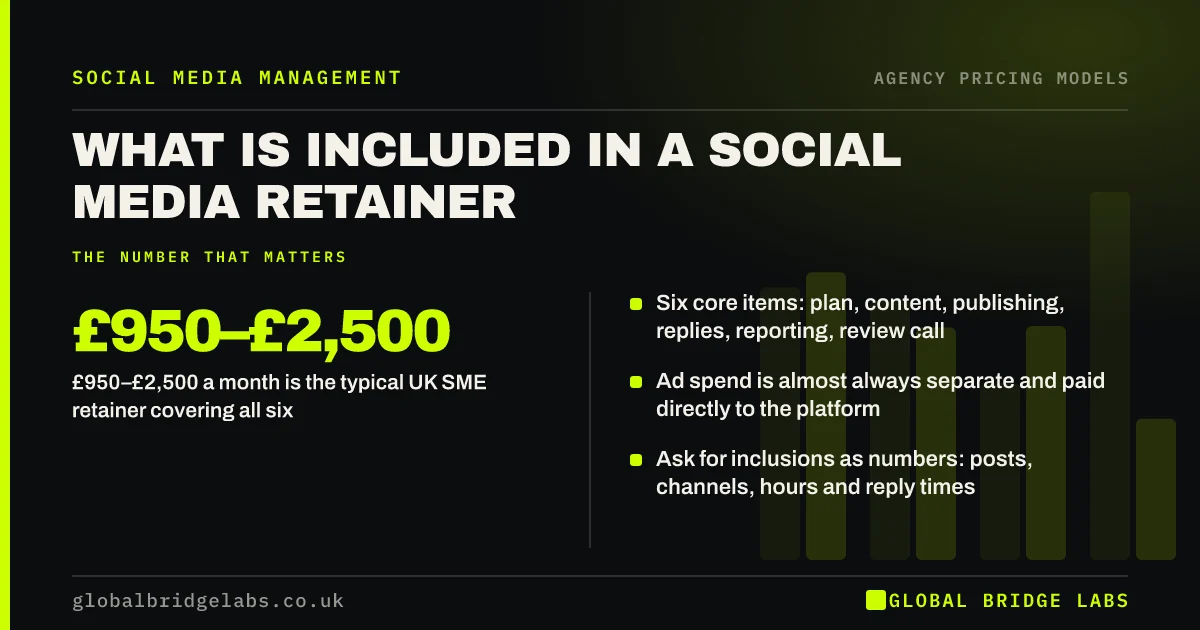
DIY marketing costs your time, tool subscriptions and any advertising budget. The time is the largest part. Six hours a week across 46 working weeks at £40 an hour is £11,040, which is comparable to an agency retainer. As an indicative UK range, managed social media retainers for small businesses run about £950–£2,500 a month.
Where does DIY marketing go wrong?
DIY marketing goes wrong in predictable ways, and most are about capacity, not ability.
- Inconsistency: activity stops whenever client work is busy.
- Too many channels: thin presence on five instead of strong on one.
- No measurement: nobody knows which activity produces enquiries.
- Ad waste: campaigns set up once and left to run.
- Dated methods: tactics learned years ago and never refreshed.
Which parts are worth keeping in-house?
Keep the parts that depend on knowing your customers. Buy the parts that depend on production skill and consistency.
- Keep: positioning, offers, customer stories, final approval.
- Keep: replies to enquiries that need your judgement.
- Buy: design, video editing, scheduling, reporting.
- Buy: paid campaign management and testing.
When is DIY marketing the right choice?
DIY marketing is right when you are starting out, when one channel done simply is enough, and when you enjoy it and do it reliably. A local business posting twice a week and keeping its Google Business Profile current may need nothing more.
How do you judge whether it is working?
Judge it by enquiries per hour invested. Record hours spent and enquiries that mention each channel for 90 days. If the hours produce few enquiries, the choice is to narrow the effort to one channel or hand production to someone who will do it consistently.
What does inconsistency cost?
Inconsistency wastes the work already done. Marketing builds on itself: an audience that sees you weekly remembers you when they need you. Stop for two months and much of that recognition fades, so the next burst of effort starts close to zero. Three months on and three months off costs the same hours as steady activity at half the pace, and delivers far less.
How much do DIY ads waste?
There is no reliable average, but the pattern is clear. Campaigns set up by non-specialists commonly target too widely, send traffic to a homepage instead of a relevant page and run unchanged for months. If a third of a £500 monthly budget goes on clicks that could never convert, that is about £2,000 a year. Check search terms, placements and landing pages monthly, or have someone do it who will.
Which other DIY jobs sit alongside marketing?
DIY marketing rarely travels alone. The same person is usually also maintaining the website, designing the graphics and answering the enquiries the marketing produces. Each of those has its own hidden cost, and the combined load is what causes the stop-start pattern. Listing them together often shows that the owner is doing most of a marketing department's job in six hours a week.
What should you do in the next 30 days?
Pick the one channel that has produced the most enquiries and commit to a rhythm you can keep in your busiest month, even if that is once a week. Pause the others. Ask every new enquiry how they found you and write the answer down. At the end of the month you will have the first reliable evidence of what your marketing hours return.
What does this look like in practice?
A pattern we see in UK service businesses: three months of regular posts, then nothing from April to June when work picks up, then a restart. The audience never builds because the activity never lasts.
Across GBL social media clients, the average reach lift in the first 90 days is +184%.
DIY marketing checklist
Review your own marketing with these.
- Log marketing hours for a month.
- List channels and when each was last updated.
- Ask every new enquiry how they found you.
- Cut to the one or two channels that produce enquiries.
- Decide what to keep and what to buy.
Next step
Tell us which channels you run and how many hours they take. We will suggest what to keep, cut and hand over in a 30-minute call.
Message us on WhatsApp to review your DIY marketing, or book a 30-minute consultation.
Chat on WhatsApp →Sources and further reading
- Google Business Profile Help · Google
- Recognising ads: brand-owned and paid social media · ASA / CAP
- Meta Business Help Centre · Meta
Frequently asked questions
Can a small business do its own marketing?
Yes, and many do it well by keeping it simple: one or two channels, a regular rhythm and a clear offer. It works less well when the owner tries to cover every channel, runs paid ads without experience or stops whenever the business gets busy.
How many hours a week should a small business spend on marketing?
It depends on goals and channels, but a few focused hours a week on one or two channels beats many scattered hours across five. Track the hours and the enquiries they produce, and adjust from evidence. Consistency matters more than volume.
Is hiring a marketing agency worth it for a small business?
It is worth it when marketing matters to growth and you cannot do it consistently yourself. Compare the fee with the value of your own hours and with the enquiries consistent activity would bring. Ask for clear measures before signing.
What marketing should I never outsource?
Keep your positioning, pricing, customer knowledge and final sign-off. An outside team can produce and publish, but they need your understanding of what customers value. Outsourcing the thinking as well as the doing usually gives generic results. Brief them well and review the output.
Written by

Global Bridge Labs (GBL) is a UK–Sri Lanka partner for social media, websites and BPO. Everything here comes from client delivery, not theory.