On this page
- 01Key takeaways
- 02What does break-even mean here?
- 03How do you calculate it? A worked example
- 04Why use profit instead of revenue?
- 05How does customer lifetime value change the sum?
- 06How long does break-even take?
- 07What makes the calculation unreliable?
- 08What if the numbers fall short?
- 09What does this look like in practice?
- 10Break-even checklist
- 11Next step
- 12Sources and further reading
- 13Frequently asked questions
Key takeaways
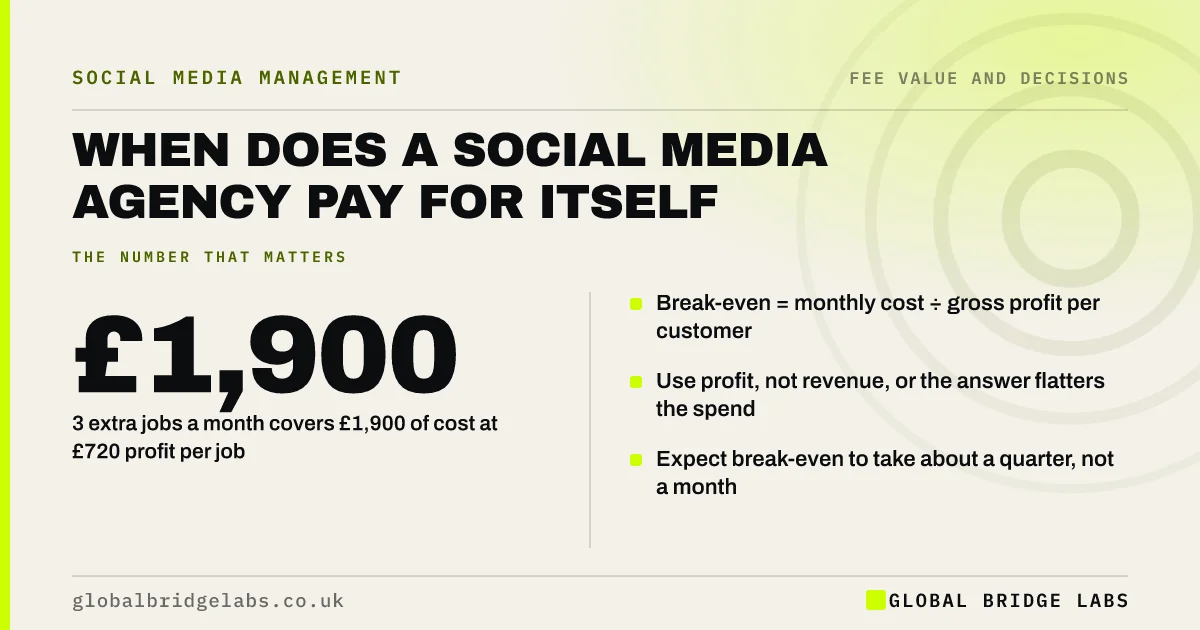
Does a social media agency pay for itself? It does when the gross profit from extra customers exceeds the fee plus ad spend. For a business paying £1,900 a month in total, with £2,400 jobs at a 30% margin, break-even is three extra jobs a month.
- 3 extra jobs a month covers £1,900 of cost at £720 profit per job.
- Break-even = monthly cost ÷ gross profit per customer.
- Use profit, not revenue, or the answer flatters the spend.
- Expect break-even to take about a quarter, not a month.
Want your break-even worked out? Message us on WhatsApp.
Chat on WhatsApp →What does break-even mean here?
Break-even is the number of extra customers per month at which the gross profit they bring equals what you spend on the agency and on advertising. Below it you are investing. Above it the channel is paying its way.
How do you calculate it? A worked example
Take a £1,500 monthly fee and £400 of ads: £1,900 in total. Average job value is £2,400 at a 30% gross margin, so each job contributes £720. Divide £1,900 by £720 and you need 2.6, so three extra jobs a month. If you win one quote in four, that is about 12 extra enquiries.
- Monthly cost: £1,500 fee + £400 ads = £1,900.
- Profit per job: £2,400 × 30% = £720.
- Jobs needed: £1,900 ÷ £720 = 2.6, so 3.
- Enquiries needed at a 1 in 4 win rate: about 12.
Want this run with your fee, margin and win rate? Send us the numbers on WhatsApp and we will discuss your requirements.
Chat on WhatsApp →Why use profit instead of revenue?
Revenue overstates the return. Three jobs bring in £7,200 of revenue against £1,900 of cost, which looks like an easy win. But only £2,160 of that is gross profit. Measuring against revenue makes almost any spend look justified.
How does customer lifetime value change the sum?
Repeat business lowers the break-even. If a customer buys several times, use the profit over a year or over the relationship, not the first sale. A clinic, accountant or cafe with returning customers needs far fewer new customers to cover the fee than a one-off installer.
How long does break-even take?
Plan for about a quarter. Reach usually moves in three to four weeks and enquiries typically follow within 90 days. Count the first two or three months as set-up cost and judge the monthly break-even from month three onwards.
What makes the calculation unreliable?
The calculation is unreliable when enquiries are not tracked to source, when social media assists sales that another channel closes, and when the sample is small. Ask every new customer how they found you, use tracked links, and judge over a quarter.
What if the numbers fall short?
If tracked enquiries are below break-even after a full quarter, find where the shortfall is before cancelling. Low reach is a content or budget problem. Good reach with few enquiries is an offer or landing page problem. Enquiries that do not convert point to follow-up or pricing, which no agency can fix for you.
- Low reach: review content, channels and ad budget.
- Reach but no enquiries: review the offer and the route to contact.
- Enquiries but no sales: review reply speed, quoting and price.
- All three fine: give it another quarter.
What does this look like in practice?
Global Bridge Labs (GBL) reports reach, leads and cost per lead on one page each month, so clients can set the figures against their own margin. A pattern we see is that owners who know their break-even number make faster, calmer decisions about budget.
Break-even checklist
Gather these five numbers.
- Monthly fee.
- Monthly ad spend.
- Average sale value.
- Gross margin.
- Win rate from enquiry to sale.
Next step
Send us the five numbers. We will reply with your break-even in customers and enquiries, and say whether it looks achievable.
Message us on WhatsApp for your break-even figure, or book a 30-minute consultation.
Chat on WhatsApp →Sources and further reading
- URL builders: collect campaign data with custom URLs · Google Analytics Help
- About key events · Google Analytics Help
- The Long and the Short of It: balancing short and long-term marketing strategies · IPA
Frequently asked questions
How do I know if my social media agency is paying for itself?
Divide the monthly fee plus ad spend by your gross profit per customer. That gives the extra customers needed each month. If tracked enquiries from social media convert to at least that many, it is paying for itself.
How many leads do I need to cover a social media agency fee?
It depends on value and win rate. For £1,900 a month in cost, £2,400 jobs at a 30% margin and a one in four win rate, you need three extra jobs, or about 12 extra enquiries a month.
How long does it take for social media management to pay back?
Usually about a quarter. Reach moves in the first few weeks and enquiries typically follow within 90 days. Treat the first two or three months as set-up and judge from month three. After that, the monthly figure is the one to watch.
Should I measure return on revenue or profit?
Profit. Revenue overstates the return because it ignores the cost of delivering the work. Use gross profit per customer, or lifetime profit where customers come back. Revenue is still useful for tracking growth, but not for judging whether the spend pays.
Written by

Global Bridge Labs (GBL) is a UK–Sri Lanka partner for social media, websites and BPO. Everything here comes from client delivery, not theory.