On this page
Why software projects slow down after a strong start
Most custom software projects begin with energy and clear goals, then lose momentum when requirements expand without a prioritisation model. Teams start building everything at once, and delivery quality drops.
The result is predictable: missed dates, duplicated effort, and expensive rework. A roadmap should reduce uncertainty, not document every possible feature.
Scope by business outcomes, not feature volume
The first milestone should solve one measurable business problem end-to-end. This gives stakeholders confidence, creates adoption early, and provides real usage feedback before scale decisions are made.
When roadmap phases are tied to outcomes, trade-offs become easier and engineering focus stays sharp.
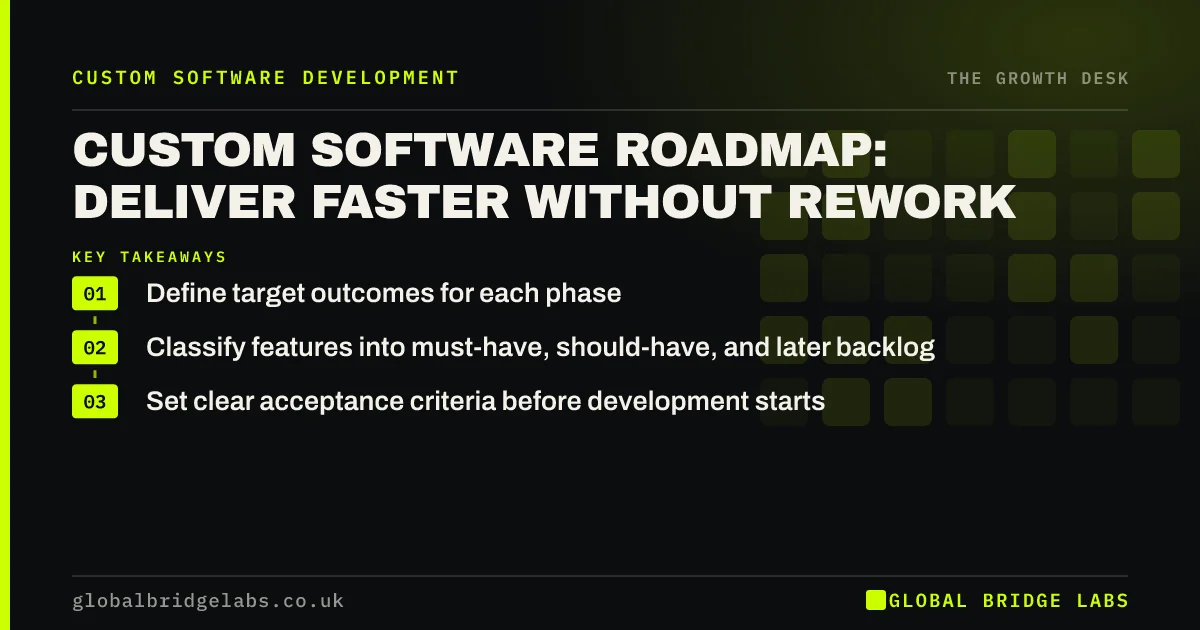
- Define target outcomes for each phase (time saved, errors reduced, conversion improved).
- Classify features into must-have, should-have, and later backlog.
- Set clear acceptance criteria before development starts.
Design architecture for change
Rework often comes from rigid architecture decisions made too early. Teams optimise for immediate delivery, then struggle when integrations, workflows, or user roles evolve.
A practical approach is modular design with stable contracts between components. That allows teams to improve parts of the system without rewriting the whole platform.
Delivery cadence that keeps risk visible
Long release cycles hide risk until it is expensive to fix. Short, regular releases with clear demos expose issues earlier and keep product, business, and engineering aligned.
A weekly or biweekly cadence creates accountability and helps teams adjust backlog priorities using evidence, not assumptions.
- Use milestone demos tied to business workflows, not just technical progress.
- Track quality gates: defect leakage, test coverage on critical paths, and deployment reliability.
- Maintain a visible decision log for scope changes and rationale.
Governance that prevents expensive surprises
Roadmaps fail when decision rights are unclear. Product, operations, and engineering need a shared governance model for priority conflicts, release readiness, and risk escalation.
Simple governance mechanisms - weekly steering reviews, KPI dashboards, and ownership clarity - prevent delays and protect delivery confidence.
Next step
If your team is planning or rebuilding a custom software initiative, we can help you design a phased roadmap that delivers value quickly and avoids rework traps.
Talk to Global Bridge Labs about your custom software roadmap.
Chat on WhatsApp →Frequently asked questions
Why do custom software projects need rework?
Most rework comes from unclear priorities and requirements that change after build starts, not from poor engineering. A roadmap that fixes the first release scope, sequences work by business value and reviews progress weekly removes the biggest sources of wasted effort.
What is a phased software roadmap?
A phased roadmap breaks a custom platform into releases that each deliver usable value: a first release that solves the most expensive problem, then increments that extend it. Each phase has a defined scope, owner and success measure, so delivery is predictable and rework is contained.
How do you keep a software project on track?
Simple governance: weekly steering reviews, a KPI dashboard everyone can read, and clear ownership of decisions. These prevent delays, keep scope honest and protect confidence in delivery far more reliably than heavyweight process.
Should we build custom software or buy off the shelf?
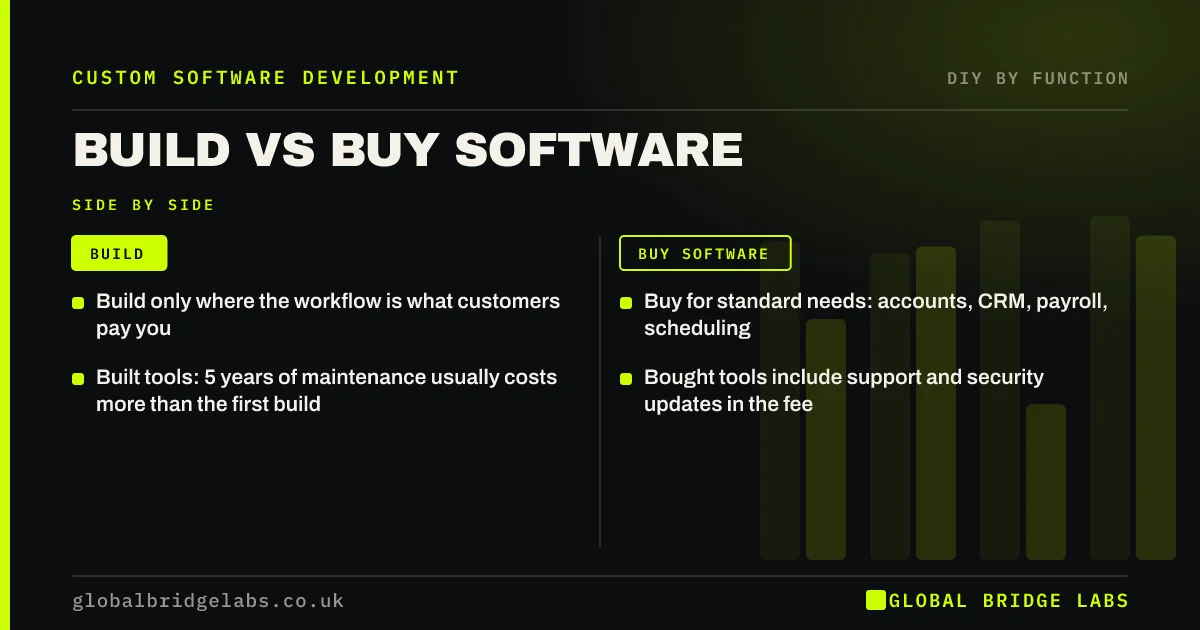
Buy when a standard tool covers the workflow well enough and the gaps are cosmetic. Build when the workflow is the business advantage, when integrations between systems are the problem, or when off-the-shelf tools force the team into workarounds that cost more than the software.
Written by

Global Bridge Labs (GBL) is a UK–Sri Lanka partner for social media, websites and BPO. Everything here comes from client delivery, not theory.